
Vibrato practice piece. Take the first step toward becoming a great singer!

Among karaoke lovers, many people are probably thinking, “I want to become a better singer.” While researching how to improve your singing, quite a few of you may also be thinking, “I want to master vibrato.” Vibrato refers to a singing technique that oscillates pitch and/or volume up and down, and it enhances expressiveness in your singing.
In this article, we’ll introduce a selection of songs that are perfect for practicing vibrato.
Different artists and songs feature various styles of vibrato, so study many performances and use them as material to help you improve.
We look forward to the day you showcase your wonderful singing.
- Songs that make it easy to practice vibrato / Recommended songs for those who want to practice
- Vibrato practice piece. Take the first step toward becoming a great singer!
- Songs to Help Women Sing Better: Practice Tracks for Improving at Karaoke
- Practice Songs Helpful for Learning Mixed Voice (Middle Voice) [For Women]
- [Enka/Kayōkyoku] Challenge! A collection of songs that make it easy to put in kobushi (melismatic embellishments)
- [For Men] Mix Voice Practice Songs: Reference Tracks to Help You Hit High Notes More Easily
- [Easy to Sing] A Compilation of Recommended Vocaloid Songs for Karaoke
- [For Beginners] Recommended Enka Masterpieces for Karaoke — Male Singers Edition
- [For Men] These Songs Will Make You a Better Singer! Tracks That Are Effective for Karaoke Practice
- [For Women] A roundup of enka songs that can score high in karaoke
- Recommended for great singers! A collection of impressive songs if you can sing them
- [Karaoke] A compilation of Vocaloid songs that are easy to sing even for people with low voices
- I want to sing songs that use a lot of falsetto—tracks that are also good for practicing falsetto at karaoke.
Vibrato practice pieces. Take your first step toward great singing! (1–10)
A Bouquet for YouUtada Hikaru

A digital-only track by Hikaru Utada, released on April 15, 2016.
It was the theme song for the NHK morning drama series “Toto Nee-chan.” It’s a medium-tempo ballad with a simple arrangement centered on piano and strings.
The vocal melody is very straightforward, which makes it all the more enjoyable to hear Utada’s wide range of vocal expressions, including her vibrato.
Be sure to pay attention to how she shapes pitch and volume in her long sustained notes—you’ll make plenty of discoveries!

fragileEvery Little Thing

This is Every Little Thing’s 17th single, released on January 1, 2001.
It was also used as the theme song for the Fuji TV program “Ainori.” It’s a slow ballad built around a broad, sweeping melody, and I think it’s a great reference track for practicing vibrato by sustaining long notes and adding pitch oscillation.
Mochida’s vocals are overall very straightforward and unadorned, and the vocal melody doesn’t span a particularly wide range, making it an ideal practice piece for beginners who aren’t yet very accustomed to singing.
If I had been living aloneSUPER BEAVER

This is SUPER BEAVER’s 12th single, released on June 10, 2020.
It seems to have been released as a sort of double A-side together with the simultaneously included track “Highlight.” The song makes extensive use of long-tone vocal melodies, making it very easy to hear where vibrato is used; it’s an excellent piece for practicing vibrato technique.
In particular, the a cappella section at the beginning makes the use of vibrato especially clear, so listen closely and study it.
In the chorus and the D section, there are many high long tones, so practice with care: let your voice vibrate while making sure you don’t lose vocal projection.
Vibrato practice songs. Take the first step toward great singing! (11–20)
Come, spring.Matsutōya Yumi

It’s Yumi Matsutoya’s 26th single, released on October 24, 1994.
It was the theme song for the NHK morning drama series of the same title.
Yumi Matsutoya is a singer known for her naturally vibrant vocal style, so it might be a bit difficult to sing exactly like her.
However, the way she shapes pitch changes in the long notes of the vocal melody can serve as valuable reference for expressive singing.
While her songs are closely associated with a very distinctive voice, be careful not to slip into mere impersonation—practice in a way that preserves your own style.
BeautifulSuperfly

A track from Superfly’s fifth original album, WHITE, which was released on May 27, 2015.
Although it wasn’t released as a single, it topped two categories in RecoChoku’s “RecoChoku Awards Monthly Best Songs, June 2015”—the Download (Single) and Chaku-Uta (Ringtone) categories—and also hit No.
1 on iTunes, making it a major hit.
Over an up-tempo, grandly arranged backing track, you can enjoy Shiho Ochi’s very dynamic vocals.
In the relatively soft-sung A melody sections, she skillfully uses a vibrato technique that wavers the pitch over a comparatively broad time axis.
In the chorus’s long sustained notes, she frequently employs straight, powerful high tones, so listen closely to the contrast there.
Personally, I was especially impressed by the use of vibrato on the long tones right after the instrumental break, where the arrangement gets a bit quieter.
If you can master this use of vibrato, your expressive range as a singer will surely expand greatly!
ORIONNakajima Mika

It was Mika Nakashima’s 27th single, released on November 12, 2008.
It was used as an insert song in the drama “Ryusei no Kizuna” (Bonds of the Meteor).
At the beginning of the track, there’s a section where she sings the chorus melody accompanied only by an acoustic guitar; I think this part is ideal as a reference for subtle vocal expression using vibrato.
Even though the pitch wavers, her projection doesn’t weaken—truly impressive.
It might also be good to pay attention to the contrast with how she handles the long notes in the chorus after the rhythm comes in.
LA・LA・LA LOVE SONG with NAOMI CAMPBELLKubota Toshinobu
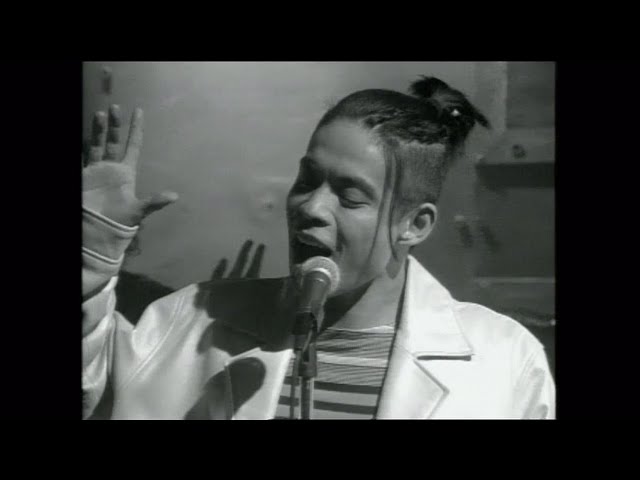
It’s Toshinobu Kubota’s 16th single, released on May 13, 1996.
Since it was chosen as the theme song for Fuji TV’s drama “Long Vacation,” which was especially popular even among the massively hyped Monday 9 p.m.
time slot shows of the 1990s, many of you have probably heard it.
In this track, Kubota delivers a masterful vibrato technique—keeping his voice consistently projected while skillfully wavering the pitch on long tones.
Try practicing so that while you let the pitch of your long tones oscillate, your actual vocal production doesn’t become weak.
It may be a slightly advanced choice, but it’s an ideal song for mastering vibrant, high-register long-tone vibrato.