


Among karaoke lovers, many people are probably thinking, “I want to become a better singer.” While researching how to improve your singing, quite a few of you may also be thinking, “I want to master vibrato.” Vibrato refers to a singing technique that oscillates pitch and/or volume up and down, and it enhances expressiveness in your singing.
In this article, we’ll introduce a selection of songs that are perfect for practicing vibrato.
Different artists and songs feature various styles of vibrato, so study many performances and use them as material to help you improve.
We look forward to the day you showcase your wonderful singing.
- Songs that make it easy to practice vibrato / Recommended songs for those who want to practice
- Vibrato practice piece. Take the first step toward becoming a great singer!
- Songs to Help Women Sing Better: Practice Tracks for Improving at Karaoke
- Practice Songs Helpful for Learning Mixed Voice (Middle Voice) [For Women]
- [Enka/Kayōkyoku] Challenge! A collection of songs that make it easy to put in kobushi (melismatic embellishments)
- [For Men] Mix Voice Practice Songs: Reference Tracks to Help You Hit High Notes More Easily
- [Easy to Sing] A Compilation of Recommended Vocaloid Songs for Karaoke
- [For Beginners] Recommended Enka Masterpieces for Karaoke — Male Singers Edition
- [For Men] These Songs Will Make You a Better Singer! Tracks That Are Effective for Karaoke Practice
- [For Women] A roundup of enka songs that can score high in karaoke
- Recommended for great singers! A collection of impressive songs if you can sing them
- [Karaoke] A compilation of Vocaloid songs that are easy to sing even for people with low voices
- I want to sing songs that use a lot of falsetto—tracks that are also good for practicing falsetto at karaoke.
Vibrato practice pieces. Take your first step toward great singing! (1–10)
flameLiSA

LiSA’s 20th single, released on October 14, 2020.
It’s the theme song for the film Demon Slayer: Kimetsu no Yaiba – The Movie: Mugen Train.
Because it became a massive hit—often described as historic—most people have probably heard this track.
The tempo is relatively slow, and in the sections where the vocal melody sustains long notes, she sings with vibrato that traces a large pitch curve.
I think it’s an ideal song for practicing slow vibrato.
Listen closely to the original and give it a try in your practice.

StoryAI

AI’s 12th single, released on May 18, 2005.
It’s a classic ballad in which AI, known for her slightly husky voice, delivers a deeply emotional performance.
The vocal melody features a broad flow with extensive use of long tones, within which AI showcases a beautiful vibrato technique.
The backing track is arranged simply, making the subtle nuances in the vocal part very easy to hear, and I think it’s an ideal piece for studying vibrato.
One of the pleasures of this song is the contrast between the quiet, delicate wavering of the sound in the first verse and the straight, sustained long tones sung in the climactic chorus.
searchlightTamaki Kōji

This is Koji Tamaki’s 25th single, released on November 27, 2013.
It was the ending theme for the drama Tokyo Bandwagon, in which Tamaki himself appeared.
Tamaki is known for his very distinctive singing style, and his characteristic use of vibrato is especially enjoyable in this song—particularly in the lower register of the A section.
Practicing that low-register vibrato will likely yield many benefits.
There’s also a lot to learn from the brief falsetto moments you can hear in the latter half of the chorus, including how he applies vibrato there.
The song itself is a simply arranged slow ballad, making it an ideal piece not only for studying vibrato but also as reference material for a wide range of vocal expressions.
Becoming a Thousand WindsAkiyama Masashi
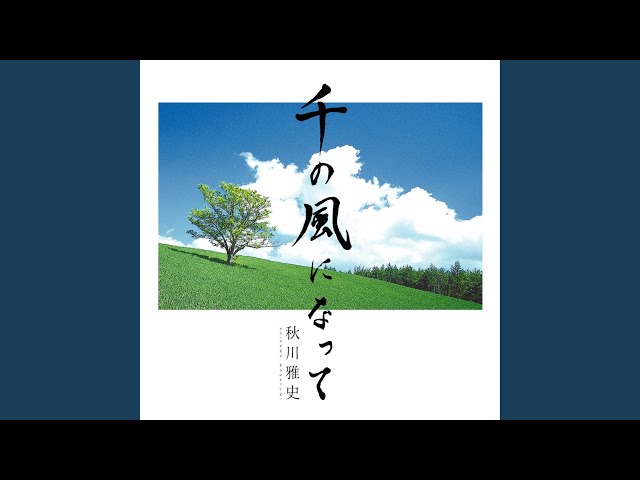
This was Masafumi Akikawa’s first single, released on May 24, 2006.
It’s a masterpiece where you can enjoy the resonant singing voice of Akikawa, a tenor.
Having thoroughly studied classical vocal music, Akikawa delivers a performance with an impressively open throat and freely controlled vibrato—truly admirable.
While it may be quite difficult for the general public without formal vocal training or experience studying voice to reproduce this, it’s an ideal piece for practicing singing with a well-opened throat and for training a precisely controlled vibrato tailored to your expressive intent.
As mentioned, it’s a selection geared toward advanced singers, but by all means, give it a try!
ANOTHER WORLDGACKT

This is Gackt’s ninth single overall, released on September 5, 2001.
It’s an up-tempo rock song, but the chorus features a broad melody built mainly on long tones.
The way Gackt applies a wide, oscillating vibrato at the ends of the chorus phrases makes it, in my view, an excellent practice piece for relative beginners as well.
Try practicing so you can reproduce the feel of gradually tightening the vibrato toward the end of each long tone.
I long to see you now.MISIA

This is MISIA’s 23rd single, released on November 18, 2009.
It was chosen as the theme song for TBS’s Sunday drama JIN.
It’s a ballad with a grand, expansive feel, and MISIA’s powerful, dynamic vocals soar throughout the piece.
Focusing on vibrato—the theme of this article—you’ll hear everything from the gentle, wide, wave-like vibrato in the softly sung A-melody to the more projected vibrato in the chorus where the song title is sung.
It’s practically a showcase of vibrato techniques, making it an ideal track for studying how to use different types of vibrato intentionally as expressive tools.
Personally, I find there’s a lot to note in the vocal expression of the A-melody in particular.
While it’s easy to let your ears gravitate toward the showy chorus, I encourage you to pay close attention to and analyze the softer A-melody phrasing.
You’re sure to discover many insights that will help elevate your singing technique!
AmyTHE ORAL CIGARETTES

This is THE ORAL CIGARETTES’ second major-label single, released on April 22, 2015.
It’s an upbeat, catchy song with a very familiar melody, making it a great practice piece for male vocal rock—there’s plenty to learn beyond just vibrato.
The way vibrato is used on the sustained notes in the chorus might feel a bit idiosyncratic, but it’s excellent for mastering a wide, pitch-swing vibrato.
Practice keeping your volume steady while smoothly connecting to the next note.