
Vibrato practice piece. Take the first step toward becoming a great singer!

Among karaoke lovers, many people are probably thinking, “I want to become a better singer.” While researching how to improve your singing, quite a few of you may also be thinking, “I want to master vibrato.” Vibrato refers to a singing technique that oscillates pitch and/or volume up and down, and it enhances expressiveness in your singing.
In this article, we’ll introduce a selection of songs that are perfect for practicing vibrato.
Different artists and songs feature various styles of vibrato, so study many performances and use them as material to help you improve.
We look forward to the day you showcase your wonderful singing.
- Songs that make it easy to practice vibrato / Recommended songs for those who want to practice
- Vibrato practice piece. Take the first step toward becoming a great singer!
- Songs to Help Women Sing Better: Practice Tracks for Improving at Karaoke
- Practice Songs Helpful for Learning Mixed Voice (Middle Voice) [For Women]
- [Enka/Kayōkyoku] Challenge! A collection of songs that make it easy to put in kobushi (melismatic embellishments)
- [For Men] Mix Voice Practice Songs: Reference Tracks to Help You Hit High Notes More Easily
- [Easy to Sing] A Compilation of Recommended Vocaloid Songs for Karaoke
- [For Beginners] Recommended Enka Masterpieces for Karaoke — Male Singers Edition
- [For Men] These Songs Will Make You a Better Singer! Tracks That Are Effective for Karaoke Practice
- [For Women] A roundup of enka songs that can score high in karaoke
- Recommended for great singers! A collection of impressive songs if you can sing them
- [Karaoke] A compilation of Vocaloid songs that are easy to sing even for people with low voices
- I want to sing songs that use a lot of falsetto—tracks that are also good for practicing falsetto at karaoke.
Vibrato practice songs. Take the first step toward great singing! (11–20)
Let’s become a familyFukuyama Masaharu

This is Masaharu Fukuyama’s 27th single, released on August 31, 2011.
It was used as the CM song for Recruit’s wedding information magazine Zexy and as the image song for TV Tokyo’s variety program “Kazoku ni Narou (Yo),” and it became a big hit.
In this song—especially in the chorus—Fukuyama showcases a vocal expression that uses vibrato to smoothly shift pitch over a broad time axis.
I think this approach to vibrato is relatively easy to understand even for beginners.
Be sure to listen closely to the finer details of each phrase and practice along.
If you focus on the long tones where the notes are sustained, you’ll find there’s a lot to learn!

scale (as of a fish or reptile)Hata Motohiro
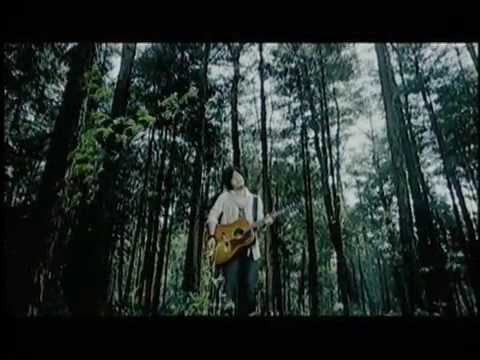
Hata Motohiro’s 2nd single, released on June 6, 2007.
It was used as the image song for Nippon TV’s summer documentary “Teijisei: 1461 Days of Memories.” Hata’s distinctly masculine vocals are vibrant within this mid-tempo rock track.
On first listen, he employs a vibrato with relatively large time-axis variations to convey subtle nuances throughout the song.
Let’s study the contrast with the more straightforward singing style in the chorus, where he belts the high notes.
moonlightOnitsuka Chihiro

Chihiro Onitsuka’s second single, released on August 9, 2008.
It was selected as the theme song for the TV Asahi drama “TRICK,” and along with the drama’s success, the song also became a major hit.
It’s a fine medium-slow ballad with a simple arrangement centered on piano backing.
Within this song—whose vocal melody is built around broad, flowing lines—Onitsuka employs frequent vibrato, seemingly to connect each phrase legato, delivering a very smooth performance.
It feels like one of the best songs to practice how to apply vibrato and shape pitch transitions to organically link phrases within a wide, expansive melody.
In the latter half, as the backing performance intensifies, she also uses delicate, fine-grained vibrato to great effect, so it might be good to listen with attention to how the vocal expression changes across different parts of the song.
KanadeSukima Suichi

It’s Sukima Switch’s second single, released on March 10, 2004.
It’s a very gentle ballad with a broad, relaxed vocal melody, so I think it could be an ideal piece for studying vibrato technique.
In particular, the way vibrato is applied and the way pitch is shaped in the falsetto (head voice) sections you hear in the chorus make it excellent practice material for vibrato.
To reproduce this, you’ll also need to master smooth transitions in vocal production, but definitely give it a try in your practice!
dogwood (flowering dogwood)Hitoto Yo

This is Yo Hitoto’s fifth single, released on February 11, 2004.
It’s a slow ballad built around sweeping phrases, and from the very start—right after the intro ends and the vocals begin—you can enjoy singing that makes brilliant use of vibrato.
If you study how the melody navigates the big pitch changes in the chorus—the way notes connect before and after, and how the pitch transitions are shaped—you’ll surely gain a lot.
The contrast between the gently sung passages and the powerful delivery in the later choruses is also highly instructive as a model for changing vocal expression.
Close your eyesHirai Ken

Ken Hirai’s 20th single, released on April 28, 2004.
It was written as the theme song for Toho’s film “Crying Out Love, in the Center of the World.” It’s a classic slow ballad.
From the whisper-like vocals in the intro to the dynamic singing in the chorus, this piece lets you fully enjoy Ken Hirai’s charm.
Regarding vibrato, which is the theme of this article, I’d like you to focus not only on the subtle nuances in the long tones, but also to practice and master the way the pitch shifts in the final phrase of the chorus—doing so will surely be a major breakthrough.
Also, try studying the contrast in expression between the powerfully sung parts and the gently sung parts.
Vibrato practice pieces. Take your first step toward great singing! (21–30)
Letter ~To You at Fifteen~Anjura Aki

In the junior high school division, it was selected as the required piece for the 75th NHK All-Japan School Music Competition.
It’s a piano ballad characterized by many long tones.
I imagine many people sing it at karaoke, too.
The overall vocal range spans G3 to D5, and the range gradually rises from the B section.
Since the lyrics directly convey emotions, it’s easy to use vibrato as a “tremble of feeling.” When singing, if you force your voice, it becomes harder to produce vibrato with your throat, so take in plenty of breath and let out air along with your voice.
Try singing as if aiming into the distance.
