
Songs that make it easy to practice vibrato / Recommended songs for those who want to practice


Do you ever think, “If only I could master vibrato, my singing would sound so much better…”? Vibrato—the technique of gently oscillating the voice—is an essential expressive tool that adds depth and emotion to a song.
However, not every song is suitable for practice.
In fact, songs that make it easier to produce vibrato share certain traits, and the right song choice can significantly speed up your progress.
In this article, we’ll introduce a wide range of songs with plenty of long tones that make applying vibrato easier, as well as numbers that are ideal for practice in terms of vocal range.
Find the one song that adds a new layer of expression to your voice!
- Vibrato practice piece. Take the first step toward becoming a great singer!
- [Karaoke] Songs That Make It Easy to Score High | From Classics to the Newest Hits
- Songs that make you sound good at karaoke
- No worries even if you’re not confident in your singing! Simple, easy-to-sing songs for karaoke.
- [Enka/Kayōkyoku] Challenge! A collection of songs that make it easy to put in kobushi (melismatic embellishments)
- [For Men] These Songs Will Make You a Better Singer! Tracks That Are Effective for Karaoke Practice
- Practice Songs Helpful for Learning Mixed Voice (Middle Voice) [For Women]
- [Teens] Easy-to-Sing Karaoke Song Rankings [2026]
- Karaoke songs where even men with low voices can aim for high scores
- Songs to Help Women Sing Better: Practice Tracks for Improving at Karaoke
- [Karaoke] A compilation of Vocaloid songs that are easy to sing even for people with low voices
- A must-see for low-voiced women! Popular songs that are easy to sing at karaoke
- Karaoke songs that are easy to sing even if you’re not confident in your pitch (for women in their 50s)
Songs that make it easy to use vibrato / Recommended songs for those who want to practice (71–80)
vaseKadamatsu Toshiki

Toshiki Kadomatsu is a great singer-songwriter who energized Japan’s AOR scene.
He excels in AOR, black contemporary, and city pop, and is known worldwide as a leading artist of city pop.
Among his songs, the one I especially recommend is Kabin (“Vase”).
While it incorporates some elements of Black music, the vocal line isn’t difficult.
In addition, because it features many long tones, it’s an ideal piece for practicing vibrato.

stay with meAoyama Teruma

Teruma Aoyama, who has also been active on variety shows lately, has been releasing tracks that feature hip-hop from time to time, while of course also putting out orthodox ballads.
Among her songs, the one I especially recommend is “stay with me.” It’s an R&B-style track, but it doesn’t incorporate that many advanced R&B techniques.
There are plenty of long sustained notes and many parts that make use of vibrato, making it a perfect piece for practice.
Definitely consider adding it to your repertoire.
Time goes byEvery Little Thing
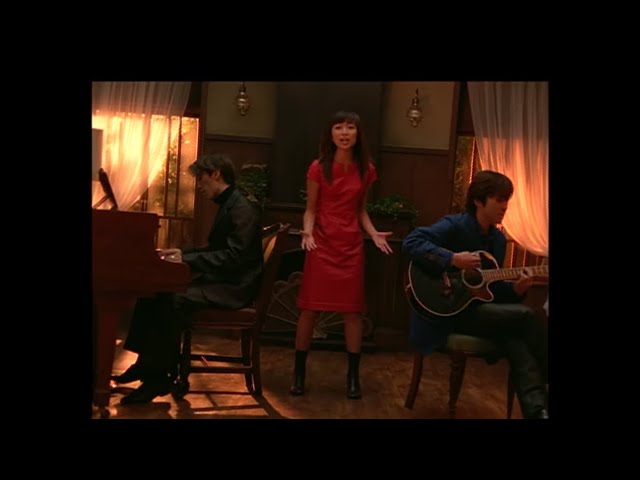
Every Little Thing’s eighth single, released on February 11, 1998.
The song features a vocal melody with a relatively broad, medium-tempo flow, so there are many long sustained notes in parts like the chorus.
That makes it an excellent practice piece for learning vibrato.
In particular, the big vibrato on the final lyric of the chorus—where the title is sung—offers a spot where it’s easy to connect notes smoothly while adding pitch modulation, making it great for beginners to practice with this song.
A good tip for singing it well is to keep a bright tone while allowing the pitch to waver relatively widely.

Recommended songs for those who find it easy to use vibrato or want to practice it (81–90)
TRUSTL’Arc〜en〜Ciel

With an unparalleled sense of musical sophistication, the visual kei rock band L’Arc~en~Ciel has garnered high acclaim not only in Japan but also in Europe, where musical standards are considered especially high.
They have many classic songs, but the one I particularly recommend as a practice piece for vibrato is “TRUST.” This tastefully crafted rock ballad features multiple long tones.
HYDE’s vibrato is textbook-level stable, so try practicing by imitating his approach.
EverythingMISIA

MISIA’s seventh single, released on October 25, 2000.
It’s a fine ballad where MISIA’s expressive vocals shine over an elegant backing track featuring symphonic string arrangements and a Rhodes electric piano.
Her vibrato seems characterized by starting long notes straight and gradually making the vibrato finer as the note continues.
Among female vocal ballads, this is an ideal piece for studying and mastering vibrato, so I highly recommend learning it and trying it out at karaoke, etc.
Island SongTHE BOOM

There are several versions of this song by THE BOOM, but I’m referring to the original version included on the album Shishunki, released on January 22, 1992.
It’s a very striking track featuring the sound of the Okinawan folk instrument, the sanshin, and a vocal melody that uses Okinawan scales.
THE BOOM’s vocalist, Kazufumi Miyazawa, also sings it in a somewhat folk-song style, and the way he sustains and shades those long tones might make this one of the best materials for practicing vibrato singing.
The contrast between the relatively straight-sung chorus and the other parts, which lean more heavily into a folk flavor, is also exquisite as a vocal expression.
When you sing it at karaoke, you might have fun trying a slightly exaggerated, pitch-wavering vibrato in the non-chorus sections!
Come, spring.Matsutoya Yumi

It’s Yumi Matsutoya’s 26th single, released on October 24, 1994.
It was produced as the theme song for an NHK morning drama series of the same title as the track.
This is just my personal take, but the vibrato you hear in Matsutoya’s singing feels less like a deliberate stylistic device and more like so-called natural vibrato stemming from her singing approach and vocal production.
This song is a great example of production and direction that perfectly capitalized on those traits and characteristics.
When you sing it at karaoke, I think the quickest way to make it sound good is not to overthink it—just imitate her delivery as closely as you can.