
Songs that make it easy to practice vibrato / Recommended songs for those who want to practice


Do you ever think, “If only I could master vibrato, my singing would sound so much better…”? Vibrato—the technique of gently oscillating the voice—is an essential expressive tool that adds depth and emotion to a song.
However, not every song is suitable for practice.
In fact, songs that make it easier to produce vibrato share certain traits, and the right song choice can significantly speed up your progress.
In this article, we’ll introduce a wide range of songs with plenty of long tones that make applying vibrato easier, as well as numbers that are ideal for practice in terms of vocal range.
Find the one song that adds a new layer of expression to your voice!
- Vibrato practice piece. Take the first step toward becoming a great singer!
- [Karaoke] Songs That Make It Easy to Score High | From Classics to the Newest Hits
- Songs that make you sound good at karaoke
- No worries even if you’re not confident in your singing! Simple, easy-to-sing songs for karaoke.
- [Enka/Kayōkyoku] Challenge! A collection of songs that make it easy to put in kobushi (melismatic embellishments)
- [For Men] These Songs Will Make You a Better Singer! Tracks That Are Effective for Karaoke Practice
- Practice Songs Helpful for Learning Mixed Voice (Middle Voice) [For Women]
- [Teens] Easy-to-Sing Karaoke Song Rankings [2026]
- Karaoke songs where even men with low voices can aim for high scores
- Songs to Help Women Sing Better: Practice Tracks for Improving at Karaoke
- [Karaoke] A compilation of Vocaloid songs that are easy to sing even for people with low voices
- A must-see for low-voiced women! Popular songs that are easy to sing at karaoke
- Karaoke songs that are easy to sing even if you’re not confident in your pitch (for women in their 50s)
Recommended Songs for Those Who Find It Easy to Use Vibrato or Want to Practice (41–50)
Tears Flowing EndlesslyNatsukawa Rimi

This was Rimi Natsukawa’s third single, released on March 23, 2001.
Before performing under the name “Rimi Natsukawa,” she reportedly debuted as an enka singer under the name “Misato Hoshi,” and I felt that this song—especially her use of vibrato—subtly reveals traces of that enka background.
It’s a track where you can enjoy pitch-wavering vibrato in many of the long notes.
The chorus in particular is a treasure trove of skillful vibrato, making it an ideal practice piece for those who want to master vibrato singing.
It’s practically a model example of vibrato in a song!

flameLiSA

LiSA’s 20th single, released on October 14, 2020.
It’s the theme song for the film Demon Slayer: Kimetsu no Yaiba – The Movie: Mugen Train.
Because it became a massive hit—often described as historic—most people have probably heard this track.
The tempo is relatively slow, and in the sections where the vocal melody sustains long notes, she sings with vibrato that traces a large pitch curve.
I think it’s an ideal song for practicing slow vibrato.
Listen closely to the original and give it a try in your practice.
Becoming a Thousand WindsAkiyama Masashi
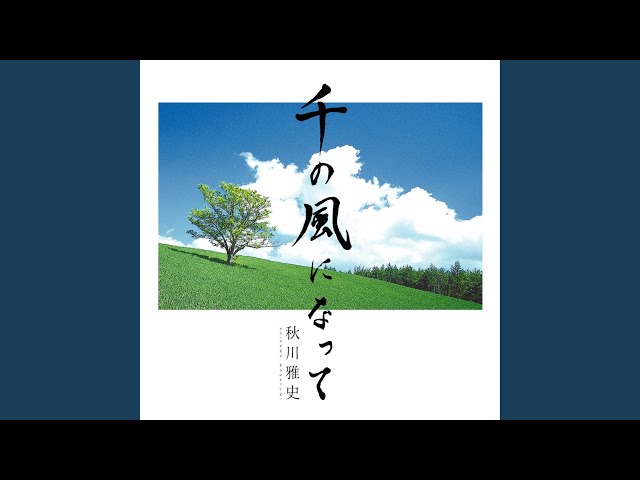
It was Masafumi Akikawa’s first single, released on May 24, 2006.
It’s a masterpiece where you can enjoy Akikawa’s resonant tenor voice.
Having rigorously studied classical vocal music, Akikawa delivers a performance with an impressively open throat and perfectly controlled vibrato—truly outstanding.
While it may be quite difficult for those without training in classical singing or formal voice lessons to replicate, this song is an ideal piece for practicing singing with a fully open throat and developing a well-controlled vibrato tailored to your expressive intent.
As mentioned, it’s a selection for advanced singers, but by all means, give it a try!
glass windowKing Gnu

A digital-only single by King Gnu, released in September 2023.
I believe this song has many aspects that will be highly informative for anyone practicing and studying vibrato technique.
Its structure features rich melodies and is centered around long sustained notes, making it ideal for practical vibrato training.
While the overall vocal difficulty is somewhat high, the sense of accomplishment you’ll feel once you master it is all the greater.
In addition, because it has a ballad-like feel and a relatively slow tempo, you can take your time and truly enjoy your vibrato.
Through this song, why not hone your vibrato skills and aim for a high score at karaoke? Mastering this one piece should significantly boost your musical expressiveness.
With patience and practice, cultivate a beautiful vibrato.
Bay City at DuskYagami Junko

Junko Yagami’s classic “Tasogare no BAY CITY.” In recent years, Japanese city pop has gained worldwide popularity, and this song is known as one of the genre’s defining tracks.
Its greatest appeal lies in its clear, soaring vocal lines.
Blending a sophisticated urban feel with Showa-era kayōkyoku, the piece features many long tones and numerous spots to add vibrato.
Beyond vibrato, it’s also excellent for simply improving your overall singing technique, so consider adding it to your repertoire.

lensIkuta Rira

This is the sixth digital single by Rira Ikuta, who is also active as ikura, the singer of the music duo YOASOBI, released in June 2022.
It’s a beautiful ballad that lets you fully enjoy Rira’s voice, rich with very pleasant high tones.
As expected, songs like this—built around relaxed, expansive phrases—are easier for the average person to produce vibrato on when singing at karaoke, for example.
The chorus makes this especially clear, but the rest of the song also offers a variety of vibrato techniques to enjoy.
Listen closely to the original and try to recreate it.
As long as I have youShimizu Shota ft. Oda Kazumasa

Shota Shimizu’s track featuring Kazumasa Oda, “Kimi Sae Ireba.” They grew closer through the Christmas music program “Christmas no Yakusoku” and decided to release a song together, and in this work Oda’s signature style bursts forth.
Surprisingly, however, the composer is actually Shota Shimizu.
The song is crafted in a J-pop style reminiscent of Off Course and Kazumasa Oda.
With many long tones and a relaxed rhythm, it’s perfect for practicing vibrato.