

Vivaldi’s masterpiece. Popular classical music.

Here are some recommended masterpieces and signature works by Antonio Vivaldi, the great Baroque composer and violinist.
During his lifetime, Vivaldi advanced the emerging concerto style and influenced musicians across Europe through his orchestration, violin technique, and programmatic music.
Although his musical reputation waned for a time after his peak, modern scholarship and performers have brought renewed appreciation to his work.
Even today, new pieces continue to be discovered, and his influence remains strong.
When you listen to Vivaldi, try to listen closely.
Your discovery might turn out to be a breakthrough of the century.
Enjoy listening.
- Antonio Vivaldi Popular Song Ranking [2026]
- [Violin] A curated selection of beloved classic masterpieces and popular pieces that continue to be cherished across eras
- [Quartet] Masterpieces and Popular Pieces for String Quartet
- [Orchestra] Introducing famous and popular pieces
- Timelessly beautiful classical masterpieces. Recommended classical music.
- Sibelius’s famous piece. Popular classical music.
- J.S. Bach | Introducing Famous and Representative Works
- Classical masterpieces. Recommended classical music.
- [Masterpiece Classics] A special showcase of gem-like masterpieces so beautiful they’ll move you to tears
- Popular classical piano pieces. A collection of masterful performances by Japanese pianists.
- [Baroque Music] A Curated Selection of Timeless Masterpieces and Famous Works
- Arcangelo Corelli’s Masterpieces and Popular Works: A Collection of Beautiful and Elegant Melodies
- [Claudio Monteverdi] Introducing Famous and Representative Works
Vivaldi’s masterpieces: Popular classical music (21–30)
Sinfonia in G major, RV 146Antonio Vivaldi

It’s a piece where the mandolin’s wistful timbre, the violin’s driving unison, and the cello’s understated low tones blend beautifully.
Though the performance runs a relatively short seven minutes, its melodies—like fresh light streaming through breaks in the clouds—are captivating.
A highly satisfying listen.
summerAntonio Vivaldi
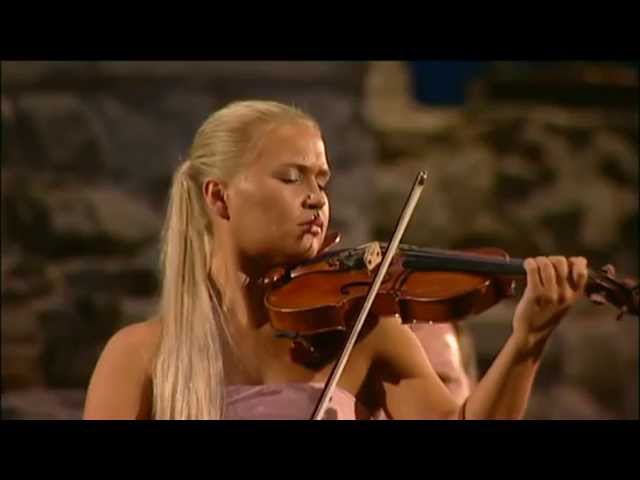
“Summer” from Vivaldi’s famous suite The Four Seasons is the second work in his collection of violin concertos The Contest Between Harmony and Invention, published in 1725.
It consists of three movements—Allegro non molto–Allegro (1st movement), Adagio (2nd movement), and Presto (3rd movement)—each depicting summer scenes.
In particular, the intense storm portrayal in the third movement is especially well known.
From “The Four Seasons” No. 3 “Autumn” First MovementAntonio Vivaldi

Antonio Vivaldi’s 1725 collection of violin concertos, The Contest Between Harmony and Invention, Op.
8, consists of twelve pieces, of which Nos.
1 through 4 are the famous Four Seasons.
This work is the first movement of Autumn from that set.
Its lively rhythms and rich ornamentation—hallmarks of Baroque music—are striking.
The joy of the harvest festival, the peasants’ cheerful dances, and the intoxication of wine are all expressed musically.
While it is excellent as a violin concerto, it is also enjoyable as a solo piano arrangement.
Known as a piece of “program music” corresponding to sonnets believed to have been written by Vivaldi himself, it vividly depicts autumnal scenes and is recommended for those who wish to savor the gentle turn of the seasons.
Violin Concertos “The Trial between Harmony and Invention,” Op. 8 (The Four Seasons), No. 4 “Winter”Antonio Vivaldi

Antonio Vivaldi, a composer who represents the Baroque era, wrote the collection of violin concertos Op.
8, The Contest Between Harmony and Invention.
Better known by the title The Four Seasons, the work is divided into four concertos depicting spring, summer, autumn, and winter.
In the fourth concerto, Winter, it portrays people shivering from the cold and the sense of spring’s approach after enduring a harsh winter.
Although originally an orchestral work, performances on the piano—with its sharp, direct tone—are also striking.
I recommend comparing it with the original.

Largo – Concerto No. 4 in F minor, RV 297 “Winter,” Movement IIAntonio Vivaldi

This is the second movement of “Winter,” the fourth concerto from Antonio Vivaldi’s violin concerto set The Four Seasons.
Each movement is accompanied by an Italian sonnet, and for the Largo it reads: “One spends quiet, contented days by the fireside, while outside the rain soaks all things.” It’s a recommended study piece for those who have begun the violin, have some understanding of scales and keys, and want to produce the characteristically brilliant yet mellow violin tone.
The tempo is slow and each part is not difficult, so it is often chosen as a practice piece for beginner string ensembles.
Although slow, flat-heavy keys can be somewhat challenging for string instruments.
If you want to improve with this piece, practice diligently so you can play with correct intonation without simplifying the key signature.
Sinfonia in B minor “At the Holy Sepulchre,” RV 169Antonio Vivaldi

A sinfonia refers to an instrumental ensemble without singing performed within operas during the Baroque period (from the early 17th century to the mid-18th century).
A sorrowful yet beautiful melody unfolds at a slow tempo, gently enveloping the listener’s heart.
It is a piece that evokes a spiritual quality reminiscent of church music.
Flute Sonata in C major, RV 48Antonio Vivaldi

A very simple piece performed only by flute and basso continuo.
Precisely because of its simple structure, it allows you to fully appreciate the flute’s plain, natural beauty.
It’s an ideal track for background music when you want to read quietly or focus on your work.