

Vivaldi’s masterpiece. Popular classical music.

Here are some recommended masterpieces and signature works by Antonio Vivaldi, the great Baroque composer and violinist.
During his lifetime, Vivaldi advanced the emerging concerto style and influenced musicians across Europe through his orchestration, violin technique, and programmatic music.
Although his musical reputation waned for a time after his peak, modern scholarship and performers have brought renewed appreciation to his work.
Even today, new pieces continue to be discovered, and his influence remains strong.
When you listen to Vivaldi, try to listen closely.
Your discovery might turn out to be a breakthrough of the century.
Enjoy listening.
- Antonio Vivaldi Popular Song Ranking [2026]
- [Violin] A curated selection of beloved classic masterpieces and popular pieces that continue to be cherished across eras
- [Quartet] Masterpieces and Popular Pieces for String Quartet
- [Orchestra] Introducing famous and popular pieces
- Timelessly beautiful classical masterpieces. Recommended classical music.
- Sibelius’s famous piece. Popular classical music.
- J.S. Bach | Introducing Famous and Representative Works
- Classical masterpieces. Recommended classical music.
- [Masterpiece Classics] A special showcase of gem-like masterpieces so beautiful they’ll move you to tears
- Popular classical piano pieces. A collection of masterful performances by Japanese pianists.
- [Baroque Music] A Curated Selection of Timeless Masterpieces and Famous Works
- Arcangelo Corelli’s Masterpieces and Popular Works: A Collection of Beautiful and Elegant Melodies
- [Claudio Monteverdi] Introducing Famous and Representative Works
Vivaldi’s masterpieces. Popular classical music (41–50)
Violin Sonata No. 2 in A major, RV 31Antonio Vivaldi

Vivaldi is famous for composing The Four Seasons, but he also wrote many violin sonatas.
Among them, this piece may be the most accessible, as it begins with a vigorous opening and is performed based on dance forms that were popular at the time.
Concerto for Violin in minor and minor, Major RV 269 “La Primavera”: II. LargoAntonio Vivaldi
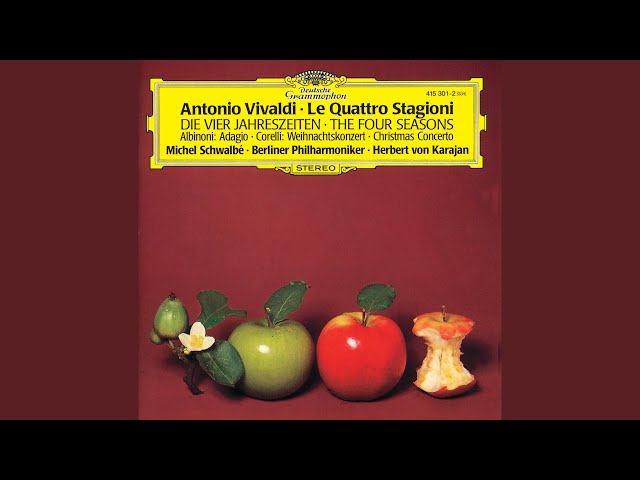
The second movement, Largo, from Spring in Vivaldi’s The Four Seasons.
You’ve probably heard of The Four Seasons; it’s the collective name for violin concertos No.
1 through No.
4.
In this second movement, it depicts flowers blooming across a meadow, the rustling sound of leaves on branches reaching toward the sky, and the barking of hunting dogs.
Over the quiet lines of the strings, the solo violin plays a tranquil, pastoral melody.

Violin Concerto “The Four Seasons”Antonio Vivaldi

Antonio Vivaldi’s The Four Seasons is one of the most widely known works of Baroque music, invariably featured in music classes.
More than 300 years after its publication in 1725, this classical masterpiece continues to captivate countless listeners.
The four concertos, which depict spring, summer, autumn, and winter through beautiful melodies, allow us to feel nature’s changes as the seasons pass.
Because the scenes are easy to picture, it’s a work that even those not very familiar with classical music can enjoy comfortably without losing interest.
Violin Concerto in A minorAntonio Vivaldi

Antonio Vivaldi, a Baroque master born in 17th-century Venice, captivated many with his passionate and dramatic music.
This work, No.
6 from L’estro armonico, Op.
3, published in 1711, is a three-movement concerto for solo violin, string ensemble, and basso continuo.
Structured in a fast–slow–fast tempo scheme, it features a lively melody in the first movement and a lyrical line in the second that resonates deeply.
The virtuosic passages of the solo violin and its exquisite interplay with the ensemble showcase Vivaldi’s innovative compositional techniques.
Highly recommended for those who want to experience Vivaldi’s music or enjoy the beautiful sounds of the Baroque.
Violin Concerto No. 4 “Winter,” Second MovementAntonio Vivaldi

On a cold winter morning, with the fireplace softly crackling, I can picture myself sitting in a rocking chair, sipping warm cocoa, reading a book with a cat on my lap.
Listening to this piece while doing the same would surely offer the ultimate soothing comfort.
Violin Concertos, Op. 8 Nos. 1–4 “The Four Seasons”Antonio Vivaldi

When people think of Antonio Vivaldi, The Four Seasons (Violin Concertos Op.
8, Nos.
1–4) is the famous work that comes to mind.
Among them, Spring is especially popular.
It’s a beloved violin concerto in which bright, festive melodies are interwoven with passages that have a touch of shadow.
In Japan, because we have four seasons, it’s often thought of as four pieces representing spring, summer, autumn, and winter.
Vivaldi himself did not give it that title, but the musical character fits the Japanese seasons perfectly.
Summer is a very fast, intense work that vividly evokes sudden showers and storms unfolding before your eyes.
It’s also a favorite among violinists and is frequently performed in concerts.

WinterAntonio Vivaldi

It is one of Vivaldi’s Four Seasons.
There are calm, leisurely melodies that evoke the crisp chill of winter, as well as intense passages that depict wintry blizzards.
In the end, a melody appears that suggests the arrival of spring.
Perhaps spring hints at new encounters—and even the possibility of love.