

[Masterpieces of the Waltz] A comprehensive introduction to classic works written for the piano!

The waltz: a steady dance in triple meter.
Among classical works, there are countless waltzes written for solo piano, solo violin, and orchestra.
In this article, we’re highlighting waltzes composed specifically for solo piano!
Focusing on pieces written from the 19th century onward—the so-called “century of the waltz”—we’ll introduce a wide range, from standard repertoire to hidden gems.
Even within the framework of 3/4 time, the character and atmosphere vary widely.
Please enjoy listening as you savor the unique charm of each waltz.
- [Piano Pieces] Easy for Children to Play! A Roundup of Simple Classical Works
- [Classical] Famous Piano Works | Gem-like Masterpieces You’ll Want to Play at Least Once in Your Lifetime
- [Classical Piano Masterpieces] A carefully selected collection of moving pieces that will bring you to tears
- Piano × Dark Pieces: Classic Masterworks to Sink Deep into Sorrow
- [Intermediate Level] A curated selection of piano masterpieces featuring strikingly brilliant melodies!
- [Classical] A collection of piano pieces with cool arpeggios
- [For Piano Recitals] Simple yet Cool Classical Pieces
- Stravinsky’s Piano Pieces: Masterpieces by a Composer Who Defined the 20th Century
- [For Adults] Recommended for Piano Recitals! A Curated Selection of Impressively Sounding Masterpieces
- [Piano Recital] Recommended for Middle Schoolers! A Comprehensive Introduction to Classical Masterpieces
- Baroque Music on the Piano: A Curated Selection of Masterpieces Perfect for Recitals and Concerts
- [Contemporary Pieces] A curated selection of classical works that captivate with the piano’s mysterious resonance!
- Romantic Piano Pieces: A Curated Selection of Popular and Classic Works for Recitals and Concerts
Masterpieces of the Waltz: A Complete Introduction to Classical Works Written for Piano! (11–20)
The Skaters’ WaltzÉmile Waldteufel

This is a representative work by the 19th-century French composer Émile Waldteufel, who wrote many waltzes and polkas and is often called the “Waltz King of France.” Commonly known as The Skaters’ Waltz, this piece was inspired by the skating rink in the Bois de Boulogne, a forest park in Paris.
Its elegant melodies glide smoothly like skaters on ice, sleigh bells sound as if snow were gently falling, and the bright, rhythmic character suggests people happily skating while chatting.
It’s a piece that makes you want to go skating just by listening to it.

Grand WaltzFrederic Chopin

An impressive waltz that blends splendid brilliance with elegance.
It begins with a fanfare-like melody, setting a bright and refreshing mood.
The work beautifully fuses the virtuosic elements and lyricism characteristic of Frédéric Chopin, brimming with charm that captivates listeners.
Distinguished by its dazzling melodies and rhythmic performance, it can be considered a masterpiece that fully draws out the piano’s expressive power.
Published in 1833, this piece reflects influences from the Viennese music scene while shining with Chopin’s unique individuality.
It is highly recommended for those who wish to take on the challenge of piano performance or experience the allure of classical music.
Waltz of the FlowersPyotr Tchaikovsky

The pleasant melody woven by the graceful waltz rhythm evokes a sense of unhurried time.
Its triple meter and the delicate harmonies of strings and woodwinds create an exquisite balance that boosts concentration without causing stress.
Premiered in Saint Petersburg in December 1892, the piece has been featured widely in various media since its use in Disney’s Fantasia and is well loved as a calming work.
It’s recommended for times when you want to focus in a quiet setting—studying, reading, or desk work.
Why not spend an intellectually enriching, relaxing time with this piece that showcases Tchaikovsky’s masterful compositional technique?
Noble and Sentimental Waltzes: Waltz No. 2, Assez lent (fairly slow), G minorMaurice Ravel

A work with an introspective atmosphere that feels like peering into the depths of the heart, it is included in Maurice Ravel’s suite Valses nobles et sentimentales.
There’s an anecdote that it was performed at a private concert in 1911 with the composer’s identity kept secret.
Within the gently flowing time, noble yet sentimental melodies emerge, as if quietly staying close to the listener’s heart.
The traditional waltz rhythm hides some unexpectedly piquant sonorities that seem to express unspoken, complex emotions.
It’s a perfect piece for those who want to learn about subtle changes in tone color and long-breathed phrasing.
The key is to play as if breathing, imbuing each note with intention so as not to break the work’s mysterious atmosphere.
Waltz No. 6 in D-flat major “Minute Waltz”Frederic Chopin

Written for solo piano, this piece is characterized by its lively and brilliant melody.
The rapid right-hand scales combine exquisitely with the left hand’s steady waltz rhythm, as if depicting a playful puppy scampering about.
Composed between 1846 and 1848, it was dedicated to Countess Delfina Potocka.
Although the performance time is relatively short—about one and a half to two minutes—the piece demands advanced technique and expressive nuance.
It’s recommended not only for classical music enthusiasts but also for those learning piano performance.
It has also been used as background music in films and anime, making it beloved by a wide audience.
Noble and Sentimental Waltzes: No. 1, Modéré (Moderato), G majorMaurice Ravel
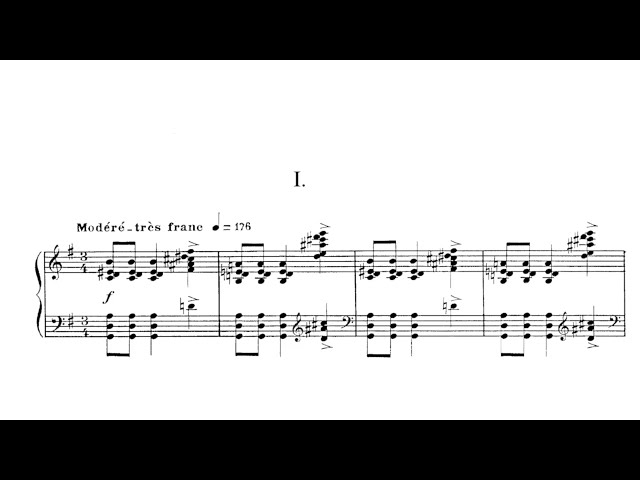
The suite Valses nobles et sentimentales fuses traditional waltz forms with Maurice Ravel’s characteristically modern sonorities.
Its opening piece is graceful yet tinged with melancholy, evoking a curious, elusive mood.
At its premiere in May 1911, the composer’s name was withheld, and the work astonished audiences with its originality.
One can almost picture a glittering ballroom where, amid the dancing, a secret, fleeting thought crosses the heart.
The work is also known in its ballet incarnation as Adélaïde, ou le langage des fleurs.
It’s perfect for those who want to experience the intriguing rhythms and harmonies that overturn conventional images of the waltz.
Aim for a rounded, gentle tone to convey the wistfulness that lies beneath the brilliance.
Masterpieces of the Waltz: A Comprehensive Introduction to Classical Works Written for Piano (21–30)
Noble and Sentimental Waltzes, No. 4, Assez animé (fairly lively)Maurice Ravel
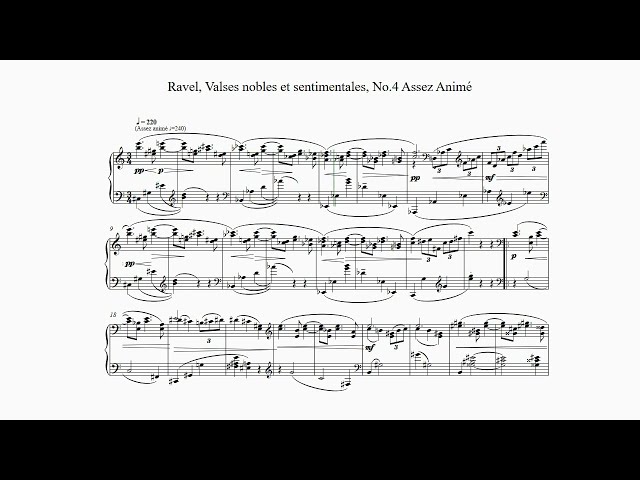
Maurice Ravel’s suite Valses nobles et sentimentales, written in homage to Schubert, contains many captivating pieces that blend traditional waltz idioms with a modern sensibility, and this particular number stands out for its verve and wit.
At the premiere in May 1911, the composer’s name was withheld, and there’s a charming anecdote that the audience tried to guess the author.
The orchestral version was staged as the ballet Adélaïde, ou le langage des fleurs, depicting the romantic intrigues of 1820s Paris.
If you imagine the give-and-take of love conveyed through the language of flowers, you’ll sense that “this sonority is more than merely elegant.” The key is to play the dense chords with lightness through the right hand’s virtuosic motion.
It’s a work that anyone seeking expression beyond classical boundaries should experience.