

Recommended pieces for a wind band contest

A competition that wind band musicians across the country aspire to enter.
You spend an entire year practicing hard for that contest, don’t you?
At that competition, depending on the division, bands typically perform two pieces: a set piece and a free-choice piece.
While the set piece is chosen from several works announced each year, how do you decide on your free-choice piece?
Some bands compete with a piece they’ve performed for years and feel comfortable with, while others take on the challenge of a new work—but either way, it’s a tough decision.
In this article, we carefully select and introduce recommended pieces for your free-choice selection in competitions.
We’ll cover timeless classics and recent popular works, so please use this as a reference!
- Perfect for free selections and concert programs! Introducing famous and classic favorites in wind ensemble music.
- [History] A roundup of popular set pieces from the All-Japan Band Competition
- A classic brass band medley
- [Brass/Wind Band] Recommended for Beginners! A Collection of Classics and Popular Pieces Perfect for Practice
- [Wind Band] Guaranteed to hype up the school festival! Recommended pieces the brass band will want to play
- [March] A curated selection of classic marches and dazzling crowd-pleasers for concerts!
- A Collection of Pop Hits for Wind Band: From Classics to Popular Medleys
- [March] Carefully selected popular songs recommended for entrance and exit at sports days and athletic festivals!
- [Wind Ensemble] Wind band pieces that men like. Masterpieces of wind band music recommended for men.
- A Must-See for Middle and High Schoolers! Recommended Free-Choice Songs for Choir Competitions Catalog
- A collection of video game music I want to perform in a wind ensemble
- Practice pieces for beginner flutists. Recommended practice pieces.
- To you who are thinking about quitting the brass band club: You shouldn’t quit for reasons like these.
Recommended Pieces for Wind Ensemble Competitions (21–30)
Overture ‘Festival’Frank Erickson

With its resounding, fanfare-like brilliance that splendidly colors a concert, the overture “Festive Overture” is perfectly suited for an opening number.
The composer, Frank Erickson, was an American composer known for numerous works for wind band, and this “Festive Overture” is among his signature pieces.
It features a light, sprightly introduction, a middle section that is relaxed and lyrical at a moderate tempo, and then returns—after the middle section—to a radiant melody and brisk tempo.
The energetic, thrilling ending leaves a strong impression.
Because it can be performed by smaller ensembles, it is a popular choice frequently selected for competitions and concerts alike.

Fantasy on Osaka Folk SongsŌguri Yutaka
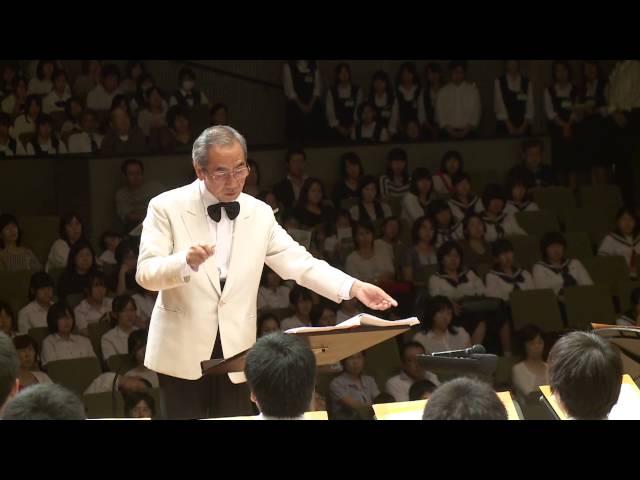
This is a popular work by Hiroshi Oguri, one of Japan’s leading composers, often called the “Bartók of the East.” It was composed in 1955 for the conductor Takashi Asahina and premiered in 1956 by the Kansai Symphony Orchestra under his direction.
The piece fuses and elevates Osaka’s folk traditions with Western music—its introduction evokes the atmosphere of Shinto kagura; it incorporates the rhythms of the Danjiri festival music from the Tenjin Festival, the miyako-bushi scale, and the lion dance from the summer festival at Ikukunitama Shrine.
With its diverse musical character, the work portrays many different faces of Osaka.

Liberty Leading the PeopleTarumiya Masanori
A dramatic wind ensemble piece composed by Masanori Taruya, inspired by a famous French Revolutionary painting.
The music vividly evokes the people seeking liberation from oppression and the grand narrative of revolution.
Throughout the work, a theme titled “Liberty” appears repeatedly as a symbol of the Goddess of Liberty, stirring the listener’s heart.
Beloved since the early 2000s, it can also be heard in a moving performance on the album Masanori Taruya Works II: The Resurrection of Lazarus.
This piece is also popular as a free-choice work for competitions, and it may well have swept audiences into a whirlwind of emotion, carried by the passionate performances of student musicians.
It’s a piece that will powerfully push you forward as you take on any challenge.
GenrokuKushida Chikayuki no Tasuku

Set in the Genroku era, when Edo’s culture blossomed in vivid color, this piece evokes the resilience of the people like an ukiyo-e painting.
The work is broadly divided into three sections: Part I uses a Latin-fusion-like rhythm to depict the bustle of passersby and the lively streets of Edo.
Part II shifts to a quiet, unhurried atmosphere, gently speaking to human kindness and emotion.
In Part III, the ensemble of taiko drums portrays the fervor of youth swept up in festival fever, building to an intense, exhilarating climax.
The Wind of ProvenceTasaka Naoki

A refreshing and dazzling wind band piece that brilliantly paints the landscapes of Spain and Provence in music.
Created by Naoki Tasaka, this work masterfully blends the passionate rhythms of Spain with the gentle melodies of Provence.
The world evoked by the bold brass fanfares and the graceful woodwind lines is sure to captivate listeners.
Selected as the required piece IV for the 2015 All-Japan Band Competition and performed by many ensembles, this work is an excellent choice not only for competitions but also for concert programs.
Cerulean WindGōma Mikio

A piece composed by Mikio Goma, the composer of the 2018 contest’s set piece.
It’s a work whose beauty and grandeur shine as a free selection in competitions as well.
With a clearly defined ebb and flow, the development is striking—especially the woodwind-only section right after the start of the second half, whose beauty is sublime.
From there it unfolds into a fluid, graceful melody, interweaving of the instruments, and a triumphant conclusion—truly a must-hear.
Since cuts, solo instrument changes, and ensemble re-scoring can be made freely, it should be an easy piece to perform for bands of all kinds.

March “Blue Sky”Takagi Toko

This is a concert band piece that lifts your spirits like a clear blue sky.
Composed by Nobuko Takagi, it is marked by a powerful fanfare, bright wind melodies, and vibrant, driving rhythms.
After a graceful middle section that evokes the expanse of the sky and a pleasant breeze, it unfolds into a dignified finale.
Originally selected as a set piece for the 2007 All-Japan Band Competition, a new arrangement appeared in 2024, expanding the work’s reach even further.