

A roundup of instruments played in wind ensemble percussion

The percussion section in a wind ensemble plays a wide variety of instruments, right?
In some pieces they play the snare drum, in others the timpani…
They also often play small percussion instruments like the tambourine and triangle.
In this article, we’ll introduce all the many instruments the percussion section plays in one go!
We’ve gathered everything from standout, showy instruments to those you might not be very familiar with, so enjoy discovering each one’s sound and appeal.
Summary of instruments played in wind band percussion (1–10)
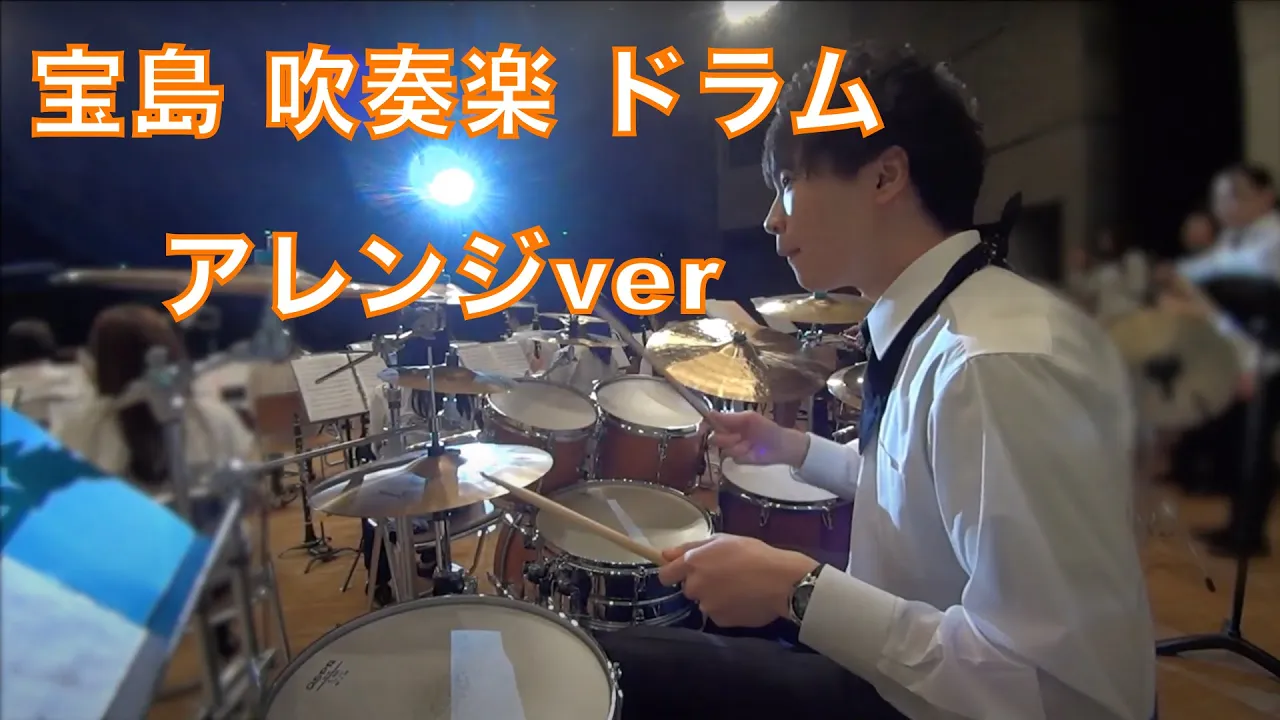
drum set

The drum set is an instrument that demands both advanced technique and physical stamina.
Commonly just called “drums,” it’s probably the first thing many people think of when they hear “percussion.” Although it may seem like an instrument you simply hit, the atmosphere changes dramatically depending on the sticks you use and the specific components of the set.
In wind bands, it depends on the piece, but the impression is that performances often emphasize power.
Because it’s an instrument where the player’s skill is clearly revealed, I encourage you to compare performances by renowned drummers.

timpani

The timpani, a percussion instrument that adds brilliance to a piece with its overwhelming presence.
Wind ensembles are made up of many percussion instruments, but among them the timpani’s impact is especially impressive, making it a particularly prominent instrument in the percussion section.
Because of that, a strong sense of rhythm and solid technique are required—but above all, the most difficult aspect is balancing the right and left hands.
Timpani are not especially hard when it comes to producing sound.
However, striking with a finely tuned balance between both hands takes training, and because you use your whole body, it also demands stamina.
In that sense, it’s an instrument with great depth, one that calls for both delicacy and boldness.
vibraphone

The vibraphone is an instrument known for its striking, sharp tone with a solid core.
In Japan, it’s introduced in elementary and junior high schools as a type of metallophone.
In concert band settings, the vibraphone often serves to add clear contrast to the music and excels at producing a sharp timbre that is difficult to achieve on the marimba.
Like the marimba, it is extremely challenging: while making a sound is easy, aiming for a powerful tone or playing with four mallets dramatically increases the difficulty.
Performances by skilled vibraphonists have astonishing expressive range—be sure to check them out.
agogo bell

The agogô bell is an instrument with a distinctive timbre that leaves a strong impression.
The name alone might be hard to picture, but once you hear its melody, most people will recognize it.
The agogô bell’s appeal lies above all in its sound pressure and tone color.
Because it’s made of metal, it produces a very powerful sound that stands out even within a wind ensemble packed with percussion.
Its tone is also extremely unique, which makes it an instrument where mistakes aren’t easily forgiven.
It’s recommended for those who are confident in their sense of rhythm.
tambourine

The tambourine is an instrument familiar to many people.
Haven’t we all played it at least once, say at karaoke? Because it feels so accessible, it may seem like a simple instrument, but in fact it has great depth; a skilled player can produce tones entirely different from the tambourine sound we think we know.
In wind ensembles, the tambourine tends to be overshadowed by other instruments, but like the snare drum and bass drum, it’s an important instrument that underpins the basic rhythm.
If you want to broaden your tambourine playing, check out performances by Ryusuke Oishi, a renowned “serious” tambourine player.
snare drum

Among percussion instruments in wind ensembles, the snare drum stands out the most.
Of course, instruments like cymbals and timpani are also prominent, but compared to the snare drum, they don’t appear as frequently.
For that reason, the snare drum is so important that it could be called the heart of a wind ensemble, underpinning the fundamental rhythm of every piece.
It’s a simple yet highly challenging instrument, and it also offers the advantage of being something you can learn from by studying drummers in rock and jazz bands.
marimba

The marimba is a percussion instrument that carries the melody.
It’s a familiar instrument in Japan, but surprisingly few people have actually played it.
That’s partly because it’s often mistaken for a xylophone.
In reality, the marimba is much larger than a xylophone and tends to have a softer tone.
To produce a powerful sound, you need to strike it firmly, making it an instrument that demands very advanced playing technique.
Performing with two mallets in each hand is especially challenging, but if you master it, you can create plenty of impact even in a solo performance.