

A comprehensive list of instruments that shine in wind bands, introduced by category

Wind ensembles, which are established at many schools across the country, are active not only in competitions and concerts but also at baseball games and cultural festivals.
Some new students may be considering joining the wind ensemble, while others may have already decided to join and started thinking about which instrument they want to play.\nSo, what kinds of instruments play an active role in wind ensembles?
In this article, we’ll introduce the instruments used in wind ensembles by dividing them into four groups: woodwinds, brass, low brass/bass instruments, and percussion.
Use this as a reference when choosing the instrument you’d like to play.
- List of instruments played in an orchestra: introduced by category.
- [For Instrument Beginners] Recommended Instruments for the School Concert Band: Flute, Trombone, and Trumpet Edition
- To you who are thinking about quitting the brass band club: You shouldn’t quit for reasons like these.
- [March] A curated selection of classic marches and dazzling crowd-pleasers for concerts!
- Songs with cool trumpet. Introducing famous pieces from wind ensemble and jazz.
- Perfect for free selections and concert programs! Introducing famous and classic favorites in wind ensemble music.
- A classic brass band medley
- [History] A roundup of popular set pieces from the All-Japan Band Competition
- Wind Ensemble: Brass Band Pieces Popular with Girls. Masterpieces of Wind Music Recommended for Women.
- The Profound Allure of the Saxophone: Iconic Songs Featuring Saxophone [2026]
- [Wind Band] Guaranteed to hype up the school festival! Recommended pieces the brass band will want to play
- [Wind Ensemble] Wind band pieces that men like. Masterpieces of wind band music recommended for men.
- [Brass/Wind Band] Recommended for Beginners! A Collection of Classics and Popular Pieces Perfect for Practice
Percussion (1–10)
xylophone
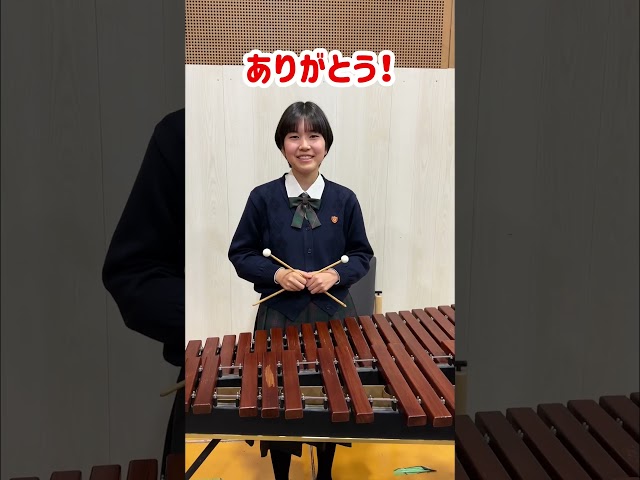
The xylophone is one of the pitched percussion instruments; it’s a member of the wooden percussion family and serves more as a melody instrument than a rhythm instrument.
Its keyboard layout is exactly the same as a piano’s, but because it’s played by striking the bars with mallets, it’s classified as a percussion instrument.
Its dry, high-pitched sound stands out even among wind band instruments, so it isn’t always required, but when used as an accent within a piece, it leaves a strong impression.
If you think of the melody in Khachaturian’s Sabre Dance, you’ll probably go, “Ah, I see.”

timpani

Among drum-like percussion instruments, the timpani are relatively pitch-specific and are played by changing the pitch with a pedal, among other mechanisms.
The shells are most commonly made of copper or brass, and there are four or five different drum sizes depending on the pitch range.
The sight of a performer surrounded by many timpani is striking, giving the instrument a star-like image within the percussion family.
This isn’t always the case in wind ensembles, but in orchestras, the timpani are not doubled with other percussion; they are handled by a dedicated timpanist.
chime

When you think of chimes, you probably recall the opening tune and the evaluation bell sounds from NHK’s ‘Nodojiman.’ The instrument used there is called tubular bells, and they’re quite expensive.
Despite that, they aren’t used consistently, so very few people likely own them as a hobby.
Percussionists in wind bands have to handle a wide range of instruments, both pitched and unpitched, so it seems they need a lot of skills and knowledge.
suspended cymbal

In orchestras, the pair of cymbals with straps that are played together are called crash (pair) cymbals, while the cymbals mounted on a stand and played individually, rather than held by hand, are called suspended cymbals.
They often have long sustain and a rich array of overtones.
Although cymbals have a long history, many of the brands still widely used today trace their origins to cymbalsmiths from Istanbul, Turkey.
Handcrafted cymbals are accordingly quite expensive.
bass drum

When you hear “bass drum,” many people might picture the one that’s part of a drum set, but the bass drum here refers to the standalone, so-called taiko-style large drum, which produces a low pitch that’s hard to perceive melodically.
It may seem like a modest instrument, but it’s a behind-the-scenes MVP: supporting the attack of low-pitched instruments, lifting the music from the bottom, and adding depth.
You may not notice it front and center, but without it, things feel bland.
If you think that kind of understated role is cool, this instrument is highly recommended.
In conclusion
We introduced the main instruments that play active roles in wind ensembles, grouped by category.
By watching videos of each instrument being performed, I hope you were able to sense the unique appeal of each one.
I would be happy if this serves as a reference for new students choosing their instruments as they join the wind ensemble club.