

Summary of ethnic musical instruments originating in Africa

How much do you know about African musical instruments?
Starting with popular folk instruments like the asalat (asalato) and the kalimba, even the djembe—well-loved as a hand-played percussion instrument—originated in Africa.
But Africa is home to many, many more traditional instruments.
In this article, we’ll introduce a wide range of African folk instruments all at once—from relatively well-known ones like the ones mentioned above to those rarely seen in Japan.
If you enjoy music with an exotic vibe, or if you’d like to try playing folk instruments yourself, be sure to take a look.
Summary of ethnographic musical instruments originating in Africa (1–10)
Kural

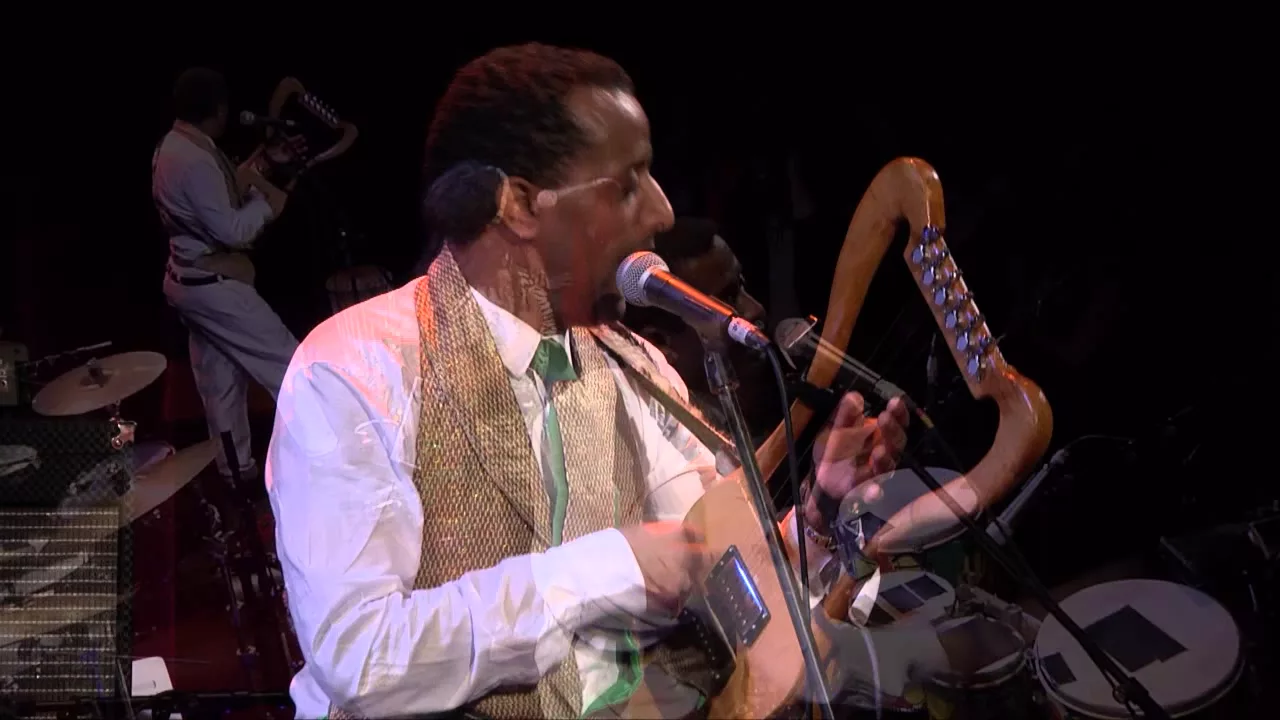
The krar is a small harp-shaped instrument played in Ethiopia and Eritrea in East Africa.
It has six or five strings, and its resonating body is hemispherical.
A distinctive feature is its two upright posts, and the strings are tuned to a pentatonic scale.
It is played tucked under the arm, similar to a guitar.
Traditionally, the krar was often decorated with cloth and beads, but today some instruments use metal geared tuning pegs.
There are also versions that amplify the sound with an amplifier, like an electric guitar.

Kalimba

The kalimba, also known as a hand-cranked music box or thumb piano, is an instrument played by plucking metal or bamboo tines arranged on a sound box with the thumbnails.
It is a traditional instrument of the Shona people of Zimbabwe in Africa.
Among the Shona, it has been passed down through generations with a sacred role, played during festivals and rituals to communicate with ancestral spirits.
It is also said to be the origin of the music box.
Since 2020, its appearance in the popular game “Animal Crossing: New Horizons” on Nintendo Switch has greatly boosted its recognition.
The kalimba is also popular in today’s online world, with prominent performers such as Misa—who has a successful YouTube channel with over 100,000 subscribers—bringing it into the spotlight.
Kakaki

Kakaki is a brass instrument made of brass used by the Hausa people, who live mainly in Central Africa.
It is used as a ceremonial instrument and is blown as a fanfare on occasions such as the appearance of royalty.
Its most notable feature is its great length, measuring 3 to 4 meters.
Unlike common brass instruments like the trumpet, it has no pistons or valves; it is a natural harmonic instrument in which the pitch is changed by adjusting the tension of the lips or reed.
Despite its length, the player holds the instrument while performing without resting its end on the ground.
Asalato

The asalato is a handheld ethnic percussion instrument that originated in West Africa.
It consists of two gourds about 5 centimeters in diameter, connected by a cord roughly 20–25 centimeters long.
Inside the gourds are plant seeds or beads; when you hold and shake it, you play by combining a maraca-like rattling sound with the clicking of the two gourds striking each other.
Hold one gourd by threading the cord between your index and middle fingers, keep your palm vertical, and swing your hand back and forth.
At the world championship for asalato technique, the Asalato Free Style Battle, Japanese players such as Panman and Watari have taken the title, making it a popular instrument in Japan as well.
Darbuka

The darbuka is an instrument that spread along the Silk Road, primarily throughout the Middle East and Europe.
It is a goblet-shaped drum that is held under one arm and played by hand.
The basic playing posture is to sit on a chair or the floor with the drum resting on the legs, but there are also styles where the body is gripped between both legs, or methods of standing performance using a strap over the shoulder.
In performance, both hands strike the drumhead to produce multiple distinct tones.
Among percussion instruments, it has a relatively high pitch with a characteristically dry timbre.
While it is mainly used in the folk music of Arab countries, it is also played in many other nations, with names and designs varying from place to place.
djembe
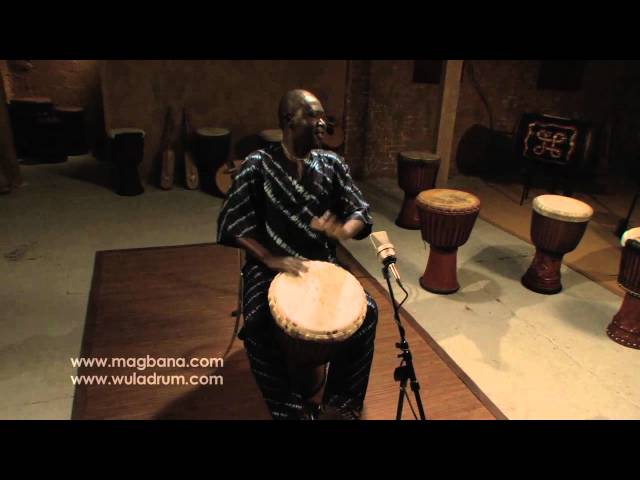
The djembe is a traditional percussion instrument played in West African countries such as Guinea, Mali, Senegal, Côte d’Ivoire, and Ghana.
It is a single-headed drum with a deep body, and the drumhead is made of animal skin.
Originating over 500 years ago, it was originally used in rituals such as harvest ceremonies and as a means of communication between distant villages.
Depending on the playing technique, its tones can be divided into three timbres—bass, mid, and high—and combining these produces a wide variety of beats.
Notable artists who play the djembe include Mamady Keïta.
Ngoni

The ngoni is a traditional guitar-shaped stringed instrument from the Walo region of Mali.
Its body is carved from wood, calabash, or gourd, and covered with animal skin such as dried goat hide.
It is smaller than a guitar, about the size of a ukulele.
It has fewer strings, and its tone is characterized by a light, rustic sound similar to a ukulele.
It is said to be the ancestor of the banjo, and like the kora, it is famously played by griots—hereditary professional musicians of West Africa.