


Masterpieces of contemporary (art) music. Recommended popular pieces.

When people hear the term “contemporary music,” I suspect the vast majority don’t even know such a genre exists.
Even if they know a little about it, many probably feel it has a high barrier to entry and seems difficult to grasp.
The influence of contemporary music is deeply rooted across many fields—not only in classical music, but also in minimal music, avant-pop, free jazz, and noise avant-garde.
With celebrated works of contemporary music as the axis, I’ve selected tracks spanning a wide range of genres.
Masterpieces of contemporary music (art music). Recommended popular pieces (1–10)
Poème ElectroniqueEdgard Varèse

Edgard Varèse was a composer born in France who later became an American citizen.
If you search the internet for photos of Varèse, you’ll likely find a stern, demanding look that feels quintessentially “artist.” He was by no means a prolific composer, but his avant-garde style—such as extensive use of percussion and the incorporation of electronic instruments—has influenced many artists.
The fact that globally renowned composers like André Jolivet and Chou Wen-chung were his students also attests to his impact.
The piece introduced here is titled Poème électronique in Japanese, a work composed for performance at the Philips Pavilion during the 1958 Brussels World’s Fair.
It is entirely different from music based on conventional scales; to some listeners it may sound like nothing more than a collage of noise.
Yet, as mentioned, its radical nature exerted a profound influence on subsequent composers.
Personally, I think it’s best appreciated, as the title suggests, as a “poem created with electronics.”

The Rite of SpringIgor Stravinsky

One of the most important works often cited when discussing modern music—from the early 20th century up to around the end of World War II—and postwar contemporary music is The Rite of Spring.
Composed by Igor Stravinsky, one of the 20th century’s leading composers from Russia, it is a ballet score whose English title is The Rite of Spring.
Its originality and its approach that defied the conventions of the time caused a tremendous shock; the premiere even sparked such an uproar that people were injured.
The way it deploys striking dissonances and unfolds rhythms so complex that their resolutions are impossible to predict makes it feel as though you are witnessing the primal energy of an ancient religious rite.
Simply hearing this work performed by an orchestra can be considered a rare musical experience.
Incidentally, in addition to The Rite of Spring, Stravinsky also composed two other historically significant ballet scores: The Firebird and Petrushka.
If you’re interested, be sure to check those out as well.
4 minutes 33 secondsJohn Cage
Even if you’re unfamiliar with the genre of contemporary music itself, some of you may know 4′33″, a piece composed of “unintentional sounds” that arise within silence.
With the spread of the internet, many people have likely discovered this work through video sites and the like.
Composed in 1952 by the American musician John Cage, 4′33″ is one of Cage’s most famous works, and it remains so controversial that debates about it continue even past the 2020s—a provocative piece that shocked and influenced artists around the world.
Only the duration of the performance is specified; the performer does not “play” in the conventional sense, and incidental sounds—such as those made by the audience—become the work itself.
This method naturally sparked both praise and criticism.
The ideas and assertions Cage embedded in this work cannot be fully conveyed in a short passage, but let it be emphasized that it is by no means a mere gimmick.
How did a music-loving youth trained in classical music come to create such experimental works? If you’re interested, please look into the life of John Cage himself.
The HoursPhilip Glass

Philip Glass is one of the leading figures in the field known as so-called minimal music and a master of contemporary composition.
Born in Baltimore, Maryland, Glass studied at the Juilliard School, one of the most prestigious music conservatories, and, while grounded in classical training, has made his mark across a wide range of fields—from avant-garde art to film scores to pop music—earning his place in music history as a singularly gifted artist.
From among his many film scores, today I’d like to introduce the title track from The Hours, released in 2002.
Within its weighty strings, a beautiful piano phrase repeats in a minimal yet intricate way, evoking the flow of time much like the film itself, which depicts different timelines.
It’s a piece you’ll find yourself wanting to listen to again and again.
Contemporary and minimal music can often seem challenging, but starting with a beautiful piano piece like this is a wonderful way to approach the work of contemporary composers.
November StepsTakemitsu Tōru

As a representative figure among contemporary Japanese composers, Toru Takemitsu enjoys worldwide renown.
He was such a towering composer that he was called “Takemitsu of the world,” transcending the bounds of contemporary music, with leading performers everywhere eager to include his works in their programs—his achievements are immeasurable.
Born in Tokyo in 1930 and largely self-taught in music, the piece that truly put Takemitsu’s name on the global map is surely November Steps.
This groundbreaking work combines a Western symphony orchestra with elements of traditional Japanese music—biwa and shakuhachi—and was originally composed in 1967 as one of the commissions for the New York Philharmonic’s 125th anniversary.
Whether it represents a fusion or a contrast between Western and Eastern music may depend on the listener’s perspective, which is part of what makes it so fascinating.
Since its premiere, it has continued to be performed by orchestras around the world, offering the pleasure of comparing recordings from different eras.
Still, if possible, it’s best experienced together with video.
Symphony No. 3 “Elegy Symphony”Henryk Gorecki

Even if you knew nothing about the background of this piece, simply surrendering yourself to its unhurried tempo and patiently unfolding structure, and listening to the beauty of its melody, steeped in deep sorrow, would naturally instill a sense of solemnity.
Known in Japanese as the “Symphony of Sorrowful Songs,” this symphony was composed in 1976 by the Polish contemporary composer Henryk Górecki.
It is said to be one of the most successful symphonies of the late 20th century and is among Górecki’s signature works.
The avant-garde tendencies evident in Górecki’s early period are somewhat restrained here, while elements of repetition and silence characteristic of minimalism, as well as a religious dimension rooted in faith, are brought to the forefront.
Though it departs from traditional symphonic forms, it is a remarkable work that incorporates many accessible, classical-sounding phrases.
Even those not particularly interested in contemporary music will likely find a universal appeal here, provided they don’t dislike classical music.
Recordings on CD are excellent, of course, but this is the kind of work you’ll truly want to experience in the concert hall.
TelemusikKarlheinz Stockhausen
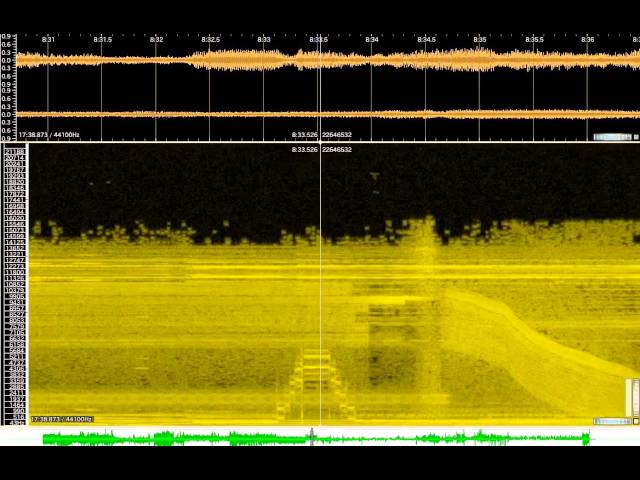
If you’re interested in contemporary music or electronic music, this is one piece you absolutely must experience at least once.
The composer is Karlheinz Stockhausen, the German master of contemporary music.
He started out as a young musician studying piano and even made a living as a pianist for a time.
He also studied philosophy and other subjects, and after relocating to France, he composed the world’s first works of electronic music, becoming a leading figure of postwar avant-garde music.
The work introduced here, Telemusik, was produced at NHK’s Electronic Music Studio in Tokyo during his first visit to Japan, from January 23 to March 2, 1966.
Drawing on materials from gagaku, Japan’s imperial court music, as well as folk and traditional musics from around the world, this piece became a landmark in the history of electronic music.
Incidentally, Stockhausen himself openly stated how deeply he was influenced by Japan, even describing the country as “a work of art in itself.”