

Masterpieces of contemporary (art) music. Recommended popular pieces.

When people hear the term “contemporary music,” I suspect the vast majority don’t even know such a genre exists.
Even if they know a little about it, many probably feel it has a high barrier to entry and seems difficult to grasp.
The influence of contemporary music is deeply rooted across many fields—not only in classical music, but also in minimal music, avant-pop, free jazz, and noise avant-garde.
With celebrated works of contemporary music as the axis, I’ve selected tracks spanning a wide range of genres.
- [Classic] Masterpieces of Contemporary Music
- Masterpieces of Minimal Music | Including Lesser-Known Works
- [2026] The Beautiful World of Ambient: A Curated Collection of Must-Listen Masterpieces
- [Celtic Music] Masterpieces of Celtic music. Recommended Irish music
- Western pop music popular with Gen Z. Hit songs.
- Famous piano masterpieces in Western music. Recommended popular songs.
- [Tango] Famous Tango Songs: Recommended Popular Tracks
- [Classical] Masterpieces of oratorios. Recommended classical music.
- A cappella masterpieces: Recommended songs where beautiful harmonies shine (Western and Japanese music)
- K-POP Masterpieces & Best Hits [Latest and Classic Popular Songs + Editor’s Select]
- Famous Western songs everyone knows: a roundup of classic tunes you’ve heard somewhere before
- [Classics] Famous waltzes: recommended popular pieces
- [2026] Iconic musical numbers: from the latest releases to timeless classics!
Masterpieces of Contemporary (Art) Music: Recommended Popular Pieces (21–30)
String Quartet No. 3Michael Nyman

What a stylishly sorrowful melody it is.
Composed by Michael Nyman to commemorate the Romanian Revolution, the piece draws its inspiration from Romanian folk melodies, yet its approach is entirely different from Bartók’s.
If Bartók is a gypsy wagon racing through a whirlwind, Nyman evokes the headlong rush of London’s intricately interwoven Tube.
Didgeridoo Concerto, Movement II: “Wind”Sean O’Boyle
It’s an eccentric piece written for didgeridoo—a traditional instrument used by Australia’s Indigenous Aboriginal people during ceremonies—and orchestra.
It takes real courage just to try blending an instrument that produces so many overtones and such ambiguous pitch with an orchestra, but the piece succeeds brilliantly as a work of art.
Masterpieces of contemporary (art) music. Recommended popular pieces (31–40)
The Chairman Dances, from the opera Nixon in ChinaJohn Adams

From John Adams, often called a standard-bearer of post-minimalism, let me introduce this piece, which won a Grammy Award in 1989.
Some may ask, what exactly is post-minimalism? It’s essentially minimal music with greater flexibility.
There’s no precise definition—perhaps you could think of it as a slightly slack side-to-side repetition.
Definitions can be useful for both language and music, but there’s a bit of nonsense to them too.
Song for AthensJohn Tavener

When Princess Diana died in an unexpected accident, the piece playing at her funeral ceremony was this work by Tavener.
Despite being a contemporary composer, the foundation of his technique lies in the church modes.
However, if you listen closely, you can hear harmonies and other elements subtly revealing that it was composed in the modern era.
Fanfare for the CitizensAaron Copland

This piece has been labeled as the most accessible music written in the 20th century, but it becomes a fanfare that transcends notions of being easy or difficult to understand—an iconic sound of its era.
What is passed down across times and nations surely bears evidence that some kind of life resides within it.
Shostakovich: Symphony No. 5Bernstein · New York Philharmonic Orchestra
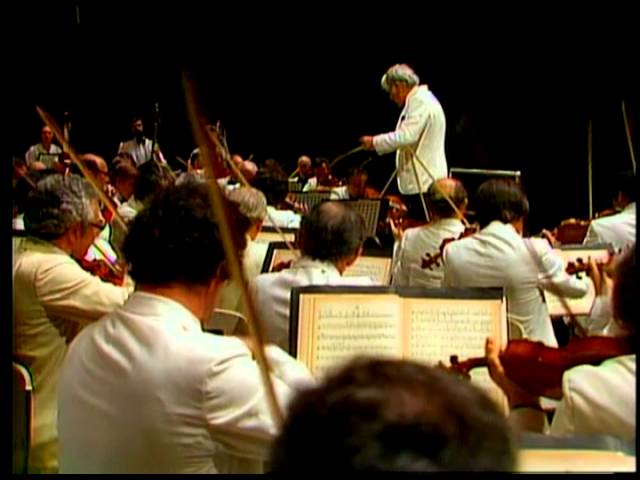
A representative work by D.
Shostakovich, a leading figure of Soviet Russia.
He had been writing highly modernist pieces, keenly attuned to trends in the West, but was severely attacked during the Stalin era; this work was created as his answer to that.
It was highly acclaimed not only in the Soviet and Eastern Bloc but also in the West.
Eight Pieces for PianoKurtág György
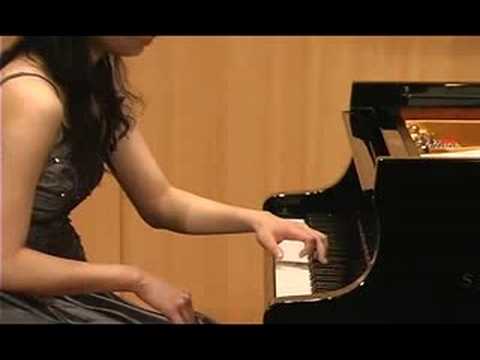
This piece, which starts with a sudden same-note trill that seems to split a microscopic atom, was composed by the Hungarian composer György Kurtág.
He is often introduced as a post-Webern figure, but his music—unconstrained by fixed methods or techniques and freely plucking fragments from the cosmos—holds infinite possibilities.