

Masterpieces of contemporary (art) music. Recommended popular pieces.

When people hear the term “contemporary music,” I suspect the vast majority don’t even know such a genre exists.
Even if they know a little about it, many probably feel it has a high barrier to entry and seems difficult to grasp.
The influence of contemporary music is deeply rooted across many fields—not only in classical music, but also in minimal music, avant-pop, free jazz, and noise avant-garde.
With celebrated works of contemporary music as the axis, I’ve selected tracks spanning a wide range of genres.
- [Classic] Masterpieces of Contemporary Music
- Masterpieces of Minimal Music | Including Lesser-Known Works
- [2026] The Beautiful World of Ambient: A Curated Collection of Must-Listen Masterpieces
- [Celtic Music] Masterpieces of Celtic music. Recommended Irish music
- Western pop music popular with Gen Z. Hit songs.
- Famous piano masterpieces in Western music. Recommended popular songs.
- [Tango] Famous Tango Songs: Recommended Popular Tracks
- [Classical] Masterpieces of oratorios. Recommended classical music.
- A cappella masterpieces: Recommended songs where beautiful harmonies shine (Western and Japanese music)
- K-POP Masterpieces & Best Hits [Latest and Classic Popular Songs + Editor’s Select]
- Famous Western songs everyone knows: a roundup of classic tunes you’ve heard somewhere before
- [Classics] Famous waltzes: recommended popular pieces
- [2026] Iconic musical numbers: from the latest releases to timeless classics!
Masterpieces of contemporary (art) music. Recommended popular pieces (61–70)
Kodály: Háry-János-SuiteSinfonieorchester ∙ Juraj Valčuha

A representative work by Zoltán Kodály, who, alongside Bartók, epitomizes 20th-century Hungary.
Although originally an opéra comique, it is seldom performed due to the abundance of Hungarian dialogue.
The suite—six selections from the opera arranged for orchestra—is better known.
The cimbalom, a traditional folk instrument, is featured in the third and fifth movements.
Alban Berg: LuluStaatsoper Hamburg
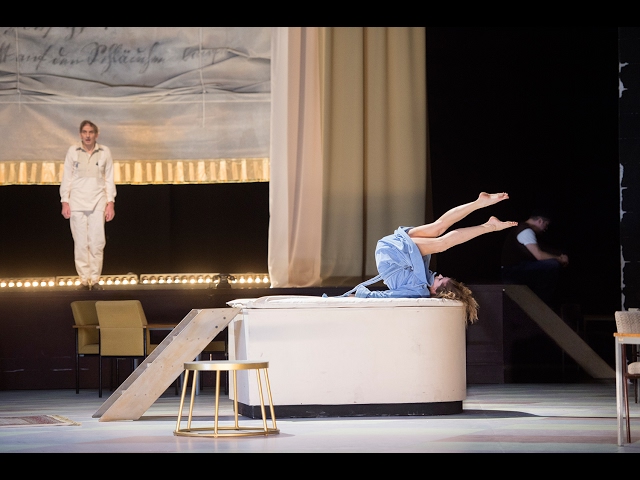
It is an opera in which the composer attempted to use the twelve-tone technique.
Although it was originally conceived in three acts, the composer’s sudden death left only Acts 1–2 and part of Act 3 completed.
It is usually performed in two acts, but a three-act version completed from the composer’s drafts is also frequently staged.
Masterpieces of contemporary (art) music: Recommended popular pieces (71–80)
King KongThe Mothers of Invention

Frank Zappa spent his 52-year life continually dismantling existing musical concepts, releasing a vast body of work, and astonishing music freaks around the world with his shocking live performances.
The fact that Zappa—who absorbed music of every stripe, whether high art or pop—decided to pursue music because of the avant-garde modern composer Edgard Varèse already tells you he didn’t have an ordinary sensibility.
Zappa left so much material that it’s hard to know where to begin, but this time I’d like to introduce King Kong, a track from Uncle Meat, an early masterpiece released in 1969 under the Mothers of Invention.
It’s a large-scale work in six-part medley form, with only Part 6 taken from a live recording, presenting a veritable kaleidoscope of music—approached through chamber-music techniques and spanning classical, free jazz, modern music, and even roots music.
Empty your mind and let yourself be swept away by the flood of sound!

Viriditas from the series “Nine Rivers”James Dillon
In this series, the instruments and ensemble vary from piece to piece.
Through James Dillon’s fieldwork, he absorbs materials from many musical domains and sprinkles them abundantly throughout his works.
He is also known for creating pieces that are impossible to reproduce and is unafraid of extreme complexity.
Arnold Schoenberg – Chamber Symphony No. 1, Op. 9Omega Ensemble

It is known as the first work in which Schoenberg grew confident in his own distinctive style.
Although it is a short piece of about 20 minutes, it is an excellent example of clear narrative structure and marks the beginnings of atonal music, while remaining relatively accessible even to beginners—making it an ideal entry point into contemporary music.
Stravinsky Symphony In Three MovementsTania Miller

A masterpiece of the neoclassical era in which Stravinsky interprets J.
S.
Bach’s Brandenburg Concerto No.
5 in his own way.
The composer himself said that while traveling in Germany during the Nazi era, he was shocked by a scene at a station where Jews were being assaulted, and that this became the impetus for the composition.
Requiem for StringsTakemitsu Tōru

Toru Takemitsu’s breakthrough work, which exerted a profound influence on contemporary music in the latter half of the 20th century not only in Japan but worldwide.
The background to Stravinsky’s high praise—“Who would have thought such a small man could write music so severe and intense?”—was the fact that the piece was composed under the shadow of death, as Takemitsu, burdened with the chronic illness of tuberculosis, confronted his mortality.