

Masterpieces of contemporary (art) music. Recommended popular pieces.

When people hear the term “contemporary music,” I suspect the vast majority don’t even know such a genre exists.
Even if they know a little about it, many probably feel it has a high barrier to entry and seems difficult to grasp.
The influence of contemporary music is deeply rooted across many fields—not only in classical music, but also in minimal music, avant-pop, free jazz, and noise avant-garde.
With celebrated works of contemporary music as the axis, I’ve selected tracks spanning a wide range of genres.
- [Classic] Masterpieces of Contemporary Music
- Masterpieces of Minimal Music | Including Lesser-Known Works
- [2026] The Beautiful World of Ambient: A Curated Collection of Must-Listen Masterpieces
- [Celtic Music] Masterpieces of Celtic music. Recommended Irish music
- Western pop music popular with Gen Z. Hit songs.
- Famous piano masterpieces in Western music. Recommended popular songs.
- [Tango] Famous Tango Songs: Recommended Popular Tracks
- [Classical] Masterpieces of oratorios. Recommended classical music.
- A cappella masterpieces: Recommended songs where beautiful harmonies shine (Western and Japanese music)
- K-POP Masterpieces & Best Hits [Latest and Classic Popular Songs + Editor’s Select]
- Famous Western songs everyone knows: a roundup of classic tunes you’ve heard somewhere before
- [Classics] Famous waltzes: recommended popular pieces
- [2026] Iconic musical numbers: from the latest releases to timeless classics!
Masterpieces of contemporary (art) music. Recommended popular pieces (31–40)
Electric CounterpointSteve Reich

Steve Reich, a master of contemporary music, has a catalog full of masterpieces.
People who aren’t familiar with minimal music often say it all sounds the same, but once you get hooked, it’s hard to get out.
That’s how addictive Reich’s music is, and there’s a kind of ecstasy you can only experience through his work.
Oratorio “Saint Nichiren”Mayuzumi Toshirō
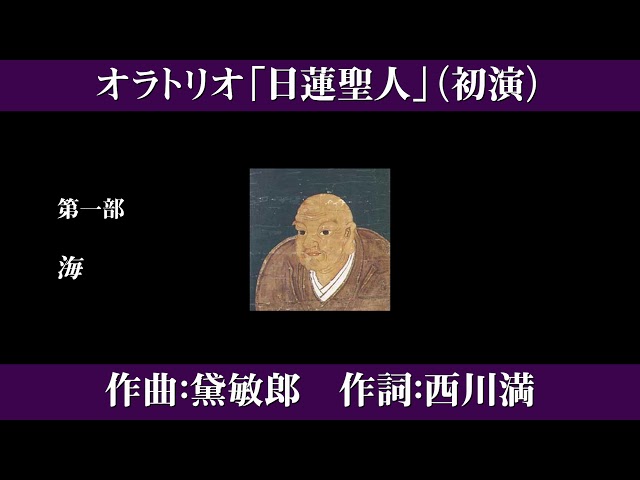
Toshiro Mayuzumi is known as a composer who represents Japan’s postwar music scene.
He was active not only in contemporary music but also in film music.
Among his works, this grand piece—expressing a Buddhist worldview through the Western oratorio form—is nothing short of overwhelming.
It depicts the life of Nichiren in five parts—Sea, Flower, Light, Snow, and Mountain—where Japanese narration, a sonorous chorus, and a symphonic orchestra unite to weave an epic narrative.
In the final section, the climactic rise powered by the repeated chanting of the daimoku is sure to stir the listener’s soul.
The work premiered in April 1982 as part of the commemoration of the 700th anniversary of Saint Nichiren’s passing.
It is a masterpiece I strongly recommend to anyone seeking a one-of-a-kind musical experience that fuses Japanese spirituality with the framework of Western music.
Boulez : Le Marteau Sans MaîtreCallithumpian Consort

A representative work by Pierre Boulez, who, not only as a conductor but also as a composer and critic, had a major influence on post–World War II contemporary music.
Rather than simply presenting three types of music labeled 1, 2, and 3, the piece is composed as a groundbreaking experiment that offers the audience a combination of several parts divided and interwoven.
Adagio for Strings for String EnsembleSamuel Barber
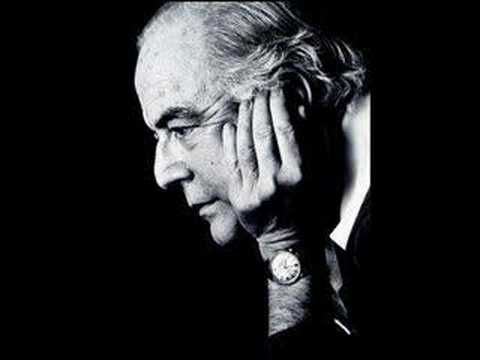
The title may sound very simple, but the music itself overflows with profound emotion.
From the very beginning (the einsatz), it not only captures your heart, but also allows you to converse—through the music—with someone who isn’t here.
Is that person yourself, or a stranger? I’ve heard the piece was inspired by a poem by the poet Virgil.
Anton Webern – Seis Peças para Orquestra, Op. 6Zubin Mehta
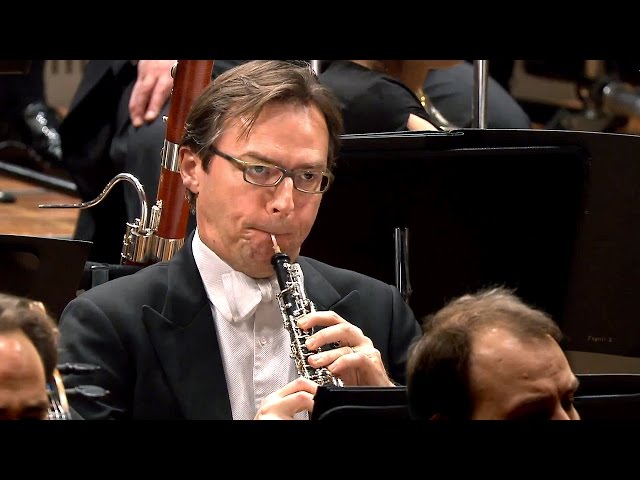
It is more often cited as a representative work by Webern than his later Symphony.
Except for the fourth piece, which is the pinnacle, each presents only the bare minimum of sonic elements—like a haiku—to create an entire world.
A work to revisit and savor repeatedly.
Masterpieces of contemporary (art) music. Recommended popular pieces (41–50)
Honegger – Pacific 231Marc Andreae

A work that depicts, through sound, the steam locomotive, which at the time was the latest state-of-the-art high-speed railway.
Incidentally, the second piece that followed this one was “Rugby.” As one of the signature works of the Swiss composer Arthur Honegger, it has long appeared—along with his name—on elementary school lists of composers.
Violin ConcertoErich Wolfgang Korngold

There’s no end to the anecdotes about the child prodigy Korngold.
After hearing a cantata he wrote at age nine, Mahler declared, “He’s a genius!” and the piano sonata he composed at twelve astonished Richard Strauss—his biography is filled with examples too numerous to count.
He would face hardships after that, but that’s another story.
Among his works, the most famous is this Violin Concerto.
It’s a piece suffused with a lyrical, decadent atmosphere, evoking a fragile beauty.