

Masterpieces of contemporary (art) music. Recommended popular pieces.

When people hear the term “contemporary music,” I suspect the vast majority don’t even know such a genre exists.
Even if they know a little about it, many probably feel it has a high barrier to entry and seems difficult to grasp.
The influence of contemporary music is deeply rooted across many fields—not only in classical music, but also in minimal music, avant-pop, free jazz, and noise avant-garde.
With celebrated works of contemporary music as the axis, I’ve selected tracks spanning a wide range of genres.
- [Classic] Masterpieces of Contemporary Music
- Masterpieces of Minimal Music | Including Lesser-Known Works
- [2026] The Beautiful World of Ambient: A Curated Collection of Must-Listen Masterpieces
- [Celtic Music] Masterpieces of Celtic music. Recommended Irish music
- Western pop music popular with Gen Z. Hit songs.
- Famous piano masterpieces in Western music. Recommended popular songs.
- [Tango] Famous Tango Songs: Recommended Popular Tracks
- [Classical] Masterpieces of oratorios. Recommended classical music.
- A cappella masterpieces: Recommended songs where beautiful harmonies shine (Western and Japanese music)
- K-POP Masterpieces & Best Hits [Latest and Classic Popular Songs + Editor’s Select]
- Famous Western songs everyone knows: a roundup of classic tunes you’ve heard somewhere before
- [Classics] Famous waltzes: recommended popular pieces
- [2026] Iconic musical numbers: from the latest releases to timeless classics!
Masterpieces of contemporary music (art music). Recommended popular pieces (1–10)
Pierrot LunaireArnold Schönberg

Also known in Japanese as “Tsuki ni Tsukareta Pierrot” (Pierrot Lunaire), this work was originally a French poetry collection published by a Belgian poet, and the musical piece is based on its German translation.
Among the several composers who set these poems to music, the most famous version is by the Austrian composer Arnold Schoenberg.
Schoenberg is known for founding the twelve-tone technique, which broke away from traditional tonal music, and after emigrating to the United States he taught, among others, the famed John Cage—an influence that profoundly shaped contemporary music.
The Pierrot Lunaire introduced here predates Schoenberg’s establishment of the twelve-tone method; it is written in an atonal style that abandons tonality, making it not only a masterpiece of contemporary music but also one of the most important works in 20th-century music history.
It departs radically from conventional chamber music with a succession of striking dissonances, and intertwines songs that fall somewhere between singing and poetic recitation, creating a complex and uncanny world.
There are no beautiful melodies to be found, and it is by no means comfortable listening, but as a musical experience unlike any other, I encourage you to give it a try—Japanese translations of the texts in hand.

Quartet for the End of TimeOlivier Messiaen

Born in 1908 in Avignon, France, Olivier Messiaen was not only one of the leading contemporary composers of the 20th century, but also an organist and pianist, and a great figure who made enormous contributions to the field as a music educator.
The fact that his students included such renowned figures as Pierre Boulez and Karlheinz Stockhausen alone shows where Messiaen stands in the history of music.
While Messiaen left many works as a composer, today I would like to introduce the Quartet for the End of Time, written during the harsh period when he was a prisoner in an internment camp during World War II.
Scored for the unusual combination of violin, clarinet, cello, and piano, it is a major chamber work with a religious background inspired by the New Testament’s Book of Revelation.
Beyond the innovation and brilliance of the work itself, the historical fact that it was composed under such extraordinary circumstances and the story of how it received its premiere are also fascinating—if you’re interested, by all means look into it yourself.
fullmoonSakamoto Ryuichi

Professor Ryuichi Sakamoto needs no introduction—he is one of Japan’s greatest musicians, celebrated worldwide.
The reason I chose to feature Sakamoto’s work under the theme of contemporary music is that, while he mastered the fundamentals of music theory and created many magnificent songs within those formats, he also awakened to contemporary music in his teens and continued composing without being bound by existing forms or rules.
The track fullmoon appears on async, his first original solo album in eight years, released in 2017, and it features vocals.
It’s also intriguing that the lyrics quote text from the novel The Sheltering Sky, for which Sakamoto composed the film score.
The album as a whole carries the concept of a “soundtrack to an imaginary Andrei Tarkovsky film,” making it a work that strongly evokes cinematic imagery.
Try to set aside as many preconceptions about music as possible, and approach it with an open mind.
Masterpieces of contemporary (art) music. Recommended popular pieces (11–20)
Epitaph for MoonlightRaymond Murray Schafer

Raymond Murray Schafer, the Canadian composer famous for proposing the concept of the so-called “soundscape,” wrote many choral works for Japanese choirs, and it is still fresh in our memory that he sadly passed away on August 14, 2021.
His 1968 work Epitaph for Moonlight—known in Japanese as “Gekkō e no Hibun” (Epitaph for Moonlight)—is a popular piece.
Although it was reportedly written as a study piece for student choirs, its fantastical and mystical sonorities alone inspire a sense of solemnity in the listener.
Rather than relying on a main phrase repeated or on strict metric subdivision, the piece is characterized by a high degree of freedom; it is sometimes performed a cappella or with metallic percussion.
As each part expresses itself with distinctive character while forming a single ensemble, the result may well be called a true “landscape of sound.”
Severed SongLuigi Nono

Luigi Nono, hailing from Venice, Italy, was a composer who played a central role in postwar contemporary and avant-garde music.
It is said that he became known through Musica Viva, a series of contemporary music concerts organized in collaboration with Bavarian Radio by Karl Amadeus Hartmann, who is often called Germany’s greatest symphonist of the 20th century.
Nono is also famous for the distinct differences in his style across periods: from his early phase, in which he mastered serial techniques; to his middle period, when he developed an interest in electronic music; and his late period, when he ventured into new horizons.
An anecdote that underscores Nono’s independent path is that, although he interacted with radical composers such as Edgard Varèse and Karlheinz Stockhausen, he later broke with them.
A committed communist who channeled his political beliefs into composition, Nono wrote Il canto sospeso between 1955 and 1956—a vocal work, a cantata, that stands as one of his masterpieces.
Known in Japanese as “The Severed Song,” the piece was inspired by farewell letters written by resistance fighters during the war and employs twelve-tone technique along with Nono’s own serial methods.
It is said to have been a major hit at the time.
One should not only hear the music but also understand the message behind it.
Etude to the Tone of the SeaSalvatore Sciarrino

Anyway, I’d really like you to watch a performance video of this piece.
In addition to the ensemble of countertenor, flute quartet, saxophone quartet, and percussion, it’s a work that resembles a grand sonic experiment expressed by, astonishingly, 100 flutes and 100 saxophones.
The sight of more than 200 performers standing on stage is spectacular in itself, but I’m even more impressed by the very idea of attempting such a thing.
The original title is “Studi per l’Intonazione del Mare,” and the composer is the Italian contemporary music composer Salvatore Sciarrino.
He is said to have been largely self-taught in composition, and his highly acclaimed body of work—utterly inexpressible through conventional classical music theory—shows his unique originality.
This piece, too, contains none of the so-called melodious, beautiful phrases; it is truly a music of sounds born from the sea itself, an acoustic world that, if possible, should be experienced not on a CD but live in the hall.
Music for 18 MusiciansSteve Reich
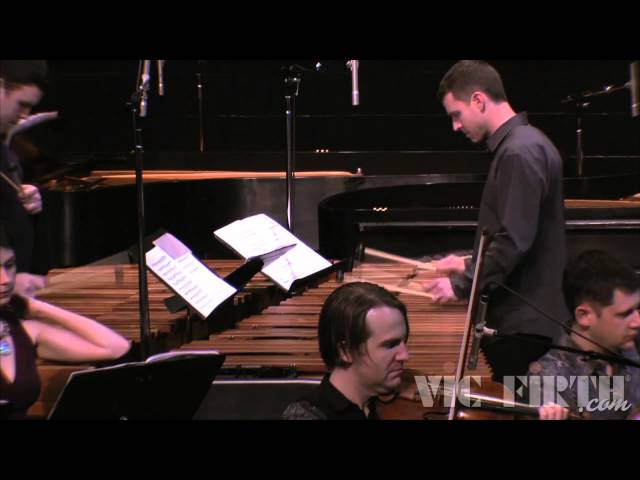
Within the category of contemporary music, there exists a genre known as minimal music.
Rooted in classical music, minimal music, as the word “minimal” suggests, is created by severely restricting the movement of tones and employing the repetition of a single pattern.
Later genres such as minimal techno are among those that adopted the musical methodology of minimal music.
Let me introduce a masterpiece by Steve Reich, a composer who represents this field: Music for 18 Musicians.
Composed between May 1974 and March 1976, it embodies the basic structural principles of minimal music, in which multiple motifs are repeated while the piece gradually transforms.
At the same time, true to its title, it requires a large ensemble for performance, making it no exaggeration to call it a landmark work that opened up new possibilities in the history of music.
Though it may seem complex, it is surprisingly approachable: as phrases with a rich resonance—distinct from conventional melodies—are reiterated, the listener finds themselves opening the door to a world unlike anything they have experienced before.