

Let’s play at home with a one-year-old! Activity ideas using things you already have at home

On rainy days or when your child isn’t feeling well and you’re staying home, you might find yourself wondering, “What should we play today?” As children reach around one year old, they start walking, their horizons expand, and their curiosity about the things around them grows even stronger.
As they can do more, the range of play widens too, so let’s stimulate their five senses by incorporating a variety of activities.
In this article, we’ll introduce ideas for at-home play recommended for one-year-olds.
From active play and bonding games to sensory play and simple crafts, we’ve gathered activities that one-year-olds will be completely absorbed in! Best of all, they’re all things you can do with items you already have at home—so please use this as a reference.
Let's Play at Home with Your 1-Year-Old! Activity Ideas Using Things You Already Have at Home (1–10)
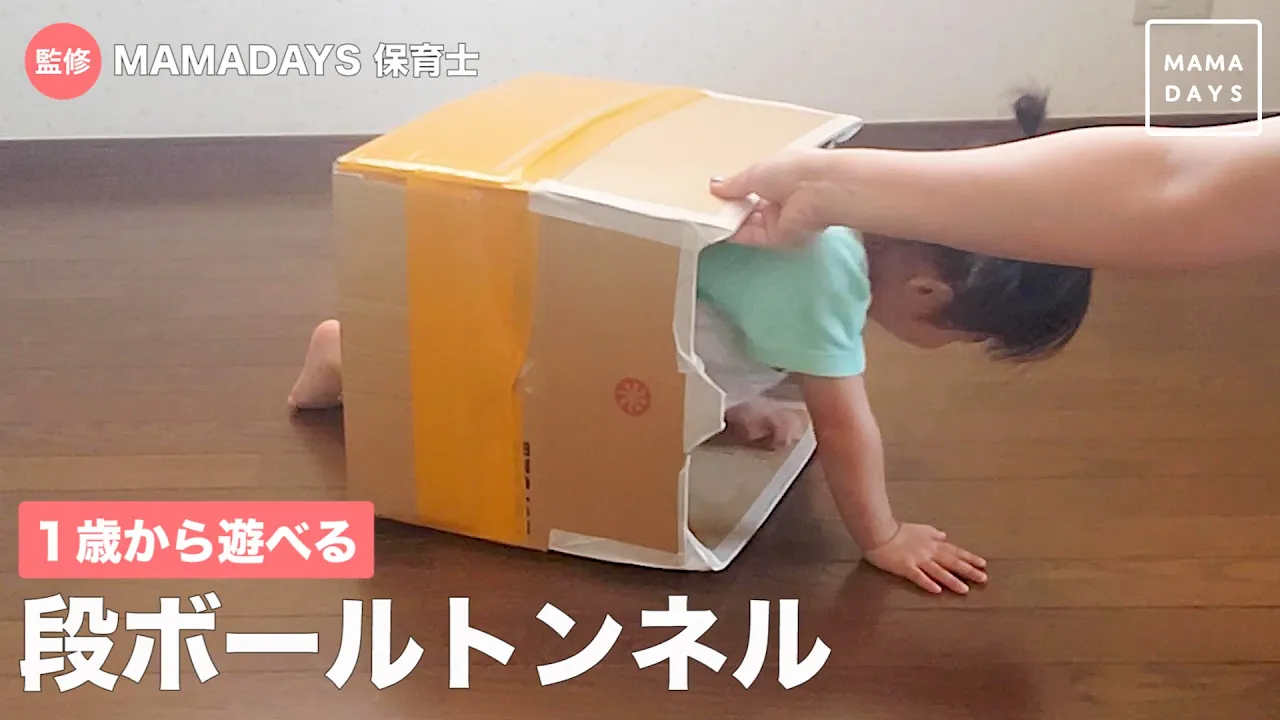
Tunnel play

For indoor physical play, how about a tunnel activity? You can make a tunnel using cardboard boxes or hula hoops.
There are also toy tunnels made of mesh material available for purchase, so using one of those is fine too! If you’re making it with cardboard, it’s a good idea to add fun features like strings kids can pull from inside or small bumps and textures.
If you’re turning hula hoops into a tunnel, have a caregiver hold up about two hoops to form the tunnel.
Small tunnels encourage crawling, which helps strengthen various muscles throughout the body!

Let’s put on a sticker

Sticker play—little kids love it, don’t they? Even with simple round stickers, you can pretend the red ones are fruit and stick them on a tree illustration, or use red, blue, and yellow to make a traffic light.
It’s fun to just keep sticking them on, even if the stickers themselves are nothing special.
It’s okay if they’re not stuck on perfectly! There are also sticker books you can stick and peel over and over again.

Reading picture books aloud

Reading picture books aloud is easy to incorporate into any time spent at home.
For a one-year-old, we recommend picture books with lots of fun onomatopoeia, or interactive books with pop-ups or flaps that reveal different images.
Funny sounds and playful mechanisms capture a child’s interest and help them focus on the book.
To keep their attention even more, try varying your tone of voice, adding small movements, and moving through the story slowly.
Picture books nurture imagination, so be sure to create many opportunities for your child to engage with them.
Flour clay
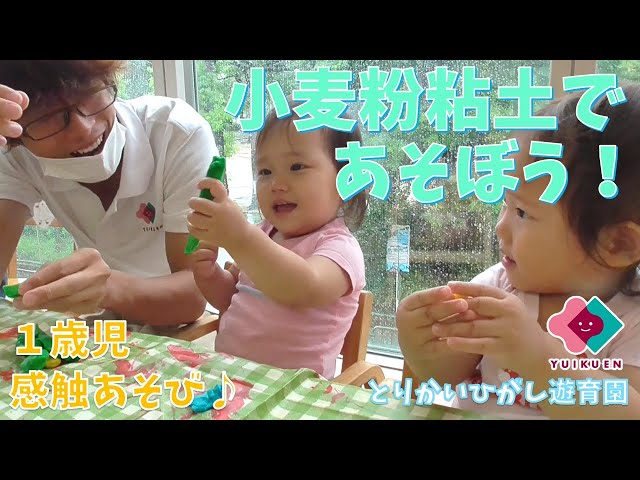
When you want to enjoy a simple crafting activity, how about playing with flour dough? Clay play enriches imagination, improves concentration, and offers plenty of benefits for children.
There are various types of clay, such as paper clay and oil clay, but flour dough is safe even if a little gets in the mouth, so it’s a good choice for one-year-olds.
Let them touch it a lot—make it smaller or bigger, knead it—and enjoy the sensory experience of working with the dough.
sensory mat

A sensory mat with various parts is a mat you can enjoy by looking and touching.
You play by feeling different shapes and soft, bumpy areas with your hands, or by walking on them.
You can prepare a base mat and make the parts yourself.
By attaching items you have at home—such as plastic bottle caps, kitchen sponges, fluffy towels, water-filled plastic bags, and noise-making toys—you can easily create one.
Walking on uneven, unstable areas helps develop balance and leg strength, and even spots that feel a bit painful underfoot become valuable experiences.
Keep building a variety of senses and continue growing healthy and strong!
Newspaper play

Let’s try newspaper play that gets not only the hands but the whole body moving! All you need is some newspaper.
Start by ripping it into pieces or crumpling it up.
You can toss the torn pieces into the air and enjoy watching them flutter down, or gather them up to make a “blanket” or a “bath.” When you make balls, try games like a ball toss, plastic-bottle bowling, or target practice.
The dry, crinkly feel when touching newspaper and the tearing sound when you rip it are great points that children will enjoy and find intriguing!
Hide-and-seek

Let’s try playing hide-and-seek, a game full of excitement where you can hide, search, and enjoy the thrill! When playing hide-and-seek with a one-year-old, it’s best to keep it simple: skip counting before searching and skip the traditional call-and-response of “Are you ready?” and “Not yet.” Instead, just hide and then search.
Even if you hide in an easy-to-find spot, your child will eagerly try to find you and have fun with the game.
When it’s your child’s turn to hide, even if you spot them right away, try pretending not to notice for a moment to build anticipation.
And don’t forget a hug when you find each other—or when you’re found!