

Laugh and have fun! A collection of funny 10-times game questions

The “10 Times Game” is where, after saying a certain word 10 times, you’re given a question—and you end up blurting out the wrong answer, perfectly swayed by the word you just repeated.
Many people have probably played it at least once, right? Even if you think, “There’s no way I’d get that wrong,” the word surprisingly trips you up—and that’s what makes it so fun! In this article, we’ve gathered a bunch of 10 Times Game prompts that anyone—from kids to adults—can easily play and enjoy.
We also explain how to ask the questions, the common wrong answers people give, and of course the correct answers.
Try them out with your friends and family!
- Do you get tripped up too? A fun roundup of 10-time quiz questions
- [Funny] Mean! 10-times Quiz/Question Collection
- Interesting riddles: a collection of simple and fun questions
- [Rec] Interesting! A roundup of wordplay games
- [Talk] Interesting! Hilarious! A Collection of Silly Questions
- A collection of challenging quizzes for adults [Difficult]
- Challenge together! A roundup of word games for adults
- [Interesting] A collection of brain teaser quiz questions. Let's train your brain!
- Fun quizzes that liven up the party. Quizzes everyone can enjoy.
- [Punishment Game] A collection of romance-themed prompts. Punishment games that get men and women excited
- [Brain Training] Difficult Riddles That Even Adults Struggle With
- [Simple Riddles] A curated selection of fun questions that will excite everyone from kids to adults!
- Let's get excited with a two-choice quiz that everyone—from kids to adults—can enjoy!
Laugh and have fun! A roundup of funny 10-times game questions (1–10)
doubanjiang (spicy fermented broad bean paste)Q: What is the phone number to call the fire department?
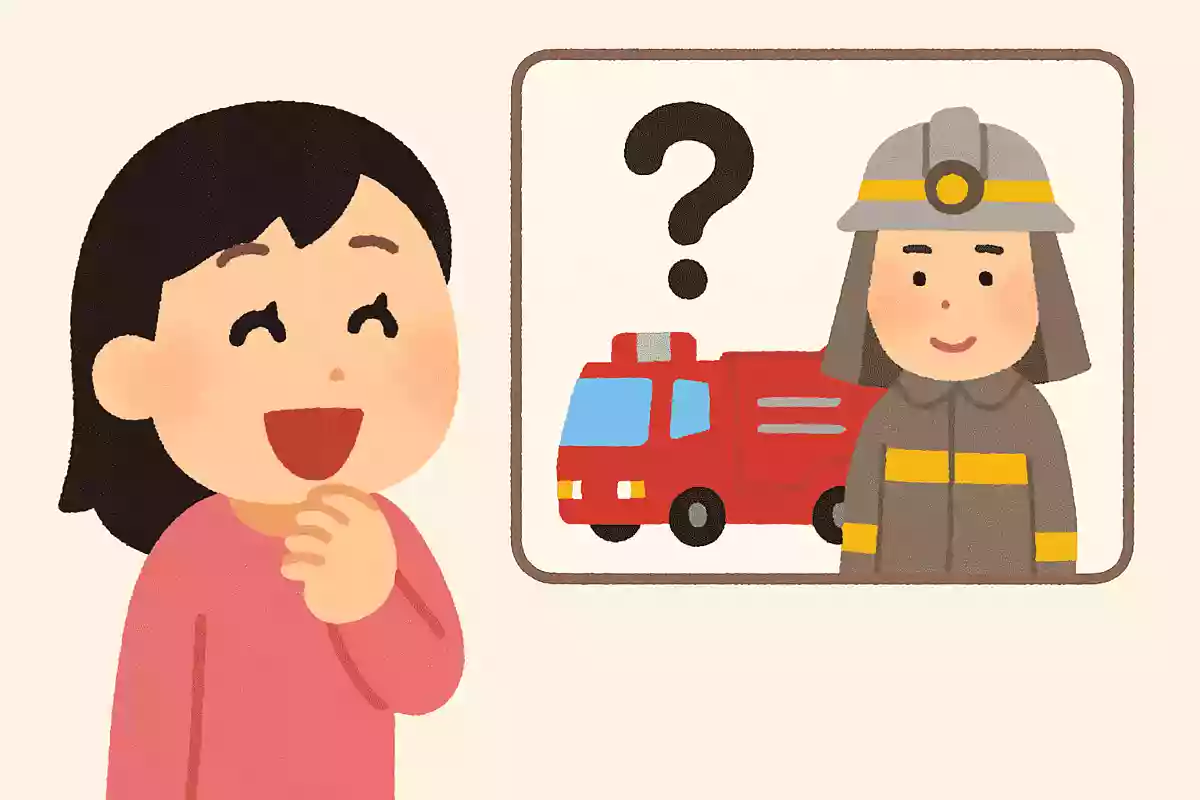
Even if people know the number to call emergency vehicles, they probably don’t actually make such calls very often.
Among the numbers related to emergency vehicles, there are many that are easy to confuse, so let’s turn that into a quiz.
Have someone repeat the word “toban-jan” (doubanjiang) ten times, then ask them for “the phone number to call the fire department.” By asking quickly and not giving them time to think, you can prompt a mistake—specifically “110,” which sounds similar.
The correct number to call the fire department is “119,” and it’s also notable that this number is strongly associated with calling an ambulance.

ThatSay, 'This is a pen.'

This is a problem that leverages the differences between English and Japanese to lead people into making a mistake.
You have them repeat the English word “that,” then prompt them to say the phrase ‘This is a pen.’ Because everyone remembers the classic sentence from English class, they tend to imagine its meaning and give an incorrect response like ‘That is a pen.’ or ‘This is a pen.’ However, the question is asking them to say ‘This is a pen’—without specifying English—so the correct answer, as per the prompt, is to say it in Japanese: 「これはペンです」.
deerQ: What does Santa Claus ride?

This is a trick question where, by repeating a word, you end up giving something similar as the answer.
After repeating the word “deer,” you ask a question about what Santa Claus rides.
Because reindeer are indispensable to Santa’s story, people are easily led from the word “deer” to the wrong answer, “reindeer.” Reindeer are the ones that pull the sleigh, and what Santa actually rides is the “sleigh.” The thought process of realizing it’s not a deer nudges you toward answering “reindeer.”
Laugh and have fun! A collection of funny 10-times game questions (11–20)
spoonQ: How about eating spaghetti?

By having someone repeat a word, this question guides what they focus on while imagining the scene.
You have them repeat “spoon,” then ask, “Who eats the spaghetti?” Because they’ve been repeating a tableware item, their attention shifts to utensils, leading to an incorrect answer like “fork.” Utensils like spoons and forks are merely tools used by people to eat; the correct answer to the question of who eats is “a human.” It’s a slightly tricky, somewhat mischievous question.
kitchenQ: How do you say 'bird' in English?

It’s a type of question that exploits changes in names depending on the context to elicit a wrong answer.
After repeatedly saying the word “kitchen,” it asks, “What is ‘bird’ in English?” Because of the similar sound, people often answer “chicken,” which is incorrect—“chicken” means the meat, not the animal.
The correct answer is “bird.” Cows and pigs are other examples where the animal’s name differs from the name of the meat, so using those in a quiz can be a good idea too.
goddessQ: What do people with poor eyesight put in their eyes?

This is a riddle designed to elicit a wrong answer by creating a similarity with the correct one.
You have the person repeat “megami” (goddess), then ask, “What do people with poor eyesight put in their eyes?” Because of the condition (people with poor eyesight) and the sound of the word “megami,” respondents are prone to answer “megane” (glasses), which is incorrect.
Glasses are worn on the face, not put into the eyes, so the correct answer is “contact lenses.” The key is to deliver the question with a sense of speed to fluster the respondent, prompting them to imagine the wrong answer midway through the question.
Tokyo CoffeeQ: How do you say 'to be absent from school'?
What words you have people repeat is also a key point of the 10-times quiz.
We have them repeat “Tokyo Coffee,” and by making them wonder what that phrase means, it creates a lapse in vigilance when answering.
Once they finish, we ask, “What do you call skipping school?” and, influenced by the sound of the phrase they were just saying, they give the wrong answer “tōkō kyohi” (school refusal).
The correct answer is “kesseki” (absence), which is easy to figure out if you think it through, so the trick relies on lulling the respondent into carelessness.