

One-character difficult kanji quiz: a multiple-choice (3 options) game to learn the readings of challenging kanji

There are many kanji characters that are hard to read at first glance.
Some of you may want to learn or memorize the readings of difficult kanji.
In this article, we’ve collected single-character kanji that are considered difficult.
It can be helpful to use radicals as hints or to think from the shape of the character.
Many of these kanji are rarely seen in daily life, so learning them will make you more knowledgeable about difficult kanji.
Be sure to try the multiple-choice quiz on tricky kanji readings!
- [Hard-to-Read Quiz] Single-character difficult kanji — including surprisingly simple ones!
- A quiz on how to read obscure kanji: words that become difficult when written in kanji.
- The world’s toughest! A collection of insanely hard-to-read kanji
- A quiz of interesting obscure kanji: characters that look easy but are hard to read
- How many can you read? A quiz on difficult kanji for foods
- Can You Read These? Quiz on Kanji with Many Strokes
- Obscure fish kanji. Can you read them?
- [Interesting] Summary of Kanji Reading Quiz Questions
- [For Elementary School Students] Country Names in Kanji Quiz. A quick, fun quiz
- [For Seniors] Fun and Exciting! Difficult Kanji Quiz
- [Challenging] General Knowledge Quiz Compilation: Difficult and Interesting Multiple-Choice Questions (3 Options)
- Learn by Playing! Recommended Games with a Kanji Theme
- Hard to get right on the first try! A quiz you’re guaranteed to get tripped up by.
One-character obscure kanji quiz: three-choice questions to learn difficult kanji readings (11–20)
navel
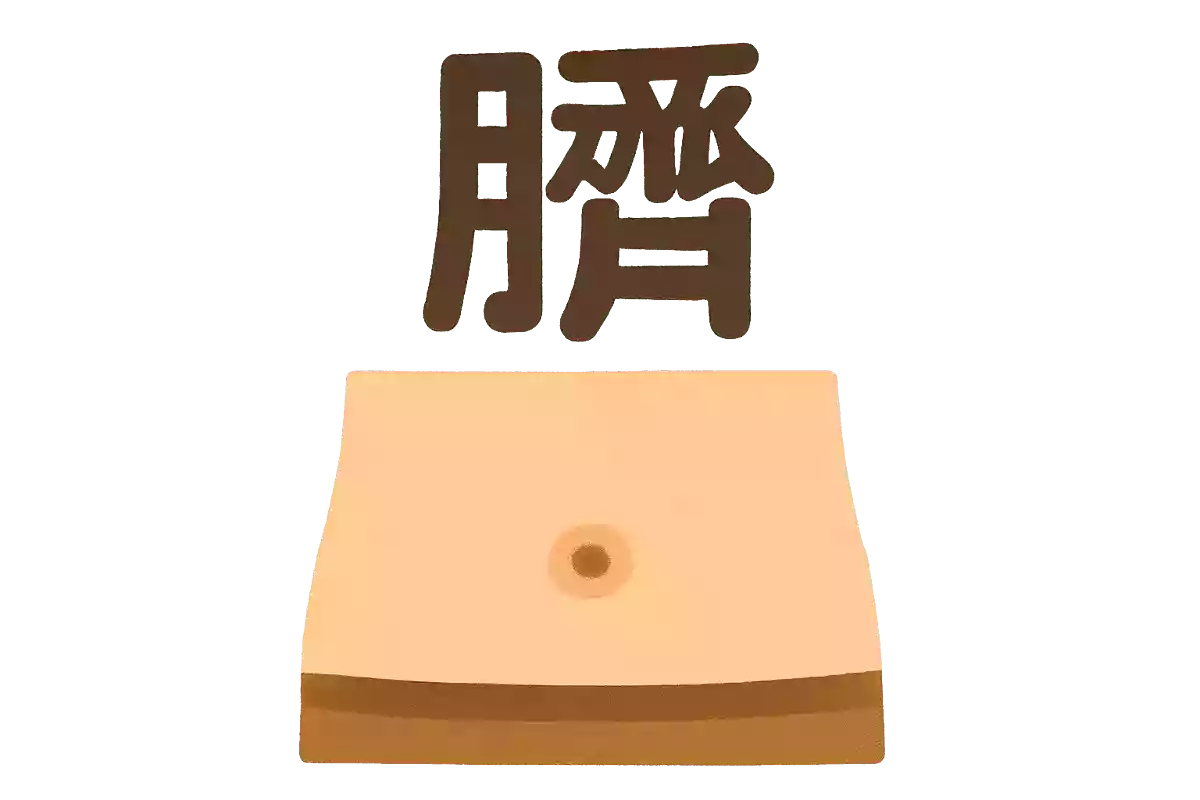
- belly button
- age; year(s) old; occasion; festival;—the meaning depends on context. Commonly, as a suffix “〜歳” means “years old,” and as “際(さい)” it means “when/on the occasion of.”
- shin
See the answer
belly button
The character 臍 is read as “heso.” It refers to the mark of the navel on the human body and is one of those kanji whose reading is hard to guess from a single character. The “heso” indicated by this character is the spot where the umbilical cord was attached—namely, the depressed area in the center of the abdomen—and it was also an important part through which a baby received nutrients while in the mother’s womb.
In conclusion
We’ve introduced tricky kanji quizzes across a variety of themes, including the human body, living creatures, and foods. Some can be guessed from the shapes of the characters, so you can sometimes get the right answer even without knowing the kanji. That feeling of “I’ve seen this somewhere, but I can’t place it…” is what makes the quiz so exciting, isn’t it? If you’re interested in kanji or want to study them, use these quizzes as a chance to learn some hard-to-read characters.