

Fun two-player games recommended that you can play using conversation only


All you need are your voices! Here are two-player games you can play using conversation alone.
We’ve gathered games you can enjoy with a friend, a partner, or a parent and child—any time there are two of you.
No props required, so they’re perfect for spare moments or even during a call! From classics like word-chain games to language-based challenges that make you think a little, there’s plenty to choose from.
If the two of you take your time and enjoy these conversation-only games, you’re sure to grow closer! Pick your favorites and give them a try!
- Games you can play with just conversation. Classic and popular activities you can enjoy without any props!
- Recommended games for two people that you can enjoy without any equipment
- Perfect for killing time! Games you can play with two people.
- Games you can play over the phone: fun activities to liven up calls with friends or a partner
- [For 2 Players] Easy Pen-and-Paper Time-Killing Game
- [Lovey-Dovey] Couple’s Challenge! Question Game Roundup
- Brain-teasing game roundup
- Questions to deepen your bond as a couple! Conversation topics that will get lovers talking
- Challenge together! A roundup of word games for adults
- [Talk] Interesting! Hilarious! A Collection of Silly Questions
- A collection of questions that will liven up conversations with friends. Talk themes to deepen your bond.
- With friends or couples! A set of questions perfect for penalty games
- [Ultimate Either-Or] A great conversation starter and a chance to get to know each other!
Psychological and mind-game genres (11–20)
Gojūon game
@am0princess Even if they match, it's an absolute no-laugh letter-matching gamePrincess of Midnightzeropri#GAMEIB: Sky Peace-san
♪ Original song – Zeropri – Zeropri
Let me introduce an irresistible, laugh-out-loud A–I–U–E–O game.
Say the Japanese syllabary in unison as you go.
If you and your friend say the same word and end up laughing, you lose.
Choose your words carefully while thinking hard to avoid overlapping with your opponent.
Looking each other in the face as you play can add depth to the game and make it even more exciting.
Playing with about three people is also recommended.
Set the number of players so that everyone can hear each other clearly.

The “No-◯◯” Game

It’s a game where you set conversation rules in advance and enjoy the awkwardness that comes from being aware of what’s forbidden.
You can have broad rules, like banning Japanese or banning English altogether, or more detailed ones that prohibit specific words—there’s a wide range of possibilities.
If you’re at Disneyland, for example, choosing a theme that nudges people toward breaking the rules—like place names being in English—can be important.
If everyone goes quiet, you won’t make mistakes, but the conversation won’t be lively either, so it might be important to have rules like penalties to make sure the conversation keeps going.

[Mind Games] Change Janken
![[Mind Games] Change Janken](https://i.ytimg.com/vi/mtNnyohjMlk/sddefault.jpg)
It’s a game that adds an element of verbal mind games to rock-paper-scissors, which is usually decided in a single round.
After both players reveal their hands, a divider is placed so they can’t see each other’s next moves.
From there, they can change their hand while talking.
The idea is to watch your opponent’s expressions closely and use their words to infer which hand you should switch to in order to win.
Sometimes what they say and the hand they actually choose don’t match, so detecting those lies is a crucial key to victory.
If you set a limit on the number of changes allowed, players can focus even more on reading the words and engaging in psychological tactics.
The “whoever says 30 loses” game
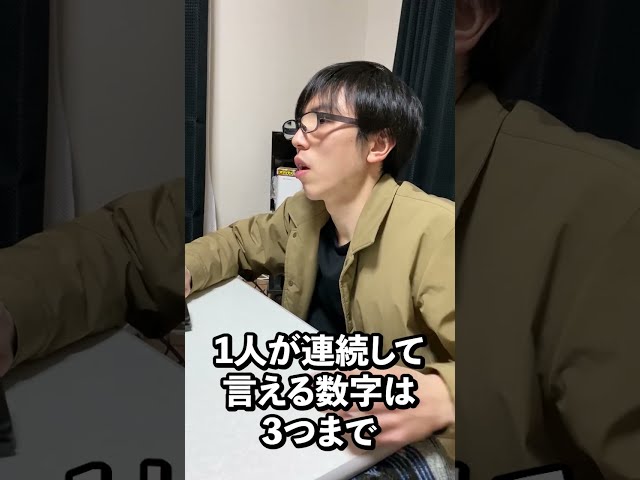
It’s a game where you take turns connecting numbers in order, and the person who ends up saying 30 loses.
You can count up to three numbers at a time, and the mind games over how to make your opponent say 30 are part of the excitement.
Because 30 is the decisive number, it tends to draw attention, but there’s actually a surefire strategy that hinges on how you map out the path to get there.
There’s a specific pattern of which numbers you should claim to force your opponent to say 30, so it might actually be more fun if players don’t know this strategy in advance.
Answer checking game

It’s a game where everyone reveals the answer that came to mind from a given theme at the same time to see if you can come up with the same answer.
If your answers match, you’ll feel a sense of connection and get excited; if they differ, it becomes a great topic for further conversation.
You can keep it simple and just see whether your thoughts align, or try a variation where one person guesses the other’s answer—highly recommended, as it tests how well you understand each other.
From straightforward themes that prompt instant answers to niche topics you’ve never considered, try checking your differences in thinking from a variety of angles.