

Independent study that impresses your teacher! Science self-study ideas recommended for third graders

Independent study in science can be a fun adventure for children!
Here, we introduce science self-study topics recommended for third graders that are likely to earn praise from teachers.
When you explore freely, learning becomes much more enjoyable.
Observe the nature around you, try simple experiments, and enjoy the excitement of discovering all sorts of things.
As their interest in nature and science grows, it’s also fun for kids to share what they’ve learned with friends and family.
Please use this as a reference and let’s dive into the fun world of science together!
Self-directed study that impresses your teacher! Recommended science self-study ideas for 3rd graders (1–10)
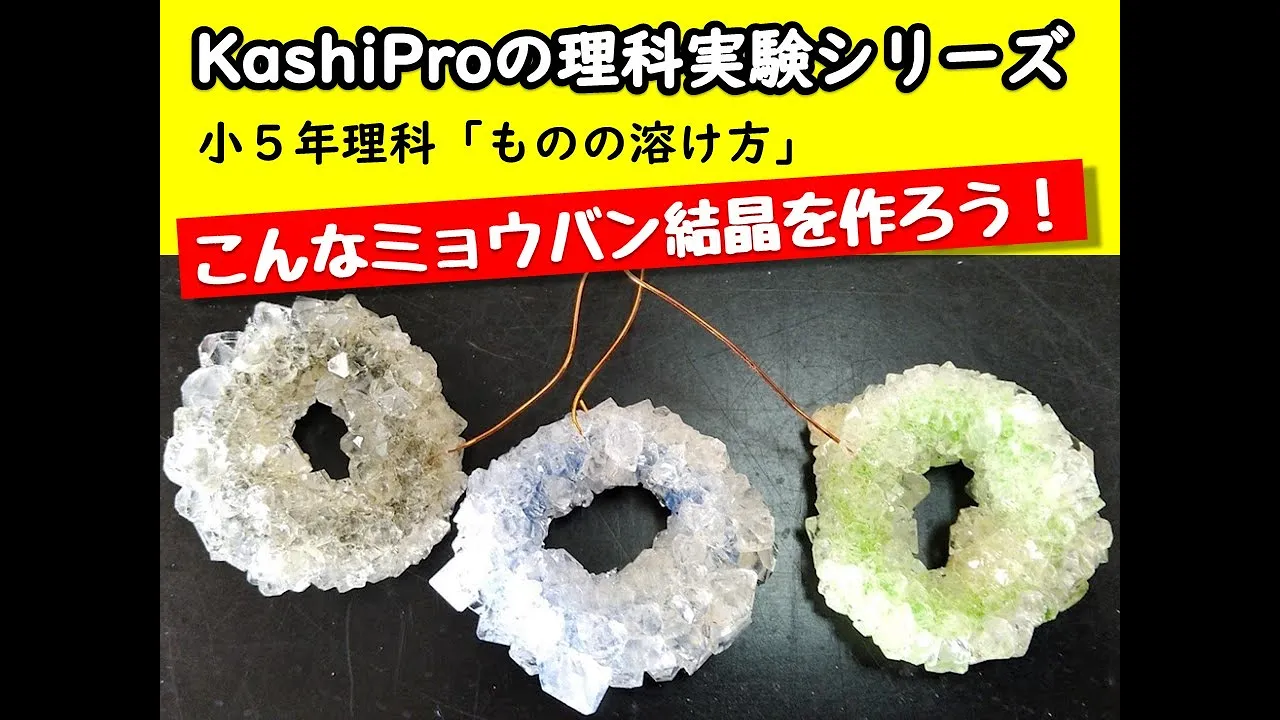
Making alum crystals

In 5th grade science, students learn about how substances dissolve, such as how much salt or alum can dissolve in 1 liter of water, and whether the amount that dissolves changes with the water’s temperature.
As a related independent project, how about making alum crystals? If you soak a pipe cleaner in hot water in which alum has been dissolved and then leave it until it cools, crystals will form around the pipe cleaner.
Repeating this process several times will produce a large alum crystal.
Once the crystal has formed, consider and research why crystals form, and compile your findings into a report—this will make an excellent independent research project.

Making a maglev train

Introducing how to make a linear motor car using dry batteries.
Attach two layers of magnets to a plastic sheet with double-sided tape.
The key here is to control the repelling force of the magnets and stick them on without any gaps.
Cut a melamine sponge for the vehicle body, and apply aluminum tape so it forms a U-shape.
Once you hook the magnet-mounted sheet onto the tape, connect clip wires to the rails.
Sandwich the lead wires in the aluminum tape, and connect the batteries in series to finish the setup.
It’s a great independent research project theme that lets you enjoy both a science experiment and toy-making at the same time.

Skeleton Egg

This is an experiment where you can enjoy watching an egg turn transparent by soaking it in vinegar.
Rinse an egg with water, place it in a glass, pour in enough vinegar to cover the egg, and cover the top with a paper towel—that’s all you need to do.
Leave it for about two days, and the egg will gradually become transparent.
The change happens because the acidic vinegar dissolves the calcium in the eggshell.
The fizzing bubbles are caused by carbon dioxide being released, and the egg becomes larger because water molecules enter through tiny pores in the membrane.
Be careful not to eat the egg made in this experiment.
It’s a perfect topic for an independent research project that you can document with photos, illustrations, and writing.
Cooking with an original recipe

By the time they reach third grade, some children may become interested in cooking.
So why not come up with and try making an original recipe of their own? First, think of a recipe that makes you say, “If I do this, it should taste great!” and then actually make it.
If you summarize the parts that turned out differently from what you imagined and the points you would improve next time, it will make an excellent independent research project.
It’s also a good idea to grow summer vegetables in plastic bottles or planters and use them in your recipe.
If you use heat, be sure to work with an adult.

Solo Camping Experience

Here is an idea for an independent study project with the theme of solo camping, where children can have the valuable experience of spending time alone surrounded by nature.
By handling preparations, travel, and meals by themselves, children can enjoy an extraordinary experience and a sense of accomplishment.
In practice, they won’t actually stay completely alone—parents or guardians should watch from a distance or participate as the person filming the experience.
Travel to the campsite by bicycle or train, and upon arrival, set up a one-person tent.
Once you’ve lit a prepared fire pit using dry branches and charcoal, you can cook rice with solid fuel and heat up retort pouch foods.
At night, sleep in a sleeping bag and welcome the morning, completing a one-night, two-day overnight program.
Plankton Observation

Observing plankton is an independent research topic that lets you explore familiar nature in depth.
Peering into the world of tiny organisms through a microscope stimulates children’s curiosity and can spark a deeper interest in biology.
Scoop water from a pond or river into a container, place a drop of the collected water onto a slide with a dropper, and observe it under a microscope.
Record the shapes and movements of the plankton with illustrations or notes, and then look up their names and characteristics in field guides or on the internet to deepen interest in living things.
This is one of the recommended independent research themes for fifth-grade elementary students who conduct science experiments in class.
Unbreakable soap bubble

Let’s add a scientific twist to soap bubbles—often seen as something kids enjoy—and aim for higher-quality bubbles.
Soap bubbles are usually thought to pop quickly, so we’ll consider how to solve that problem.
By making adjustments like mixing in liquid laundry starch/glue, the bubble solution becomes more durable.
It could be fun to try other ingredients too and aim for even stronger bubbles.
By experimenting with different formulas, you might discover your own ultimate, strongest soap bubbles.
