

Ideas for indoor activities, games, and group play that 5-year-olds enjoy

At age five, children deepen their friendships through play—cooperating with peers and becoming aware of others’ feelings—while developing social skills and teamwork.
In this article, we’re sharing indoor play ideas that are perfect for the developmental needs of five-year-olds.
We’ve gathered a wide range of activities: energetic games that get kids moving, activities that nurture thoughtful problem-solving, and simple DIY toy-making ideas that are easy to create and fun to play with.
We’re focusing on activities that encourage communication with friends during play, so use these ideas as a reference and enjoy meaningful time with the children.
- Ideas for indoor activities and group games that 5-year-olds like
- [For 5-Year-Olds] Recommended Indoor Play! A Collection of Exciting Games
- [For 4-Year-Olds] A Collection of Indoor Play and Game Ideas That Get Everyone Excited
- [Childcare] Full of energy! Indoor activity ideas to get kids moving
- For 4-year-olds! Introducing recommended indoor activities, group games, and crafts
- [Age 5] Exciting and fun! A special feature on ideas for at-home play
- Recommended for 3-year-olds! Fun indoor activities and group game ideas
- [Riddles] Have Fun with Kindergarten Seniors! A Collection of Riddles
- No prep needed! Indoor activities for 3-year-olds, including movement play and group games.
- Indoor recreation for children: A roundup of exciting games
- Recommended for 5-year-olds! Simple DIY toy ideas
- [Childcare] Playful craft ideas to enjoy with 5-year-olds
- [For 4-year-olds] Ideas for group games and craft activities that can be done indoors
Indoor play and game ideas, and group play ideas that 5-year-olds like (71–80)
gomudan
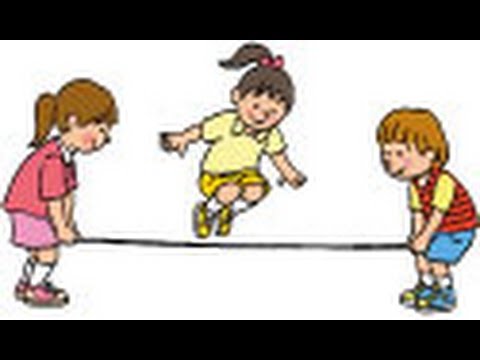
Here’s how to play Gomu-dan (rubber band jumping).
First, prepare a flat elastic band, and have two people hold the ends.
Let’s start with a simple jump-over game.
Hold the band at ankle height and jump over it.
Even if your feet catch on the band, it’s a success as long as you make it through to the other side.
Try different ways of jumping, like two-footed jumps, backward two-footed jumps, and cartwheel jumps! You can also raise the height to increase the difficulty and excitement.
Be sure to keep the band pulled tight—if it’s slack, it can be dangerous.

Churippu sharippu

Hold hands with your friends and play while calling each other’s names! Let me share the idea for “Churippu Sharippu.” There’s nothing to prepare, so just hum the song together and play.
There are moments in the song where you call out names, which makes it great for learning your friends’ names.
It’s especially recommended for classes with new or transferring children! You can adapt the way you play, so it’s an idea that children from infants to preschoolers can enjoy.
Be sure to try it in your activities.
Tag game where the number of chasers increases (Infection tag)

Here’s an introduction to “Fuyashi Oni,” a heart-pounding, edge-of-your-seat tag game where the number of taggers (oni) keeps increasing.
The rules are very simple: if you’re tagged, you become an oni, so the number of oni steadily grows—making it a game you can play with any number of people.
If you play with 30 people, before you know it there might be 29 oni and you’re the only one still running, surrounded and on pins and needles.
It can even turn into a psychological battle: an oni who’s been tagged might pretend not to notice and act like they’re still a runner, sidling up to someone and tagging them.
You don’t need any special equipment, so give it a try!
Pun Quiz

It’s like a riddle and really fun! Here are some ideas for pun quizzes.
By using puns, you can create laughter while learning words—a unique idea.
For example, for the question “What card game is a tiger playing?” the answer would be “toranpu” (trump), a play on words in Japanese.
Try coming up with answers that work like puns.
Children will develop creativity by twisting words to produce funny answers.
It’s something you can enjoy with family and friends while experiencing the fun of wordplay, and it helps build vocabulary and a sense of humor too! Let’s think up questions together, from easy to a bit challenging, and find the answers while laughing.
Don Janken

Let’s try playing Don-Janken, a quick and exciting game you can enjoy anywhere! The rules are very simple: split into two teams and line up at opposite ends.
At the signal, the first person from each team runs forward, and when they meet, they play rock-paper-scissors.
If you win, you keep going; if you lose, the next teammate starts running.
You continue advancing by playing rock-paper-scissors, aiming to reach the opponent’s side.
It’s called Don-Janken because when you meet, you both stretch your hands forward, touch with a “don!” and stop.
Play carefully to avoid injuries.