


When you’re told to do independent study in sixth grade, it can be hard to know what to do.
First, try to find something you’re interested in.
When you learn about things you like, you can keep going and have fun with it.
Here, we’ve gathered simple independent study ideas that let you make amazing discoveries by learning a little bit every day.
Try using different methods like materials, books, and videos.
Learning with friends or family makes it even more enjoyable.
Learning can open up new worlds and lead to new discoveries.
Make the most of your current interests and try engaging in enjoyable independent study.
- Recommended for 5th graders! A collection of easy self-study ideas you can enjoy while learning
- Recommended for 3rd graders! A collection of easy self-study ideas you can try
- For 6th Graders: Unique and Fun Ideas for Independent Research Projects
- Self-directed study that impresses your teacher! Recommended independent science study ideas for 6th graders
- Recommended for 4th graders! A collection of easy self-study ideas to try
- Recommended for elementary students! A collection of fun craft ideas to make for 6th graders
- Self-study that impresses your teacher! Recommended science self-study ideas for 5th graders
- Recommended Independent Research Projects for 5th Graders [Elementary School Students]
- Third graders will be hooked! A collection of science project ideas using everyday materials
- Independent study that impresses your teacher! Science self-study ideas recommended for third graders
- [For 4th Graders] Fun Independent Research Ideas You Can Do With Everyday Materials
- Recommended for elementary school students! Science fair topics & craft ideas
- [For 2nd Graders] Make it with everyday materials! Irresistibly engaging ideas for independent research projects
Recommended for 6th graders! A collection of easy self-study ideas you can enjoy (1–10)
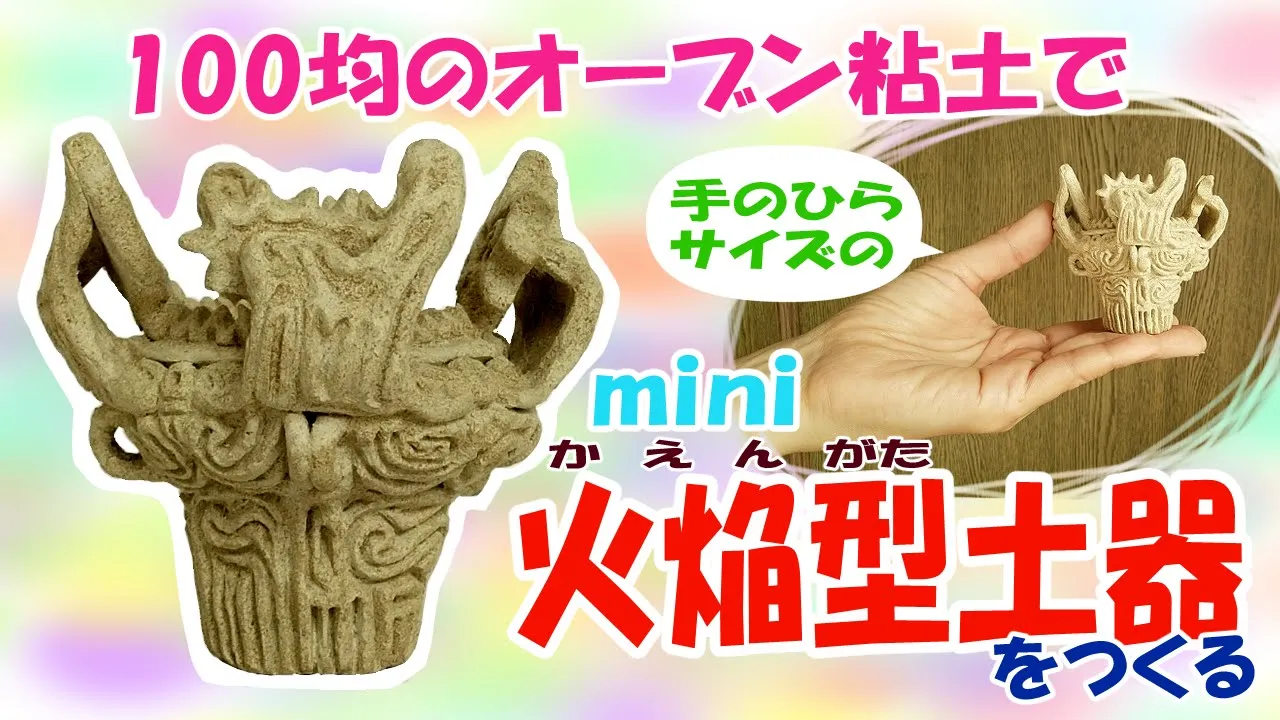
[Oven-Bake Clay] Let’s Make Jomon Pottery
![[Oven-Bake Clay] Let’s Make Jomon Pottery](https://i.ytimg.com/vi/Ekutbek-myw/sddefault.jpg)
Jomon pottery, said to have been used by people in the Jomon period for cooking and other purposes, has an impressive, uniquely shaped design.
This craft project involves making Jomon-style pottery out of clay, and it can also serve as a history lesson.
You’ll use oven-bake clay, which you can find at 100-yen shops, and form a pot sized to fit in your oven by adding torn-off pieces of clay onto one another.
It’s recommended to first create a central cylinder and then attach decorative parts onto it; smooth the seams to create a unified look.
While referring to textbooks and other materials, it could be fun to try your own original patterns as well.

Let’s find tools that use levers

The principle of the lever, which lets you move heavy objects with a small force, is a name you’ve probably heard in science class.
Let’s understand what this lever principle is and look into the tools that use it.
You might discover something surprising about tools you’ve been using without thinking much about how they work.
The fulcrum, the point where force is applied, and the point where the effect occurs are key when considering the lever principle, so it’s a good idea to also think about which parts of a tool correspond to each of these.
Solo Camping Experience

Here is an idea for an independent study project with the theme of solo camping, where children can have the valuable experience of spending time alone surrounded by nature.
By handling preparations, travel, and meals by themselves, children can enjoy an extraordinary experience and a sense of accomplishment.
In practice, they won’t actually stay completely alone—parents or guardians should watch from a distance or participate as the person filming the experience.
Travel to the campsite by bicycle or train, and upon arrival, set up a one-person tent.
Once you’ve lit a prepared fire pit using dry branches and charcoal, you can cook rice with solid fuel and heat up retort pouch foods.
At night, sleep in a sleeping bag and welcome the morning, completing a one-night, two-day overnight program.

Pill Bug Maze

Here’s an intriguing idea for a pill bug maze.
The concept is to place pill bugs in a cardboard maze and let them walk through it.
The pill bugs should advance through the maze following a pattern: right, left, right, left.
This actually stems from a behavior known as the alternation of turn response.
Try thinking about or researching why they possess such a habit.
By the way, earthworms can be used for the same experiment.
It might be fun to try both as a set.

Plankton Observation

Observing plankton is an independent research topic that lets you explore familiar nature in depth.
Peering into the world of tiny organisms through a microscope stimulates children’s curiosity and can spark a deeper interest in biology.
Scoop water from a pond or river into a container, place a drop of the collected water onto a slide with a dropper, and observe it under a microscope.
Record the shapes and movements of the plankton with illustrations or notes, and then look up their names and characteristics in field guides or on the internet to deepen interest in living things.
This is one of the recommended independent research themes for fifth-grade elementary students who conduct science experiments in class.
Handmade claw machine

Crane games that let you grab candy, plush toys, and figures are popular with kids.
Let’s try making a homemade device so you can enjoy the excitement of “I wonder if this prize can be picked up with this arm movement…” at home.
Build the main body using cardboard or empty boxes.
Next, create the crane arm with straws or wooden chopsticks, and connect it with thread so it can move.
Prepare prizes you like, such as small toys or snacks.
By researching how crane games work as you build, you’ll also discover the fun of crafting.
This is a science project idea that’s enjoyable not only during the building process but also when you play with the completed game.
Handmade fireworks

Fireworks are an essential part of summer, aren’t they? Instead of just buying store-bought ones, how about trying to make your own? The plan is to make sparklers: you mix oxidizers, fuels, and flash agents—the basic components of gunpowder—and wrap the mixture in paper.
Since they burn with a crackling sparkle, be sure to prioritize safety while experimenting with the amounts and wrapping methods to make them last longer.
The way you apply the powder can cause uneven burning, so staying focused while you work is also an important point.