

For 6th Graders: Unique and Fun Ideas for Independent Research Projects


We’ve gathered recommended ideas for anyone looking for interesting summer independent study themes perfect for 6th graders! From “Let’s research the SDGs” to “Let’s make original Jomon-style pottery,” these topics showcase the creativity and ingenuity fitting for upper elementary students.
They’re full of unique ideas that will set you apart from your friends.
From projects you can start with familiar materials to more advanced experiments, you’re sure to find the perfect theme.
Kick off a fun and fitting independent study for your 6th-grade summer vacation!
- Recommended for elementary school students' independent research! Experiment and observation ideas using everyday materials
- Recommended for elementary school students! Science fair topics & craft ideas
- Simple but awesome! Craft ideas for upper-grade girls
- Recommended for middle school students! A collection of quick science project ideas you can do in a short time.
- Stand out with your junior high school independent research! A collection of fun experiment and craft ideas
- Elementary School Students: Simple One-Day Science Project and Craft Ideas
- DIY science projects that elementary school boys will love: ideas you can make with everyday materials
- Recommended for 6th graders! A collection of easy self-study ideas you can enjoy while learning
- Recommended for elementary students! A collection of fun craft ideas to make for 6th graders
- Craft ideas using plastic bottle caps [for boys]
- Self-directed study that impresses your teacher! Recommended independent science study ideas for 6th graders
- [For Upper Elementary Students] Simple but Awesome! A Collection of Summer Vacation Craft Ideas
- [For 4th Graders] Fun Independent Research Ideas You Can Do With Everyday Materials
[For 6th Graders] Stand-Out, Fun Independent Research Ideas (71–80)
Let’s make an ultra-rich juice

In summer, many people have probably experienced freezing a plastic bottle of sports drink and, when sipping the partially melted liquid, feeling that it tastes “stronger than usual!” Let’s make this phenomenon the theme of a science project: What mechanism causes it? The key is a phenomenon called freezing point depression.
Solutions containing substances like sugar freeze later and melt sooner than pure water.
Based on this, you can investigate and summarize how the perceived increase in flavor strength differs depending on the type of beverage you freeze.

Make an electromagnet and investigate its properties
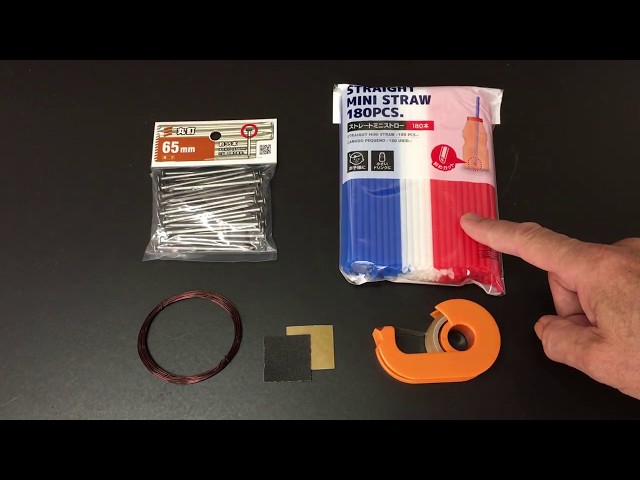
In 5th grade, you’ll likely learn about electromagnets at school.
For your summer break independent project, try making an electromagnet yourself and use it to investigate its properties.
An electromagnet works by making a coil with enameled wire and running an electric current through it to generate magnetic force.
It would be good to test various conditions—such as the number of turns in the coil, what you place as the core inside the coil, increasing the number of batteries or changing how they are connected—and compile a report on how the magnetic strength changes.
plastic bottle rocket

Another classic for independent research projects is the plastic bottle rocket, which I highly recommend.
Not only is the building process fun, but launching it is thrilling, too.
By the way, there are craft kits for plastic bottle rockets available for purchase, so you can make one easily.
After you finish, try thinking creatively about how to make it fly farther.
One of the appeals of plastic bottle rockets is that you can experiment freely.
Try various methods, like using carbonated water instead of regular water.

Paper chromatography

Chromatography refers to a method for separating mixtures, and paper chromatography is a type of chromatography that uses water and filter paper.
Although chromatography might sound like a formal chemistry experiment, it’s actually easy to try as a hands-on science project.
One simple activity is to use paper chromatography to separate the inks of water-based pens.
Water-based pen ink is made by mixing various colors; for example, when you separate green ink, you can see that it’s composed of multiple colors.
The method is simple: color a coffee filter with a water-based pen, then dip it in water and leave it.
The ink will separate as if it’s bleeding, revealing which colors were mixed.
Try separating and observing different colors, or investigate whether the mixture of colors differs between brands even for the same ink color.
Historical research of the area where you live

Some of you may be struggling to find a topic even though you want to do research.
In such cases, it might be a good idea to study the history of the area where you live.
The park you usually play at may have an unexpected past, and a building you’ve never paid attention to might actually be historically significant.
Searching online is convenient, but asking local residents or visiting the library can make the process feel more immersive and enjoyable.
As a variation, you could also look into the history of your school.