

Great enka masterpieces and hit songs of the 1970s

When you think of enka, many people imagine songs that use distinctive vocal inflections to express Japanese sentimentality and tales of love.
Enka became popular as mainstream music starting in the 1960s, but in fact, the term “enka” didn’t really take hold until the 1970s.
In this article, we’ve researched timeless enka hits from the ’70s and compiled songs that truly resonate with the Japanese heart—perfect for a first listen.
Alongside massive hits you’ve likely heard at least once, we’ve also picked many songs that lean toward kayōkyoku (Showa-era pop).
So if you’re a younger music fan curious about Showa-era Japanese music, be sure to check them out.
- A roundup of male enka singers in their 70s: legendary vocalists who support the enka world
- Classic enka songs you’ll want to sing at karaoke: recommended popular tracks
- A roundup of female enka singers in their 70s: voices that evoke nostalgia
- Great enka masterpieces and hit songs of the 1980s
- Cool masterpieces of enka, the heart of Japan
- [Showa Era] A Collection of Enka Hits: Timeless Classics Loved Across Generations
- Legendary enka songs that fire up the crowd. A song catalog of enka picks you won’t go wrong with at karaoke.
- A roundup of leading female enka singers representing the Showa era
- [2026] A Collection of Masterpieces of Enka and Mood Kayō
- [1980s] A roundup of debut songs by enka singers
- [2026] Life's Cheering Songs: A Collection of Recommended Enka to Lift Your Spirits
- Heart-touching, tear-jerking masterpieces from the Showa era
- Great enka masterpieces and hit songs of the 1990s
Great Enka Classics and Hit Songs of the 1970s (11–20)
companion on the road; fellow traveler; taking someone along (often unwillingly)Makimura Mieko

Originally, it was a track on an album by Tetsuya Watari, a major actor who was signed to Polydor Records.
Mieko Makimura, who was with the same label, directly asked Watari if she could sing the song, and with his approval it was released in 1978.
Mieko Makimura’s “Michizure” went on to sell over two million copies in total, and Watari, thinking it would be confusing to have the same song out there, withdrew his own version from circulation.
A stylish gesture, indeed.
Will you marry me?Niinuma Kenji

Kenji Niinuma’s “Yome ni Konai ka” is a wholehearted song that captures the romantic landscape of Japan at the time.
Its melodic line is smooth and approachable, with a pastoral beauty that is deeply appealing.
Both the musical character and the lyrics highlight the Japanese music scene of the 1970s, resulting in a work that encapsulates all the charms of the era’s kayōkyoku.
Niinuma’s distinctive emotional expression shines throughout, creating phrases whose poignancy lingers long after you first hear them.
While the lyrics may feel out of step with the times today, it’s a song that evokes the Japan of the Shōwa era.

Scorpio womanMikawa Ken’ichi

Kenichi Mikawa became widely known through hits of local songs like Yanagase Blues and Niigata Blues, and this quasi-comic song is also one of his signature numbers.
However, after this song became a hit in 1972, he went through a slump and faded from the spotlight—until Korokke’s impression of him became a huge hit in 1991, leading to Mikawa’s comeback.
Some people get angry about being impersonated, but I think Mikawa is an entertainer whose life was changed by Korokke’s impression.
Madam of the Pleasure QuarterKaneda Tatsue

Released in 1973, “Kagai no Haha” took as long as six years to see the light of day.
While Tatsuē Kaneda was active as a folk singer, her supervising director, who strictly forbade enka, became furious; the single was released only in the Osaka area, and with almost no promotional budget she traveled all over Japan—enough to circle the archipelago two and a half times.
Kaneda has said she was determined to bring the song to the public because her own life is woven into it—so much so that she would naturally be moved to tears when singing, thinking of her foster mother who raised her.
Woman’s PathMiya Shirō to Pinkara Torio

Released in 1972, this song achieved record-breaking sales of 4 million copies according to Nippon Columbia.
For some reason, it was also popular with children.
It wasn’t that they understood the gritty lyrics; rather, during that era, it was a big hit because Kato Cha would make a hilarious entrance on the hugely popular kids’ show “It’s 8 o’clock! Everyone Gather Round!”—wearing thick ‘milk-bottle-bottom’ glasses, dressed in a police uniform, riding a bicycle, and singing this song.
That certainly helped boost its name recognition even further.
A life full of scarsTsuruta Koji
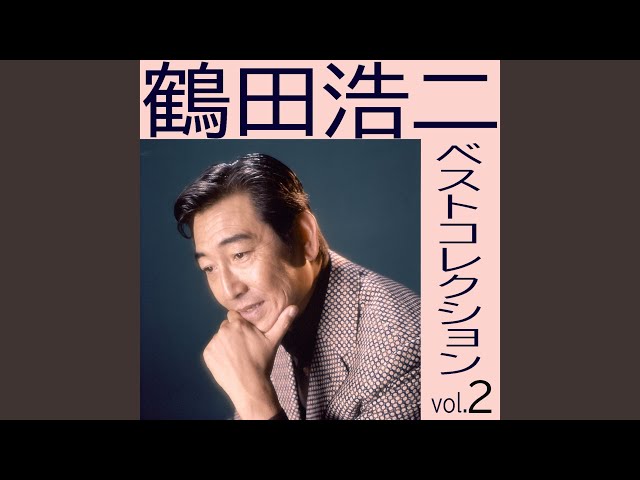
Pressing a hand to his ear and saying, “You may think I’m old-fashioned, but…,” he created an indescribably cool, picture-perfect moment.
True to its title, the song portrayed the yakuza world and became a huge hit, selling nearly one million records.
However, the mighty NHK deemed it “unsuitable for public broadcasting,” which angered Koji Tsuruta, and he refused to appear on NHK for the next six years.
Great Enka Masterpieces and Hit Songs of the 1970s (21–30)
The Woman of RumorUchiyamada Hiroshi to Cool Five

The vibrato at the start of the song is something unique to Kiyoshi Maekawa.
Even the title, “Uwasa no Onna” (The Woman of Rumor), felt quite groundbreaking for its time.
Released in 1970, the song—featuring Maekawa’s calm, understated delivery of a woman’s feelings—quickly became a hit.
Composer Kimimasa Inomata originally intended to offer the song to Shinichi Mori, but after Mori turned it down, it was passed on to the Cool Five.
You could say Mori might have missed out on another hit.