

Anime songs that were hits in the 1990s. Recommended masterpieces and popular tracks.

Back in the 1990s, it still wasn’t the age of the internet.
These days, late-night anime and VOD subscriptions are the norm, but when you think of 90s anime, it was all about those early evening broadcasts.
Many of you probably spent your grade-school days rushing home after classes and turning on the TV right away.
This time, we’re featuring anime songs from that nostalgic 90s era!
Be sure to look for tracks from the shows you were obsessed with.
They’re great picks to keep in mind for karaoke, too!
- [Nostalgic] Classic and Popular Anime Songs Recommended for People in Their 30s
- Anime songs recommended for people in their 40s, from nostalgic classics to the latest hits.
- [Nostalgic] A roundup of anime songs and theme songs that were hits in the 1980s
- Anisongs that were hits in the 2000s: a nostalgic collection of legendary tracks
- Recommended anime songs for people in their 50s. Classic and popular anime theme songs.
- A coming-of-age song that was a hit in the ’90s. A classic and popular track in Japanese music.
- [Nostalgic] A special feature on legendary anime theme songs: revisiting those classic tracks
- [Top 20] Anime Song Sales Ranking of the Heisei 30 Years!
- [Nostalgic Songs] A compilation of classic anime themes that hit home for those born in the Showa and Heisei eras
- Including global smash hits! Anime songs recommended for Gen Z
- [Nostalgic & Latest] A Special Feature on Anime Songs Recommended for People in Their 20s
- 1990s J-Pop to listen to in summer: classic and hit summer songs
- [Hot & Cool] Up-tempo, hype-inducing anime song
Anime songs that were hits in the 1990s: Recommended masterpieces and popular tracks (61–70)
I want to shout that I love you.BAAD

Slam Dunk is an anime based on the manga by Takehiko Inoue that sparked a basketball boom.
Its theme song is Kimi ga Suki da to Sakebitai, the third single by the rock band BAAD, which peaked at No.
16 on the Oricon chart.
Katsushika RhapsodyDōjima Kōhei

It’s the opening theme of “Kochira Katsushika-ku Kameari Kōen-mae Hashutsujo.” The somewhat nostalgic melody is nice, isn’t it? Maybe the content of the series influences it too, but when I listen, I get the feeling I’m in Tokyo’s shitamachi downtown.
It’s sung by Kohei Dojima, a singer-songwriter from Osaka Prefecture.
Lucky Man’s SongYashiro Aki

Tottemo! Luckyman is a manga by Hiroshi Gamo that was serialized in Weekly Shonen Jump, and it once made a joke involving enka singer Aki Yashiro within the story.
Thanks to that connection, when it was adapted into an anime, Aki Yashiro performed the theme song, “The Luckyman Song.”
Takoyaki Mantoman Theme Songsaneyoshi isako
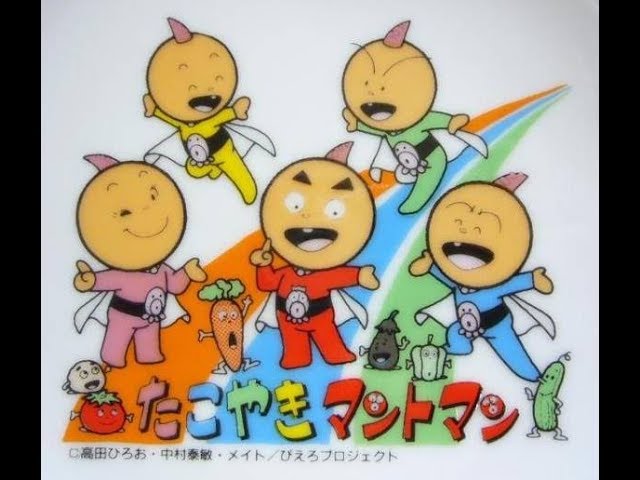
This is the opening theme of Takoyaki Mantoman, which aired in 1998.
This catchy song, with its lively melody and cute lyrics, fits the anime perfectly and makes you feel happy when you listen to it.
By the way, the original work of Takoyaki Mantoman is a picture book by Hiroo Takada and Yasutoshi Nakamura.
Some of you may know it from that.
100% CourageHikaru GENJI

This is the opening theme of Nintama Rantarō, which has been airing since April 10, 1993 and continues to this day.
It was originally performed by Hikaru GENJI, and has since been passed down and sung by successive Johnny’s groups such as Ya-Ya-yah, Hey! Say! JUMP, NYC, Sexy Zone, and Junior Boys.
I bet many of you can sing it even without looking at the lyrics.
Where the clouds goTakeda Tetsuya

It’s the theme song for the film Doraemon: Nobita and the Kingdom of Clouds.
It’s a classic by Kaientai, with Tetsuya Takeda on vocals.
Kaientai frequently handled the theme songs for Doraemon films at the time.
Among them, this song is particularly popular.
The exquisite combination of Doraemon and folk music added depth to the movie.
Listening to it again now, you’ll be struck by the profoundness of Kaientai’s lyrics.
Demon God Child ZENKIKageyama Hironobu

As the title suggests, this is the opening theme of the anime Zenki: The Demon Child.
It’s sung by Hironobu Kageyama, known as the “Prince of Anison.” The hard rock sound and his passionate vocals are irresistible! It’s such a cool track that makes you want to say, “This is what anison is all about.”