

Anime songs that were hits in the 1990s. Recommended masterpieces and popular tracks.

Back in the 1990s, it still wasn’t the age of the internet.
These days, late-night anime and VOD subscriptions are the norm, but when you think of 90s anime, it was all about those early evening broadcasts.
Many of you probably spent your grade-school days rushing home after classes and turning on the TV right away.
This time, we’re featuring anime songs from that nostalgic 90s era!
Be sure to look for tracks from the shows you were obsessed with.
They’re great picks to keep in mind for karaoke, too!
- [Nostalgic] Classic and Popular Anime Songs Recommended for People in Their 30s
- Anime songs recommended for people in their 40s, from nostalgic classics to the latest hits.
- [Nostalgic] A roundup of anime songs and theme songs that were hits in the 1980s
- Anisongs that were hits in the 2000s: a nostalgic collection of legendary tracks
- Recommended anime songs for people in their 50s. Classic and popular anime theme songs.
- A coming-of-age song that was a hit in the ’90s. A classic and popular track in Japanese music.
- [Nostalgic] A special feature on legendary anime theme songs: revisiting those classic tracks
- [Top 20] Anime Song Sales Ranking of the Heisei 30 Years!
- [Nostalgic Songs] A compilation of classic anime themes that hit home for those born in the Showa and Heisei eras
- Including global smash hits! Anime songs recommended for Gen Z
- [Nostalgic & Latest] A Special Feature on Anime Songs Recommended for People in Their 20s
- 1990s J-Pop to listen to in summer: classic and hit summer songs
- [Hot & Cool] Up-tempo, hype-inducing anime song
Anime songs that were hits in the 1990s: Recommended masterpieces and popular tracks (21–30)
Until the World Ends…WANDS

This is the ending theme for episodes 25–49 of SLAM DUNK, which aired from October 16, 1993 to March 23, 1996.
SLAM DUNK itself is an amazing work, and its music is full of great songs, too.
Listening to it makes me want to play basketball.
Someone at any timeJōjō Taihūn

When it comes to the ending theme of the animated film Pom Poko, it’s “Itsudemo Dareka ga” by Shang Shang Typhoon.
Released in 1993, this song celebrates the importance of bonds between people.
It features a distinctive sound that incorporates traditional Asian music and a friendly, catchy melody.
It resonates with listeners, offering courage and hope.
It’s a great pick to sing together at karaoke with people of the same generation.
Anime songs that were hits in the 1990s: Recommended masterpieces and popular tracks (31–40)
The Strongest, Number One, All-OutFEEL SO BAD

Hell Teacher Nūbē is an anime about Meisuke Nueno, a teacher with an Oni Hand, who exorcises yokai.
The theme song “BARIBARI Saikyō No.1” was performed by FEEL SO BAD.
Its highest position on the Oricon weekly chart was 35th.
1/2Kawamoto Makoto

It’s the theme song of Rurouni Kenshin, a popular Jump anime that was also adapted into a live-action film.
Although the story is set in the era of samurai like a period drama, the pop quality of this song felt refreshingly well-matched to the narrative.
In any case, it’s truly worthy of being called a masterpiece—the cute, rhythmic lyrics and the way the song unfolds are wonderful, and it’s a moving piece no matter how many times you listen to it.

The radiance is within you.Suzuki Yume

The opening theme of the anime NINKU, which aired in 1995, is Kagayaki wa Kimi no Naka ni by singer-songwriter Yumi Suzuki.
It’s a distinctive song that, unusually for a boys’ anime, conveys a somewhat dark worldview, so many people may still remember it.
Incidentally, the original manga, serialized in Weekly Shonen Jump, went on repeated hiatus and remained unfinished for a long time, but it was revived with serialization in Ultra Jump and concluded in 2011.
Feelings in your colorSMAP / Sawada Shoko

Broadcast in 1994, Red Riding Hood Chacha is a TV anime based on a girls’ manga serialized in Ribon.
Its opening theme was SMAP’s Kimi Iro Omoi.
The song is very popular—it was even included in a best-of album selected by SMAP fan votes—but when the anime was released on home video, rights issues arose, so the song was replaced with a cover version sung by Seiko Sawada instead of SMAP.
Moonlight LegendDALI
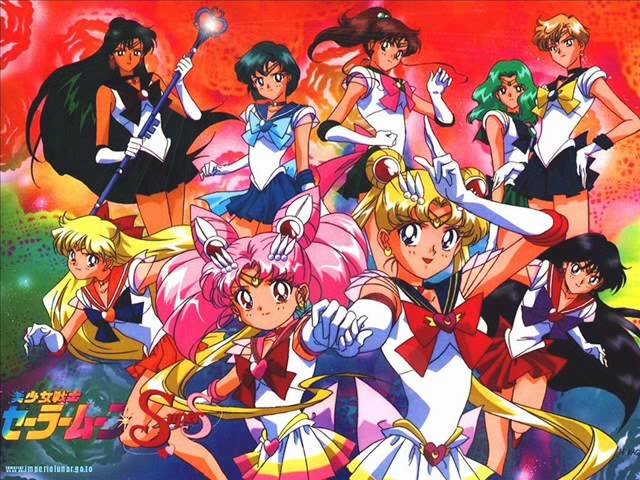
This is the opening theme of Pretty Guardian Sailor Moon, which aired from March 7, 1992 to February 27, 1993.
Since it’s a globally famous work, the song is also passionately supported by people overseas.
Both the music and the lyrics are totally cute, aren’t they?