

Anime songs that were hits in the 1990s. Recommended masterpieces and popular tracks.

Back in the 1990s, it still wasn’t the age of the internet.
These days, late-night anime and VOD subscriptions are the norm, but when you think of 90s anime, it was all about those early evening broadcasts.
Many of you probably spent your grade-school days rushing home after classes and turning on the TV right away.
This time, we’re featuring anime songs from that nostalgic 90s era!
Be sure to look for tracks from the shows you were obsessed with.
They’re great picks to keep in mind for karaoke, too!
- [Nostalgic] Classic and Popular Anime Songs Recommended for People in Their 30s
- Anime songs recommended for people in their 40s, from nostalgic classics to the latest hits.
- [Nostalgic] A roundup of anime songs and theme songs that were hits in the 1980s
- Anisongs that were hits in the 2000s: a nostalgic collection of legendary tracks
- Recommended anime songs for people in their 50s. Classic and popular anime theme songs.
- A coming-of-age song that was a hit in the ’90s. A classic and popular track in Japanese music.
- [Nostalgic] A special feature on legendary anime theme songs: revisiting those classic tracks
- [Top 20] Anime Song Sales Ranking of the Heisei 30 Years!
- [Nostalgic Songs] A compilation of classic anime themes that hit home for those born in the Showa and Heisei eras
- Including global smash hits! Anime songs recommended for Gen Z
- [Nostalgic & Latest] A Special Feature on Anime Songs Recommended for People in Their 20s
- 1990s J-Pop to listen to in summer: classic and hit summer songs
- [Hot & Cool] Up-tempo, hype-inducing anime song
Anime songs that were hits in the 1990s. Recommended masterpieces and popular tracks (41–50)
Get alongHayashibara Megumi, Okui Masami

It’s the opening theme of the first anime adaptation of Hajime Kanzaka’s popular light novel series Slayers, sung by Megumi Hayashibara, who voices the protagonist Lina Inverse, and singer-songwriter Masami Okui.
It peaked at number 36 on the Oricon weekly chart.
Invisible Power ~INVISIBLE ONE~B’z

This is the ending theme of Hell Teacher Nūbē, which aired from April 13, 1996 to June 21, 1997.
It was released in 1996 as the 19th single by B’z, one of Japan’s leading rock duos.
The grand sound and world-building are truly impressive.
Warrior, rise!Endō Masaaki

This is the theme song from when Masō Kishin Cybaster, which appears in the Super Robot Wars series, was adapted into an anime.
It seems opinions are divided, partly because the anime differed too much from the original, but Masaaki Endoh’s opening theme is undeniably cool.
Aim to be a Pokémon MasterMatsumoto Rika

It’s the well-known opening theme of the anime Pokémon.
The series began airing in 1997, and this song was used as the very first theme, becoming a huge hit.
Since it’s been remade several times, some of you might know it from one of those versions.
Wind Climbing ~Played by the Wind~Okui Aki
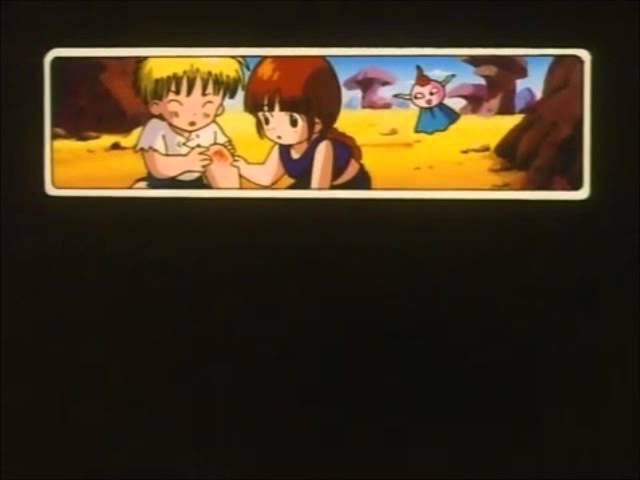
The popular manga Magical Circle Guru-Guru, serialized in Monthly Shonen Gangan, was adapted into an anime in 1994 and later became a major hit with a film version as well.
The ending theme for the TV anime was Aki Okui’s “Wind Climbing ~Kaze ni Asobarete~.” She later handled the ending theme as well, and has gone on to produce many other anime theme songs.
frecklesJUDY AND MARY

This is the opening theme for episodes 1–38 of Rurouni Kenshin: Meiji Swordsman Romantic Story, which aired from January 10, 1996 to September 8, 1998.
Many people think of this song when they think of the rock band JUDY AND MARY.
It was a million-selling hit and is one of the most beloved songs in the Japanese music scene of the 1990s.
Wapiko’s Genki Forecast!Uchida Junko

The theme song from when Neko Nekobe’s signature work Goldfish Warning!, serialized in Nakayoshi, was adapted into a TV anime.
“Wapiko” is the name of the main character.
It was sung by Junko Uchida, who is also well known as a choreographer.
Incidentally, the tone of the original manga and the anime differs somewhat.