

Anime songs that were hits in the 1990s. Recommended masterpieces and popular tracks.

Back in the 1990s, it still wasn’t the age of the internet.
These days, late-night anime and VOD subscriptions are the norm, but when you think of 90s anime, it was all about those early evening broadcasts.
Many of you probably spent your grade-school days rushing home after classes and turning on the TV right away.
This time, we’re featuring anime songs from that nostalgic 90s era!
Be sure to look for tracks from the shows you were obsessed with.
They’re great picks to keep in mind for karaoke, too!
- [Nostalgic] Classic and Popular Anime Songs Recommended for People in Their 30s
- Anime songs recommended for people in their 40s, from nostalgic classics to the latest hits.
- [Nostalgic] A roundup of anime songs and theme songs that were hits in the 1980s
- Anisongs that were hits in the 2000s: a nostalgic collection of legendary tracks
- Recommended anime songs for people in their 50s. Classic and popular anime theme songs.
- A coming-of-age song that was a hit in the ’90s. A classic and popular track in Japanese music.
- [Nostalgic] A special feature on legendary anime theme songs: revisiting those classic tracks
- [Top 20] Anime Song Sales Ranking of the Heisei 30 Years!
- [Nostalgic Songs] A compilation of classic anime themes that hit home for those born in the Showa and Heisei eras
- Including global smash hits! Anime songs recommended for Gen Z
- [Nostalgic & Latest] A Special Feature on Anime Songs Recommended for People in Their 20s
- 1990s J-Pop to listen to in summer: classic and hit summer songs
- [Hot & Cool] Up-tempo, hype-inducing anime song
Anime songs that were hits in the 1990s. Recommended masterpieces and popular tracks (41–50)
Driver’s HighL’Arc〜en〜Ciel

It was the opening theme for episodes 1 through 16 of GTO, which aired from June 30, 1999 to September 2000, and the ending theme for the final episode.
The engine sound in the intro is so cool, and I remember getting totally hooked on L’Arc at the time because of this song.
The track matches perfectly with the protagonist, Eikichi Onizuka—he’s a hopeless guy, but he always ends up looking awesome—and I looked forward to it every week.
Anime songs that were hits in the 1990s. Recommended masterpieces and popular tracks (51–60)
Rondo – revolutionOkui Masami

Broadcast in 1997, the TV anime Revolutionary Girl Utena gained popularity across a wide audience thanks to its experimental direction and a storyline that transcended the boundaries of shoujo manga.
Its opening theme, Rondo – revolution, was released as Masami Okui’s 10th single.
She has worked on many other anime songs as well, and in 2003 she joined JAM Project, a hugely popular group of anison singers.
WinnersG・GRIP

Set against the backdrop of a fictional auto race, the TV anime Future GPX Cyber Formula aired in 1991.
Riding the wave of the F1 racing boom at the time, it became popular for its authentic, high-octane racing scenes.
4人組女性バンドのG・GRIPが本作のオープニングとエンディングの両テーマを担当し、このオープニング曲は作品の世界観に完璧にマッチしたテンポの速い楽曲である。
FLYING IN THE SKYUjima Yoshifumi

Mobile Fighter G Gundam was the first entry in the Gundam series set in a world outside the Universal Century timeline, and its distinctly different style from previous series became a major talking point.
The first opening theme is Flying in the Sky, which was Jin Hashimoto’s debut song.
DREAMSROMANTIC MODE
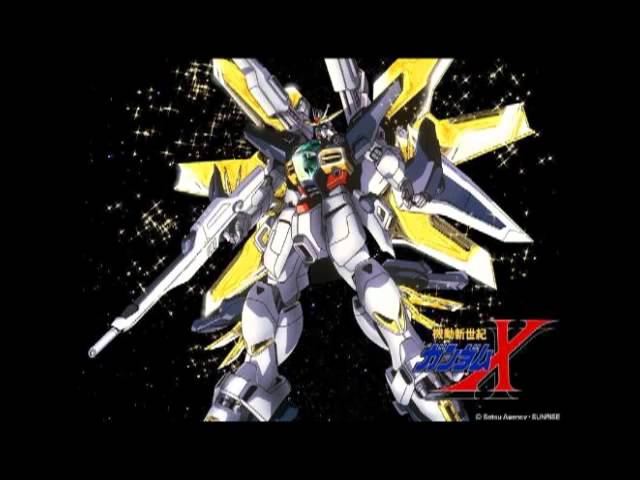
The Gundam series is synonymous with Japan’s flagship robot anime.
One of the works broadcast on TV in the 1990s, After War Gundam X, aired in 1996.
Its opening theme, DREAMS, was ROMANTIC MODE’s debut song, and the vocalist Akira Asakura also made a name for herself as an anime song singer.
Blue waterMorikawa Miho

Nadia: The Secret of Blue Water is an anime series directed by Hideaki Anno as chief director, who would later go on to create Evangelion.
Its theme song is Blue Water, sung by Miho Morikawa, which reached a peak position of 17 on the Oricon chart.
I want to see your smileHamada Rie

Marmalade Boy, a shoujo manga serialized in Ribon, was a huge hit in the 1990s.
It remains a beloved work, even getting a live-action film adaptation in 2018.
For the 1994 anime adaptation, the theme song chosen was Rie Hamada’s “Egao ni Aitai.” In fact, beyond anime, she has written and composed numerous songs for children’s programs on NHK Educational TV (E-Tele).