

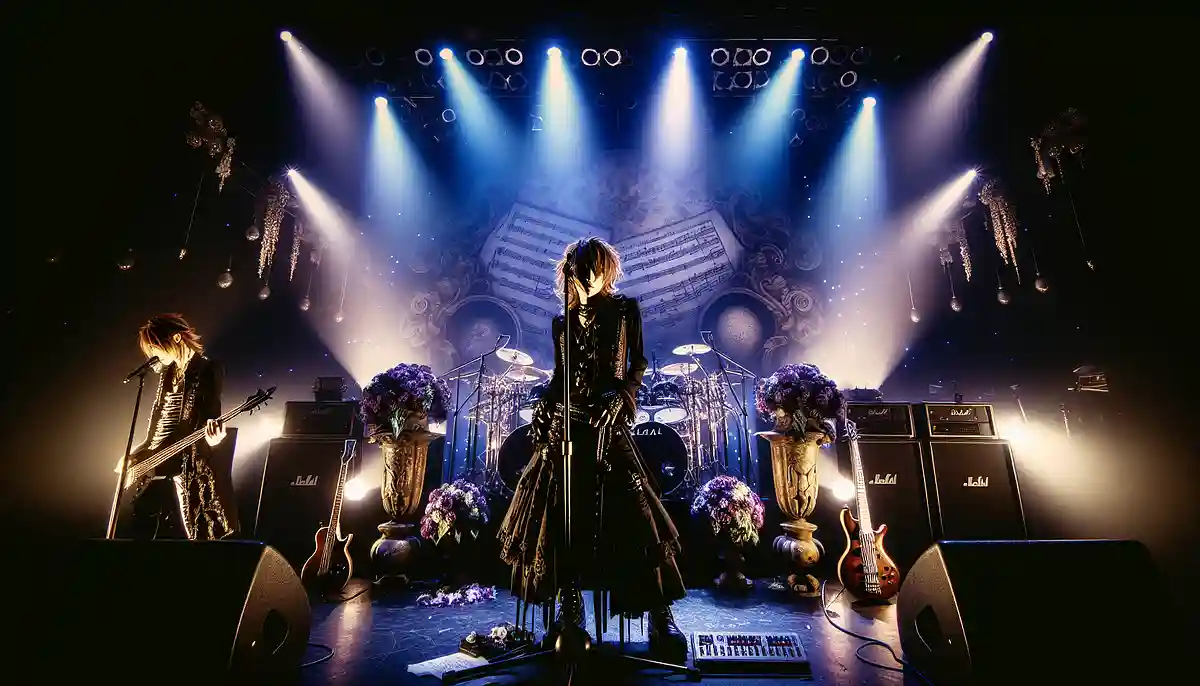
What kind of image comes to mind when you hear “visual kei”? Flashy, intense, heavy makeup, like Golden Bomber…
That’s how most people probably see it.
If you’re a bit knowledgeable about music, you might picture songs that sound like heavy metal.
By the way, have you heard of a band called Plastic Tree? They’re a band that overturns that typical image of visual kei.
In this article, I’d like to write about them.
- Plastic Tree Popular Song Rankings [2026]
- A classic masterpiece of visual kei. A staple and popular song representing V-kei rock.
- [Neo-Visual Kei] A roundup of popular songs by V-kei bands from the 2000s
- Debut song of a 90s visual kei band
- A collection of hit songs and classics that opened the door to 1990s Visual Kei
- A song that gives my Instagram stories an emo vibe
- Masterpieces and popular songs by DIR EN GREY
- A popular song by Acid Black Cherry. A masterpiece that shines with aesthetic decadence and a strong conceptual flair.
- Lyrics that hit home! PornoGraffitti’s warm and fleeting masterpieces and popular songs
- PTP (Pay money To my Pain) classic and popular songs
- [BUCK-TICK Masterpieces] Popular Songs by the Legendary Band with an Overwhelming Presence
- A musical world expanding from novels! Ranking of popular songs by Sangatsu no Phantasia
- Zutomayo’s recommended songs: Popular tracks you’ll love more the more you listen
Plastic Tree(PlasticWhat is a tree)?
Plastic Tree is a four-piece rock band formed in 1993 in Ichikawa, Chiba Prefecture. After several member changes, the current members are
- Ryutaro Arimura: Vocals & Guitar
- Tadashi Hasegawa: bass and band leader
- Akira Nakayama: Guitar, Programming
- Kenken Sato: Drums, officially joined in 2009
Four of us.
The history is quite long: they were formed in 1993 and made their major debut in 1997.20th anniversary of their major debut this yearwelcome
Despite member changes, they have remained highly active without taking a single hiatus.kept on performing, including appearing at festivals with many non-visual-kei acts such as the Rock in Japan FestivalAn activity style unconstrained by genreIt is also one of the attractions.
Lately, the vocalist Ryutaro Arimura has begun solo activities and has been quite active individually, and guitarist Akira Nakayama has been especially active outside the band as well, taking part as a support member for Coaltar of the Deepers, among other projects.
musicality
Because of the way it developed, the visual kei genre is one that is strongly influenced by punk and heavy metal, and Plastic Tree is no exception; punk and heavy metal are among their roots.
However,They were mainly influenced by gothic UK rock like The Cure.Because of that, their early work had a somewhat gloomy and delicate feel, but after the 2002 album Traeumerei, with NARASAKI from Coaltar of the Deepers taking over production and an increase in compositions by guitarist Akira Nakayama, their musical style shifted considerably toward rock.
Along with that, the world Ryutaro Arimura depicts gradually shifts into something more imbued with a sense of reality.
These elements come together to create a distinctive musicality and worldview characterized by the coexistence of delicate lyrics—imbued with intensity and realism—and a powerful instrumental section.
And they have characteristics that are clearly different from other visual kei bands, which I will describe next.
What sets them apart from other visual kei
Plastic Tree has aspects that set them apart from other visual kei bands.
They are the musicality and sense of reality I mentioned earlier.
As I listed earlier regarding their musicality, they also incorporate and express grunge rock, alternative rock, and even shoegaze.
Therefore,Rather than a visual-kei-style sound, it’s about crafting a purely non–heavy metal UK rock sound and expressing noise in the direct lineage of shoegaze.There are many works that do things you wouldn’t normally see in visual-kei.
Also, contrary to the image, it seems quite different from the visual kei format—not only with heavy-metal-style chugging riffs and technical guitar solos, but also with many cutting-centric guitar riffs reminiscent of Coaltar of the Deepers.
Another feature is a sense of realism.
Since visual kei has its roots in positive punk and the new romantic movement, its lyrics tend to be highly introspective—focusing on abstract inner worlds and emotions—or, conversely, extraordinarily glamorous; in any case, they are distinctly one or the other.A characteristic of a lack of sense of realityI think (the following) can be mentioned.
However, this band’s lyrics often carry a sense of realism—lingering attachments and regrets rooted in everyday life, or even small daily joys—that is largely out of place in typical visual kei lyrics, despite sharing the same mode of inner expression.
Additionally, the lyrics sometimes include specific place names or objects—such as Chiba or a platform—which can make them feel more realistic.
Although the lyrics are expressed in a highly literary manner, their content is realistic and thus differs from that of ordinary visual kei bands.Regarding their influence on subsequent bands, the impact they had on non-visual-kei bands was greater.It seems (to me).
It makes me think they were among the first Japanese bands to set confessional, novelistic lyrics to rock with the intensity of heavy metal.
Now that you recognize the uniqueness of the band Plastic Tree, I'd like to introduce some recommended songs.
Please note that, following the current band members’ notation, we will unify all songwriting credits under full names. Thank you for your understanding.
Recommended songs
Sink (Lyrics: Ryutaro Arimura, Music: Tadashi Hasegawa)
Released in 1999, it is the best-selling song among their singles.
It’s a song evocative of early Plastic Tree, brimming with decadent elegance and pop sensibilities, with a memorable, catchy chorus.
It was also used as the ending theme for the TV anime The Kindaichi Case Files.
Platform (Lyrics: Ryutaro Arimura, Music: Akira Nakayama)
It’s a track included on the 2002 album “Traumerei.”
At this time, perhaps reflecting the clear influence of Akira Nakayama, who had begun supporting Coaltar of the Deepers, the guitar riffs and song structures are quite similar.
Moreover, since NARASAKI of Coaltar of the Deepers handled the arrangement and guitar, there was reportedly criticism at the time saying, “Don’t turn Pla into the Deepers.”
The song itself has a great sense of speed, and the way the guitar layers rapid-fire picking toward the end is really cool.
Spring-blooming Sentimental (Lyrics and Music: Ryutaro Arimura)
It is a single released in 2004.
With lyrics conveying the theme of remembering you after our breakup whenever I see cherry blossoms, woven together with interlocking piano and band sounds, the piece achieves an exquisitely delicate finish that fully expresses Ryutaro Arimura’s voice and worldview.
When Ryutaro Arimura writes and composes, the songs characteristically favor lyricism and poetic expression over a sense of speed, and they often end up being tracks that first-time listeners can easily picture as representing the band’s identity.
Pouring Down, Roaring Down (Lyrics and Music: Ryutaro Arimura)
The lyrics and composition for this one are also by Ryutaro Arimura.
It is included on the 2007 album “Nega to Poji.”
As the title suggests, it’s a song that suits the rain, and that quality may have more to do with its distortion sound—different from heavy metal in a grunge-like way—than with the lyrics.
Although it doesn’t have technical elements, it’s a song where you can purely appreciate how good the riff is, making it one of the fan favorites.
Owl (Lyrics: Ryutaro Arimura, Music: Ryutaro Arimura, Tadashi Hasegawa)
It’s a song included on the 2009 album “Dona Dona.”
A song with a strong sense of drive in its cutting guitar, whose poignant, farewell-tinged lyrics match perfectly, creating a rock-like punch and catchiness.
Personally, I love the guitar phrase right before the chorus, and I think of it as a kind of signature moment.
Kiss (Lyrics: Ryutaro Arimura, Tadashi Hasegawa; Music: Tadashi Hasegawa)
It’s a song included on the 2012 album “Ink.”
Starting with a piano and arpeggio phrase, it pairs exquisitely with lyrics that are richly adorned in a literary style to evoke the heartache of a forbidden love.
The fact that this song has something of a post-rock feel suggests that the band deviates quite a bit from visual kei conventions.
There aren’t any chugging, intricate heavy-metal-style riffs on the guitar, bass, or drums, but the way they skillfully build a minimal band sound to give the piece cohesion really conveys this band’s greatness and the weight of their career.
Mime (Lyrics: Ryutaro Arimura, Music: Tadashi Hasegawa)
It’s a track included on the 2015 album “Hakusei” (Taxidermy).
With instruments repeating phrases like minimal music and the bold use of digital sounds, this track evokes a new chapter for Plastic Tree.
It was probably a song they wouldn’t have written in their early days.
The repeating melody feels as pleasant as dance music, making it a song with instant impact that can really get the crowd going at live shows.
Plastic Tree’s songs are quite different from the typical image of visual kei, and I think many of them are approachable even for people who aren’t very familiar with that scene.
If you especially enjoy lyrically rich songs that make abundant use of Japanese, please give them a listen!