

![[Neo-Visual Kei] A roundup of popular songs by V-kei bands from the 2000s](https://i.ytimg.com/vi/rFF1r-C--tU/hqdefault.jpg)
[Neo-Visual Kei] A roundup of popular songs by V-kei bands from the 2000s


Visual kei, which reached its golden age in the 1990s and produced hits that ranked high on the Oricon charts, is now embraced overseas as a culture that transcends a Japanese music genre—so much so that the term “Visual kei” appears on Wikipedia.
Within the 30-plus-year history of V-kei, this article spotlights popular songs by the so-called “Neo-Visual Kei” bands of the 2000s.
We’ve compiled a selection of classics—hugely influential on today’s Visual kei bands—focusing on releases from the 2000s, spanning both major-label and indie acts.
Whether those years were your youth or you’ve only recently gotten into V-kei, enjoy!
[Neo-Visual Kei] A roundup of popular songs by 2000s Visual Kei bands (1–10)
This life is for you.the GazettE
Featured on the 2004 masterpiece “MADARA,” this track is one of the GazettE’s signature songs.
Its story-like lyrics, centered on the theme of pure love, delicately portray scenes and emotions that anyone with experience in romance can relate to.
The lyrics, imbued with anxiety and bittersweetness, paired with a dark, passionate sound, captivate listeners and won’t let go.
The striking guitar riff and the synths’ woven, dreamlike atmosphere reach not only the ears but deep into the hearts of sensitive listeners.
Listening to this piece offers a special moment—like experiencing a once-in-a-lifetime encounter through music.
Tokyo Wounded Yearsnaitomea

Nightmare, a band that established a unique worldview in Japan’s music scene.
Released in July 2004, this work is a song that portrays the loneliness and anguish of city life.
Its melancholic melodies fused with rap-style vocals draw listeners irresistibly into its world.
The powerful guitars and profound lyrics are highly valuable in how they expanded the possibilities of the visual kei genre.
In 2006, they provided the theme song for the anime DEATH NOTE, cementing the band’s popularity.
Expressing the emotions of young people wavering between reality and ideal, this track is one we highly recommend to anyone feeling weary of urban life.
LieShido

This is the third major-label single by SID, a four-member visual kei band that has been popular since their formation in 2003 for their pop style infused with elements of power pop and disco.
The song was used as the ending theme for the TV anime Fullmetal Alchemist: Brotherhood.
It’s a pop-rock number distinguished by the beautiful piano and strings that flow throughout, with a sinuous bass line that lingers in the ear.
Though the lyrics are written about romantic love, they can ultimately be read as expressing brotherly love as well, making it a track that ties in with the anime’s story.

CandyholicAntikku-Kohiten-
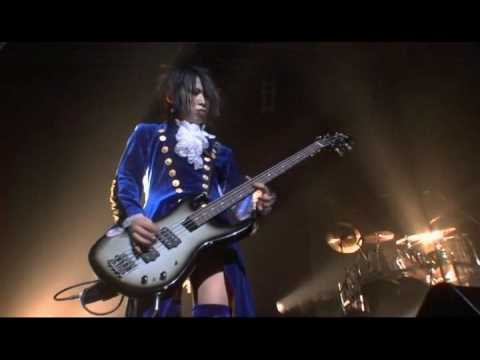
The first single by the visual kei rock band Antic Cafe (Antikku-Kohiten), formed in 2003 and better known by the nickname “An Cafe.” True to their musical concept of “dance rock” and “genre-free visual kei,” the track creates an irresistible groove that makes you want to move.
With a guitar intro featuring jet-like flanger effects and a driving vocal melody that ramps up the energy, it’s a fitting number for the original ‘kawaii’-style visual band.
The place where I ought to beMUCC

This is the major-label debut single by MUCC, a visual kei rock band from Ibaraki Prefecture, who began with a musical style that blends the weight and intensity of metal with melodies reminiscent of Showa-era kayōkyoku.
It starts with whisper-like vocals and a dark clean-guitar riff, then shifts into a loud band intro that brings the noisy guitars to the forefront, and opens up suddenly in the chorus.
The song naturally fuses the darkness associated with visual kei and melodies that evoke nostalgia.
Its lyrical worldview, which feels like an explosion of negative emotions, is also outstanding—a track worth hearing even if you’re not a fan of visual kei.
anachro filmbarokku

Baroque, the rock band that gained popularity with their rough look and genre-defying musicality and are said to be the pioneers of the “osare-kei” style.
The track Anachro Film, which opens their best-of album brq 2001-2004, leaves a strong impression with its shuffle-beat ensemble featuring noisy guitar sounds.
The lyrics, which evoke a hint of madness, meld with the hysterical sound to create an addictive effect.
It’s a rock tune that stands out as something anomalous even within the visual kei genre, drawing listeners into its uniquely original world.
You, who saved me as I was about to drown in a rotten sea.kagerou

Kagerou was a rock band in which all members composed songs, and despite being independent, they were highly acclaimed for their wide-ranging musicality.
Their 12th single, “You Saved Me When I Was About to Drown in a Rotten Sea,” was used as the ending theme for the late-night information program “Super V.I.P.” Its lyrics, which evoke the image of parting with someone dear, resonate deeply alongside a rich, layered ensemble.
It is one of Kagerou’s signature songs, debuting at No.
1 on the Oricon indie chart and reaching No.
21 on the major chart.