

[Baroque Music] A Curated Selection of Timeless Masterpieces and Famous Works

Baroque music, which emerged from the early 17th century to the mid-18th century.
During the Baroque era, when great composers such as Johann Sebastian Bach, Antonio Vivaldi, and George Frideric Handel were active, music was performed mainly at courts and in churches, and was cherished as an aristocratic pleasure beyond the reach of ordinary people.
Here, we present representative works from that era—pieces born in the Baroque period that have continued to be loved across the centuries.
- Handel’s Masterpieces | A Comprehensive Introduction to His Popular Works
- Vivaldi’s masterpiece. Popular classical music.
- [Masterpiece Classics] A special showcase of gem-like masterpieces so beautiful they’ll move you to tears
- J.S. Bach | Introducing Famous and Representative Works
- [Classical Music] A carefully curated selection of masterpieces born in the pivotal era that bridged the Baroque and Romantic periods
- Classical Masterpieces: Recommended Works You Should Hear at Least Once
- Arcangelo Corelli’s Masterpieces and Popular Works: A Collection of Beautiful and Elegant Melodies
- A catchy tune that sounds familiar
- Timelessly beautiful classical masterpieces. Recommended classical music.
- [Violin] A curated selection of beloved classic masterpieces and popular pieces that continue to be cherished across eras
- [Quartet] Masterpieces and Popular Pieces for String Quartet
- Today's Classics: Recommended classical music and great performances to listen to today
- [Scarlatti] Introducing masterpieces and signature works from his many keyboard compositions!
[Baroque Music] A Curated Selection of Timeless Masterpieces and Famous Works (1–10)
Concerto in D minor for Oboe and String OrchestraAlessandro Marcello

Alessandro Marcello’s Concerto in D minor for Oboe and Strings is his best-known work, also famous in Johann Sebastian Bach’s arrangement for solo harpsichord.
The especially renowned second movement, Adagio, weaves the oboe’s expressively lyrical melody with the strings’ delicate accompaniment, flowing unhurriedly and drawing listeners into an elegant world of Baroque music.
It also garnered attention as the piece used by figure skater Shoma Uno for his short program.
Why not spend a relaxing moment listening to this refined and beautiful work?
Ombra mai fu (Largo)Georg Friedrich Händel
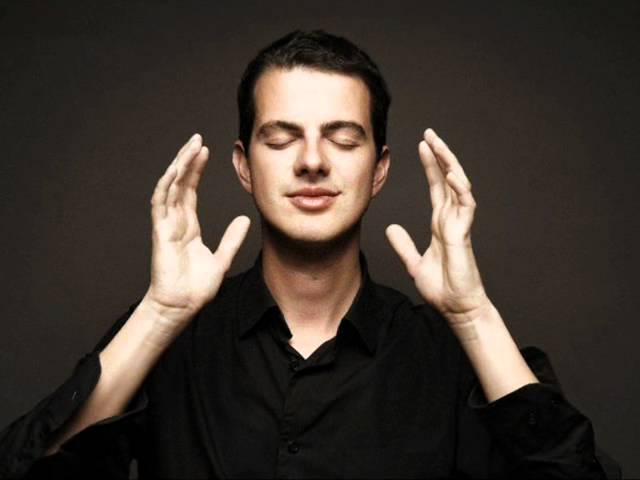
Georg Friedrich Händel’s timeless masterpiece “Ombra mai fu (Largo)” is a piece from the opera Serse (Xerxes).
Frequently featured as a movie theme and in TV commercials, it has continued to move listeners deeply over many years.
Its beautiful melody and stirring harmonies make it perfect for ceremonies such as weddings, matriculation ceremonies, and graduations.
Although it has a noble atmosphere, many people may feel it sounds familiar—“I think I’ve heard this somewhere…”
Toccata and Fugue in D minor, BWV 565J.S.Bach

Toccata and Fugue in D minor, BWV 565 is one of Johann Sebastian Bach’s most iconic organ works.
It is divided into the flamboyant, improvisatory “Toccata” and the “Fugue,” which makes full use of imitative techniques.
In Japan, the Toccata is famous for beginning with the melody used in the parody song “Milk from the Nose.” Although this piece is attributed to Bach, its characteristics set it apart from his other works, leading some to suggest it may have been composed by another musician, Peter Kellner.
A masterpiece of the still-mysterious Baroque era, it’s worth setting aside the parody association and listening to it anew as a classical work.
[Baroque Music] A Curated Selection of Timeless Masterpieces and Famous Works (11–20)
The Sprightly BlacksmithGeorg Friedrich Händel

The Harmonious Blacksmith is the concluding piece of a harpsichord suite published by George Frideric Handel in 1720.
The work consists of a recurring theme and five refined variations, featuring technical elements throughout such as trills, arpeggios, and triplets.
Today, it is widely known as a staple piece for piano learners, and listening to it on instruments actually used in the Baroque era—like the harpsichord—can leave quite a different impression.
St Matthew PassionJ.S.Bach

Johann Sebastian Bach’s monumental masterpiece, the St.
Matthew Passion, is a celebrated work that movingly portrays the final days of Christ.
Even nearly 300 years after its 1727 premiere, this work continues to touch listeners’ hearts and is renowned for its expressive richness and grand scale.
Notably, its 1829 revival by Felix Mendelssohn, one of the leading composers of the Romantic era, is said to have sparked the reappraisal of Bach.
Profoundly moving, this masterpiece is highly recommended to all classical music fans, regardless of nationality or religion.
Adagio in G minorTomaso Albinoni
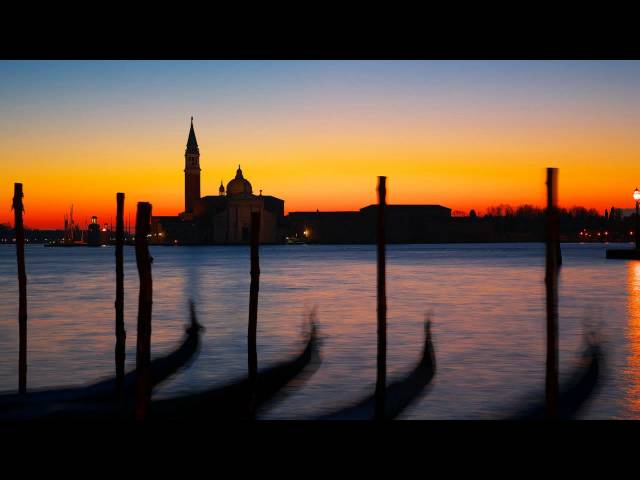
I included Tomaso Albinoni’s “Adagio in G minor” among Baroque-era works, but in fact, this piece was composed in 1958 by the musicologist Remo Giazotto, who used fragments from Albinoni’s “Sonata in G minor.” Although it’s often presented with the composer’s name as “Albinoni’s Adagio,” the truth is that it’s a modern work infused with Albinoni’s essence.
That said, it undeniably has a Baroque flavor, making it a perfect piece when you want to immerse yourself in the atmosphere of Baroque music.
These kinds of stories—common with older works—where it turns out, “Wait, this wasn’t actually by that person!?” are so fascinating, aren’t they?
Make me cry.Georg Friedrich Händel
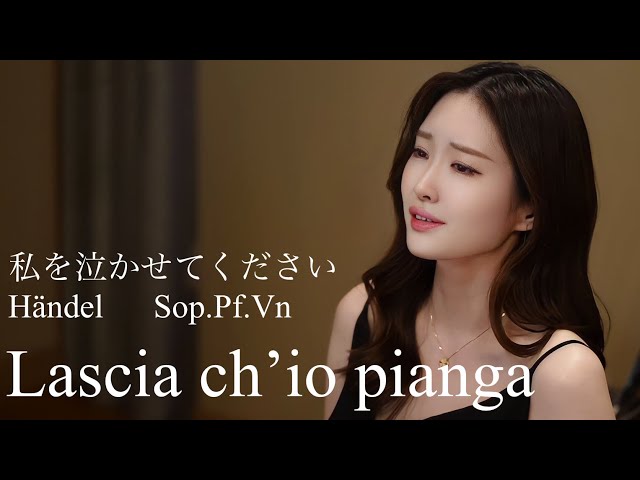
Known in Japan by the title “Watashi o Nakase te Kudasai” (“Let Me Weep”), Lascia ch’io pianga is an aria from George Frideric Handel’s opera Rinaldo.
Sung by Almirena as she laments her captivity, this aria portrays her sorrow and stands as a vocal masterpiece that conveys the moving beauty of Baroque music; it is also included in collections of Italian art songs.
Although the opera itself is seldom staged today, this particularly beautiful piece is frequently performed as a standalone song in concerts by many renowned singers.