


Bear trivia quiz and fun facts. Introducing quizzes packed with everything you want to know.

There are many surprising facts and little-known tidbits about bear ecology.
From the massive polar bear, which can reach 3 meters in length and weigh up to 800 kilograms, to the Asiatic black bears and brown bears that live in Japan’s forests.
Bears’ habits, lifestyles, and interactions with humans are full of astonishing discoveries.
With human-bear conflicts rapidly increasing, this is knowledge you’ll want to have now more than ever.
How many can you answer? Enjoy a trivia quiz while deepening your understanding of bears!
Bear trivia quiz and fun facts. Introducing quizzes packed with things you’ll want to know (1–10)
We ask hunters who have captured bears to provide teeth, which are analyzed by a research institution—what do you think they are investigating?

- The sturdiness of a bear’s teeth
- What the bear was eating
- Bear's age
See the answer
Bear's age
By analyzing a bear’s teeth, researchers can examine growth layers (cementum annuli) similar to tree rings to estimate the bear’s age. By collecting these data, we can determine the age distribution of bears living in the area and estimate the population size. This is a widely used method in wildlife age assessment.

Which of the following actions should you not take when encountering a wild bear?
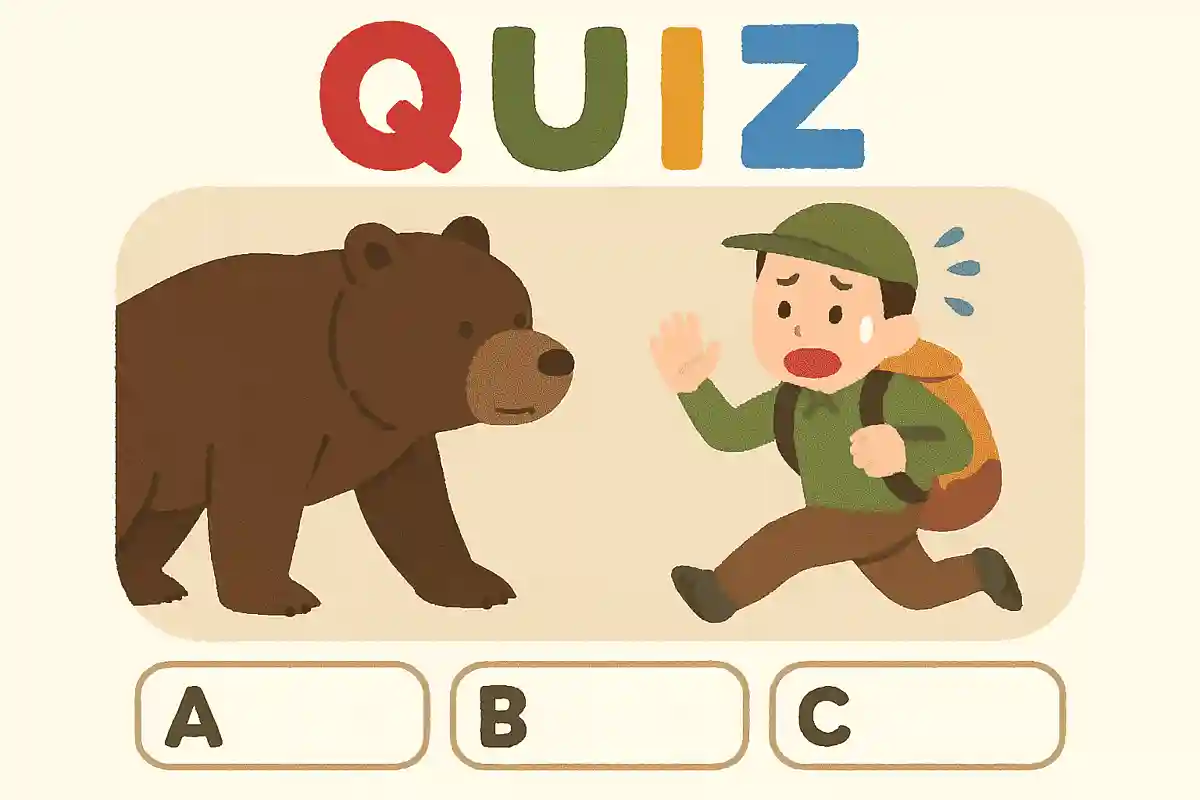
- Shout loudly to make your presence known.
- Back away slowly while watching the bear
- Run away showing your back.
See the answer
Run away showing your back.
If you turn your back on a bear and run, there’s a risk it will instinctively chase you. If you encounter a bear, the basic rule is to slowly back away and leave the area. Never run with your back turned, as it can trigger the bear’s pursuit instinct.
What kind of routes would brown bears choose when moving around residential areas?

- Take routes that are as open as possible
- Boldly passing through the middle of a residential area
- Pass through places along the river or in the thicket where you are less likely to be seen.
See the answer
Pass through places along the river or in the thicket where you are less likely to be seen.
Brown bears are highly wary and tend to avoid people. Therefore, when moving around residential areas, they choose inconspicuous routes such as along rivers, through thickets, and along the edges where forests meet homes.
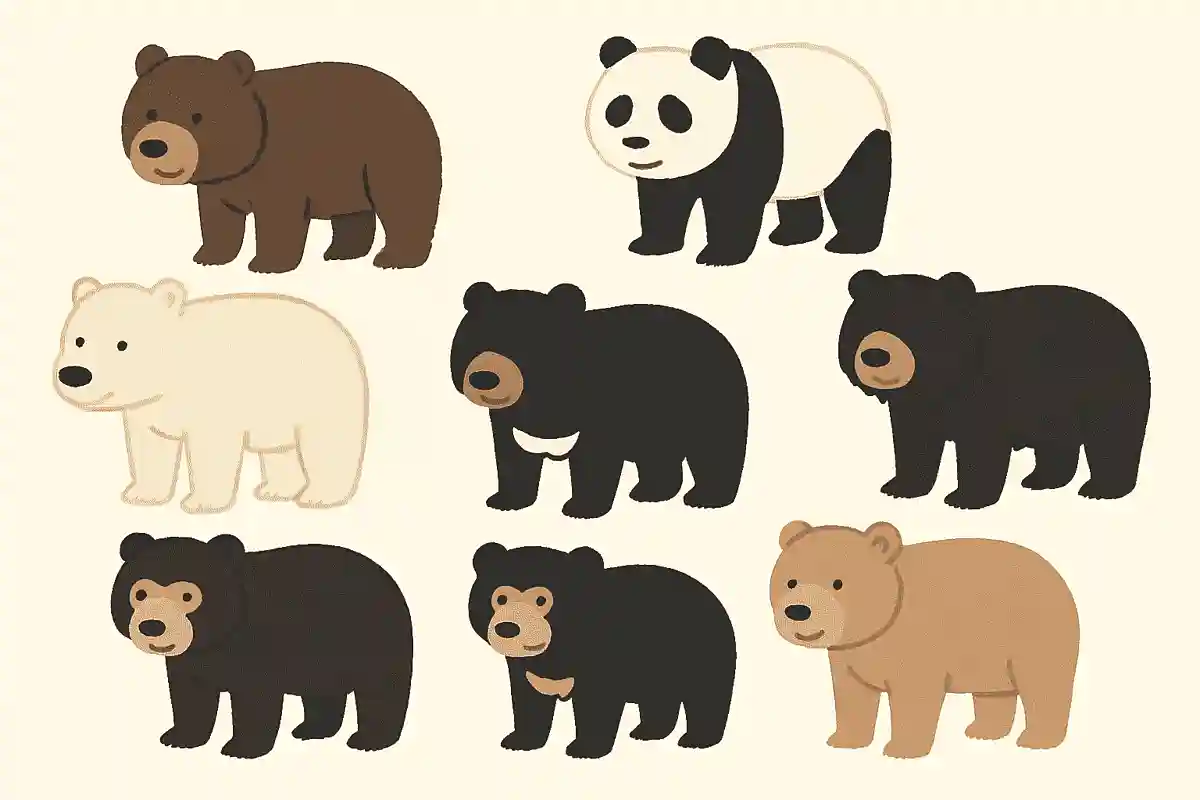
How many species of bears live in the world?
- 4 types
- 6 types
- 8 types
See the answer
8 types
There are eight species of bears living around the world. Representative ones include the brown bear, the American black bear, and the polar bear. Incidentally, the giant panda is also counted as one species of bear.
In general, in which season do bears give birth?

- spring
- summer
- Winter
See the answer
Winter
In general, many bears give birth in winter, especially during hibernation. Bears eat a lot in the fall to build up reserves, become pregnant as they enter hibernation, and give birth to their cubs in a safe den during the winter. When spring arrives and it gets warmer, the mother bear and her cubs emerge from the den and begin their activities.
What do you call the practice of separating habitats to prevent bears and humans from overlapping?

- Buffer zone
- zoning
- Partitioning
See the answer
zoning
The practice of clearly dividing and managing the living areas of humans and bears is called “zoning.” It involves designating areas where bear conservation is prioritized, such as remote forests, and areas where human activities are prioritized, such as residential neighborhoods and farmland, with buffer zones in between to discourage bears from appearing there. By implementing zoning, we aim to reduce contact between humans and bears and achieve safe coexistence.
Which of the following bears, also known as the “bear of the sea,” has a deep connection with the ocean?
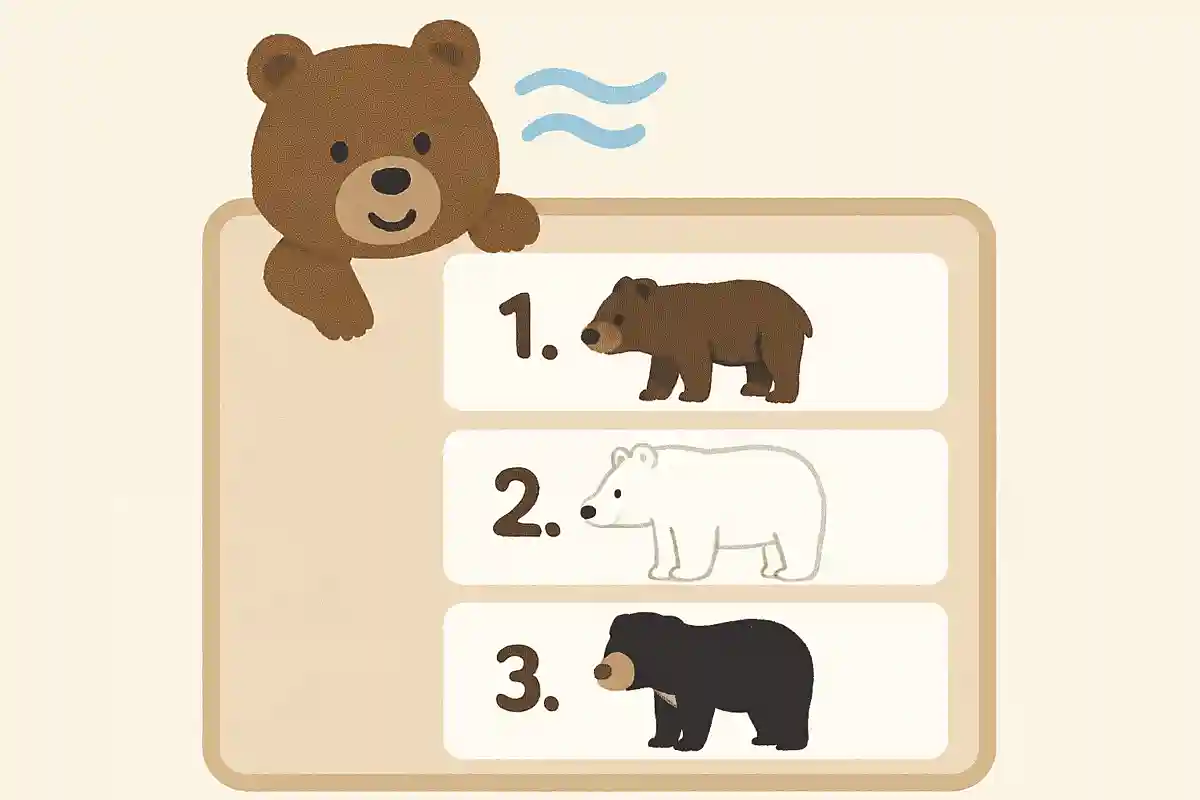
- Asian black bear
- brown bear
- polar bear
See the answer
polar bear
“Sea bear” refers to the polar bear. In English, it is sometimes called “sea bear” or “marine bear.” Polar bears mainly inhabit the Arctic region and hunt prey such as seals on sea ice. They are also excellent swimmers and can cover long distances in the water.