

Songs to Listen to on Children’s Day | A Curated Selection of Music for Tango no Sekku!


As Children’s Day approaches, is there a song that you suddenly find yourself humming?Nursery rhymes and seasonal songs related to Tango no Sekku have long been cherished across generations as an important part of Japanese culture.In this article, we’ll introduce songs associated with Tango no Sekku that will fill you with nostalgia the moment you hear them—from those everyone knows to classic tunes whose lyrics you might not actually remember.Singing them with your child will make seasonal traditions feel closer and more fun.Enjoy them together with your family!
- Nursery rhymes and fingerplay songs to enjoy in May! Songs perfect for the fresh green season
- [Children’s Day Hand-Play Songs] A Collection of Nursery Rhymes & Traditional Children’s Songs for Parents and Kids to Enjoy Together
- [Songs for May] Tracks that suit fresh greenery and driving & Mother's Day songs
- [Children's Songs] Cute songs recommended for childcare. List of popular nursery rhymes.
- Children’s Song Rankings [2026]
- Nursery rhymes to sing in spring: a collection of classic songs you'll want to sing with your children
- [Hinamatsuri Songs] A roundup of classic Girls’ Day tunes and unexpected Hinamatsuri tracks
- What karaoke songs can kids sing? Popular karaoke songs for parents and children to sing together as a family.
- Recommended dance music for children. Kid-friendly dance tunes that make you want to move.
- Kids will love it! A collection of dance song ideas with easy-to-follow rhythms
- Children’s songs for Hinamatsuri: A collection of songs everyone can sing together for the Doll Festival
- An anthem to support childcare that I want to dedicate to moms and dads. Inspiring classics and popular songs that keep you going.
- Babies and kids will smile! A heartwarming collection of songs for children
Songs to Listen to on Children's Day | A Curated Selection of Tracks Related to Tango no Sekku (Boys' Festival)! (21–30)
Doraemon: Make My Dreams Come Truemao

When it comes to the theme song of Doraemon, a beloved national anime across generations, many people probably think of this song.
It’s packed with the excitement of soaring through the sky alongside mysterious gadgets.
mao’s clear vocals and the lively chorus by the Himawari Kids leave a strong impression, and just listening to it brings on a wave of nostalgia.
In fact, it was chosen from over 1,000 candidates and began airing on TV in May 2007.
At the time, mao’s vocals on the demo tape captured the production team’s hearts, and those very vocals were used for her debut single, released in July.
It’s a warm song perfect for Children’s Day, one that makes you want to hum along with your kids and talk about dreams and the future.
What will you be when you grow up?amerika min’yō

Are you familiar with the classic fingerplay song that’s a staple in preschools and kindergartens? Its melody is said to come from the American folk song “Little Cabin in the Wood,” and in Japan it has taken root as a play song where children count off their future dreams.
The gestures of pretending to be a doctor or a cake shop owner make for a delightfully fun scene that nurtures children’s imagination.
Not tied to any particular singer’s repertoire, this piece has been passed down by many performers.
It has been cherished in educational settings for a long time, even being included in a Yamaha sheet music collection released in March 2023.
Daisuke Yokoyama has also sung it, and it remains a beloved classic across generations.
On Children’s Day, why not use this song as a springboard to talk with your child about dreams for the future?
A bamboo shoot has sprouted.warabeuta asobi
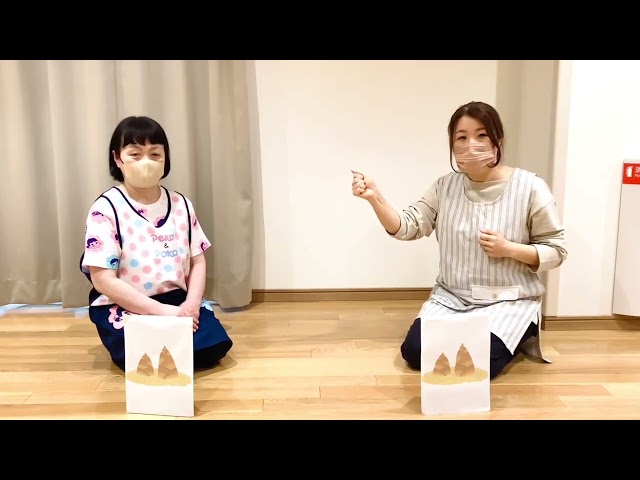
A children’s hand-play song that expresses the growth of bamboo shoots with the whole body, just as they come into season from spring to early summer.
You enjoy the story through hand motions—from a sprout emerging from the soil, to a flower blooming with a pop, and finally being snipped with scissors.
Because the hand shapes for rock, scissors, and paper are naturally incorporated into the actions, it’s also perfect for helping kids learn the rules of rock-paper-scissors.
Although it’s a traditional song passed down through generations, it has become a familiar group activity in nurseries and kindergartens, partly thanks to being featured on NHK’s children’s programs.
It typically ends with everyone chanting “essa, essa” together and deciding the winner with rock-paper-scissors.
Under the beautiful May skies of fresh greenery, get moving energetically with your family and friends.
snailMonbushō shōka

This song speaks to a small creature carrying its shell that you might spot in the garden after the rain.
Many people probably find themselves humming it around Children’s Day or during the rainy season.
Though it’s often thought of as relaxed, it’s actually set at a lively tempo of quarter note = 96.
Included in Elementary School Songs (Volume 1), published in 1911 (Meiji 44), it was reportedly created to foster children’s affection for nature at the time.
Its humorous lyrics—calling for the creature to stick out its horns and spear—remain widely loved more than a century later in schools and children’s programs.
If you come across one while playing outside, it could be fun to sing the song and observe it together with your child!
Mountain MusiciansDoitsu min’yō

Rooted in an old German folk song, this charming piece features woodland creatures taking turns showing off their favorite instruments.
With pairings like a squirrel playing the violin and a little bird on the flute, the combinations of animals and instruments are delightful, and the phrases that imitate their sounds just slip off the tongue.
In Japan, it became widely beloved after it was broadcast on NHK’s “Minna no Uta” in April 1964.
With lyrics adapted by Shisen Mizuta and the warm harmonies of the Dark Ducks, the song took root and is still sung today in early childhood education settings and at home.
If parents and children sing it while pretending to play instruments, the living room on Children’s Day will quickly transform into a merry concert hall.
Choo-choo trainSakushi: Tomihara Kaoru Sakushi / Sakkyoku: Kusakawa Shin

Lyrics by Kaoru Tomihara, music by Shin Kusakawa.
This lively piece with its jaunty rhythm and playful onomatopoeia is actually based on an original song released in 1938 titled “Heitai-san no Kisha” (The Soldiers’ Train).
It is said to have been inspired by scenes at Gotemba Station in Shizuoka Prefecture, and in 1945, after the war, prompted by NHK’s program “Kohaku Ongaku Shiai,” Kaoru Tomihara himself rewrote the lyrics to suit a more peaceful era.
Keeping its powerful melody intact, the song has been loved for many years, even being selected in 2007 for the “100 Best Japanese Songs.” Its exhilarating, fast-paced feel perfectly matches the excitement of going out.
On Children’s Day, it’s also great fun for the whole family to raise their voices together and sing it with energy.
Issun-bōshi (The One-Inch Boy)Sakushi: Iwaya Konami / Sakkyoku: Tamura Torazō

This work portrays a small hero who turns a rice bowl into a boat and chopsticks into oars to head for the capital.
With lyrics by Konami Iwaya and music by Torazō Tamura, it is a children’s song based on a well-known folk tale.
The story of a brave protagonist who uses wisdom and courage to defeat ogres and grows into a fine young person is a perfect theme for Children’s Day, which celebrates the healthy growth of boys.
First included in a song collection published in 1905, it featured lyrics unusually close to everyday speech for the time, making them easy for children to understand.
Tamura’s efforts to avoid difficult expressions and prioritize singability may be why the song has remained beloved for so long.
Singing it together with your child and talking about the great potential and courage hidden within their small body would be a wonderful experience!