




As Children’s Day approaches, is there a song that you suddenly find yourself humming?Nursery rhymes and seasonal songs related to Tango no Sekku have long been cherished across generations as an important part of Japanese culture.In this article, we’ll introduce songs associated with Tango no Sekku that will fill you with nostalgia the moment you hear them—from those everyone knows to classic tunes whose lyrics you might not actually remember.Singing them with your child will make seasonal traditions feel closer and more fun.Enjoy them together with your family!
- Nursery rhymes and fingerplay songs to enjoy in May! Songs perfect for the fresh green season
- [Children’s Day Hand-Play Songs] A Collection of Nursery Rhymes & Traditional Children’s Songs for Parents and Kids to Enjoy Together
- [Songs for May] Tracks that suit fresh greenery and driving & Mother's Day songs
- [Children's Songs] Cute songs recommended for childcare. List of popular nursery rhymes.
- Children’s Song Rankings [2026]
- Nursery rhymes to sing in spring: a collection of classic songs you'll want to sing with your children
- [Hinamatsuri Songs] A roundup of classic Girls’ Day tunes and unexpected Hinamatsuri tracks
- What karaoke songs can kids sing? Popular karaoke songs for parents and children to sing together as a family.
- Recommended dance music for children. Kid-friendly dance tunes that make you want to move.
- Kids will love it! A collection of dance song ideas with easy-to-follow rhythms
- Children’s songs for Hinamatsuri: A collection of songs everyone can sing together for the Doll Festival
- An anthem to support childcare that I want to dedicate to moms and dads. Inspiring classics and popular songs that keep you going.
- Babies and kids will smile! A heartwarming collection of songs for children
Songs to Listen to on Children's Day | A Curated Selection of Tracks Related to Tango no Sekku (1–10)
Raise the carp streamers.gaagaaS

When we think of Children’s Day, we picture carp streamers swimming in the sky—but did you know there’s a song that lets you experience that through a hand-play activity? GaagaaS’s “Koinobori Ageyo” is a participatory song where you enjoy the motion of hoisting a carp streamer by pulling a string.
There’s a staged mishap in the middle where you let go and it falls, followed by a dramatic turn as you try again and succeed—something that always gets kids laughing.
Released as a video in March 2023, the piece has become a beloved staple that livens up seasonal events at nursery schools and kindergartens.
True to the unit known for providing music to NHK Educational TV and Molly Fantasy, it’s full of ideas parents and children can play along with right away.
Even if you “fail,” everyone will be shouting “One more time!”—so give it a try at home too.
The family of carp streamersKeroponzu

This heartwarming song imagines carp streamers swimming in the sky as a family, with Dad, Mom, and the children all appearing happily together.
Did you know that this song was designed not only to listen to, but also to be enjoyed as a “panel theater,” where you move pictures in time with the music? Included on Keropons’ July 2014 album “Haru Natsu Aki Fuyu: Event Play Operation!” it’s beloved in nursery schools and kindergartens as a performance piece for Children’s Day events.
With picture book author Tomohiko Fujimoto also involved, you can really feel the warm, story-like quality.
For Children’s Day, it would be great to get the whole family to pretend to be carp streamers and have a lively playtime together indoors to this song!
Children around the worldSakushi: Shinzawa Toshihiko / Sakkyoku: Nakagawa Hirotaka
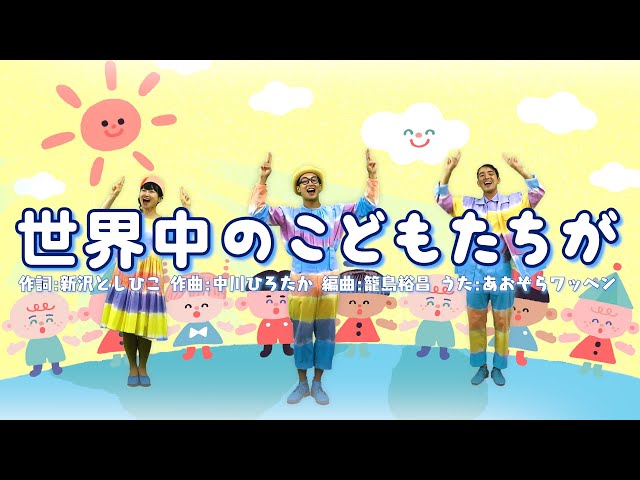
This work features lyrics by Toshihiko Shinzawa and music by Hirotaka Nakagawa.
It’s a warm song carrying a message of coexistence: let’s join hands as companions living in the same time, even if our languages and cultures differ.
It spread after being included in the collection “Sekai Jū no Kodomotachi ga,” released in July 1988 under the name “Tora ya Bōshiten,” and later appeared in elementary school textbooks, becoming a long‑loved staple in education.
In April 2004, it was also released as a single by the female singer KAORI under the name HIBARI, showing how the song has been passed down in forms that suit the times.
With its grand sense of scale that evokes a global bond connected by the sky and the sea, it’s perfect for families to hum together on Children’s Day, wishing for children’s healthy growth and a peaceful future.
Height comparisonSakushi: Umino Atsushi / Sakkyoku: Nakayama Shinpei

The children’s song “Seikurabe” (Height Comparison) depicts the scene of comparing heights on Children’s Day.
Selected as one of the “100 Best Japanese Songs,” it is said to be written from the perspective of lyricist Atsushi Unno’s much younger brother.
The song charmingly portrays eating chimaki—traditional rice dumplings enjoyed on Children’s Day—and having his older brother measure his height.
You can really feel Unno’s affection for his younger brother, especially since, being much older, Unno became an adult and left home earlier.
Following the spirit of this song, it might be nice to do an annual height check with siblings or parents on Children’s Day!

That’s good too.kocchi no kento

This piece was specially written as the ending theme for NHK Educational TV’s “The Wakey Show.” It’s a track released by Kocchinoken-to in May 2025 and is also included on the EP “Kekka All Right EP.” Set to a light, marching-style rhythm, it carries a warmly affirming message that wholly embraces being yourself and celebrating differences.
Its upbeat, morning-friendly vibe and its encouragement of children’s “likes” make it a perfect listen for Children’s Day, when we wish for their healthy growth.
In the program, the characters called the Wakeys also sing, and it’s fun for parents and kids to enjoy together by copying the choreography.
Let’s celebrate Tango no Sekku with gentle hearts that embrace diversity.
carp streamerSakushi: Kondō Miyako / Sakkyoku: Fushō

When it comes to Children’s Day, many people probably think of this song.
The biggest black carp at the top represents the father, and the smaller red carp that follow beneath are the children.
It’s said that the mother doesn’t appear because, at the time the song was written, the idea that the father was the most important, the pillar of the household, was very strong.
The song expresses the wish that boys will grow up healthy and strong, inspired by the koinobori streamers that look as if they are merrily swimming through the sky.

Boys’ Festival (Tango no Sekku)sakushi sakkyoku: Ōtani Yūka
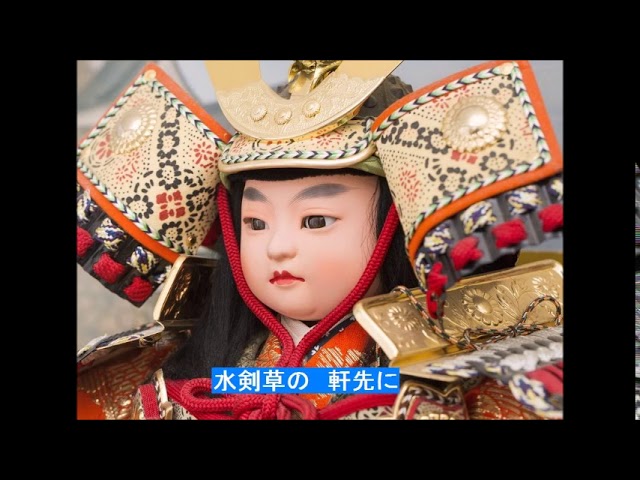
It’s a song celebrating Boys’ Day, the Tango no Sekku festival.
The lyrics use many seasonal words for May—imagery that calls May to mind.
Among them, an unusual part features a “dragon.” You might wonder, what does a dragon have to do with it? According to a Chinese legend, a carp that swims up a raging river becomes a dragon, and the term “Tōryūmon” (Dragon Gate) comes from that story.