

Chopin’s masterpieces. Popular classical music.

Are you looking for famous piano pieces and beautiful melodies?
Here are some masterpieces and recommended works by Frédéric Chopin, a pianist and composer who represents the early Romantic era in Poland.
Chopin composed as many as 21 nocturnes, and he also left a wealth of piano works in many other styles—such as mazurkas, waltzes, and polonaises—which is why he is known as the Poet of the Piano.
Let yourself be captivated for a while by the beautiful melodies woven by Chopin.
- [Masterpiece Classics] A special showcase of gem-like masterpieces so beautiful they’ll move you to tears
- Classical piano masterpieces: legendary performances from around the world you should hear at least once
- Rachmaninoff’s masterpieces. Recommended pieces by Rachmaninoff.
- [Tchaikovsky] Pick up famous and representative pieces!
- Frederic Chopin Popular Songs Ranking [2026]
- François Couperin Popular Songs Ranking [2026]
- [Advanced] A Comprehensive Introduction to the Difficult Piano Pieces of Chopin, the Poet of the Piano!
- Pick up Beethoven’s famous and representative works!
- Popular classical piano pieces. A collection of masterful performances by Japanese pianists.
- Timelessly beautiful classical masterpieces. Recommended classical music.
- Classical masterpieces. Recommended classical music.
- Cool classical masterpieces. Recommended classical music.
- Elgar’s masterpiece. Popular classical music.
Chopin’s masterpieces. Popular classical music (81–90)
12 Etudes, Op. 12 No. 10 “Revolutionary”Frederic Chopin

Because many pieces performed at piano recitals prioritize technical difficulty, they tend not to be especially engaging for listeners.
Frederic Chopin’s masterpiece, Etude Op.
10 No.
12 “Revolutionary,” is not only technically demanding but also highly esteemed as a musical work.
It is, in other words, a perfect choice for a piece that truly impresses an audience.
While the right-hand theme is well known, the rapid sixteenth-note arpeggios in the left hand are quite challenging too, so if you’re confident in your playing, by all means give it a try.

Etude Collection (Studies) No. 4, Op. 10-4 in C-sharp minorFrederic Chopin

A fiercely passionate piece that grips the listener’s heart and won’t let go.
Its rapid sixteenth-note passages and continuous intricate figures in both hands create an impact like a storm.
Composed in August 1832, this work is acclaimed as having artistic value that far surpasses a mere study.
It is recommended not only for those aiming to improve their piano technique, but also for anyone who loves passionate music.
While the performance demands advanced technique, the sense of accomplishment is all the greater.
If you want to experience the appeal of classical music, why not give it a try?
Scherzo No. 2, Op. 31Frederic Chopin

The demanding piece Scherzo No.
2, Op.
31 by the great composer Frédéric Chopin.
Composed in 1837, it is characterized by bright, brilliant modulations that evoke romance and an impressive coda.
Written in B-flat minor, in 3/4 time, it is structured in a sonata form close to a rondo.
While the right hand sings an elegant melody, the performer is required to play a wide-ranging, highly challenging left-hand accompaniment with calm control.
The main theme, which includes dissonances, also boasts a strong performance impact—be sure to check it out.
Scherzo No. 1 in B minor, Op. 20Frederic Chopin

When it comes to composers known for works that push technical boundaries, many people think of Franz Liszt, but Frédéric Chopin is no slouch either.
His celebrated Scherzo No.
1 in B minor, Op.
20 is known as a highly demanding piece that uses dissonance to great effect.
Because consonance and dissonance intermingle with varying intensity, the work demands both expressive nuance and technical prowess.
In particular, the dissonant phrases that descend from the high register to the low at the beginning are the hallmark of the piece, so I recommend focusing your practice on them.
Nocturne No. 20 in C-sharp minor, KK. IVa/16 “Posthumous”Frederic Chopin

Set against a left-hand arpeggiated accompaniment, the right hand sings a sweet, sentimental melody—an outstanding example of the talent of Chopin, known as the “poet of the piano.” Around the time he composed this piece, Chopin was deeply in love with a young soprano, Konstancja Gładkowska.
However, because she was the daughter of a palace official and of high social standing, he never confessed his feelings, and his first love is said to have come to an end.
This work captures the tenderness and poignancy of unrequited love.

Étude Op. 10 No. 4Frederic Chopin

Although this piece bears no specific title among the études, its fame is overwhelming, and it is a celebrated work often used as an assignment in music conservatories.
It was also featured in the drama “Nodame Cantabile,” which likely broadened its recognition even further.
More recently, it has even been included in the rhythm game “Taiko no Tatsujin.” Among the études, it is considered especially difficult to perform, and its fast, passionate melody is nothing short of breathtaking.
Chopin’s masterpieces. Popular classical music (91–100)
Scherzo No. 2Frederic Chopin
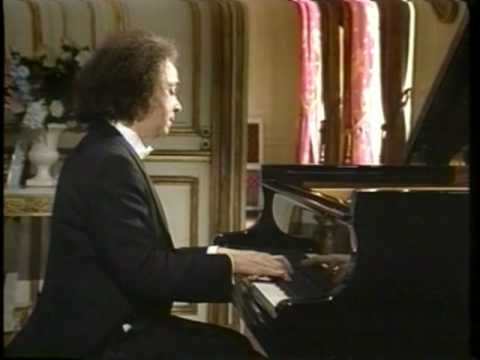
Meaning “joke” or “jest,” a scherzo is a very fast piece in triple meter, and among them Chopin’s Scherzo No.
2 is a masterpiece frequently used in TV commercials.
It begins darkly and passionately, then introduces a sweet, lyrical melody, during which the main theme—akin to a refrain—gradually unfolds.
The ending is especially breathtaking.