

Chopin’s masterpieces. Popular classical music.

Are you looking for famous piano pieces and beautiful melodies?
Here are some masterpieces and recommended works by Frédéric Chopin, a pianist and composer who represents the early Romantic era in Poland.
Chopin composed as many as 21 nocturnes, and he also left a wealth of piano works in many other styles—such as mazurkas, waltzes, and polonaises—which is why he is known as the Poet of the Piano.
Let yourself be captivated for a while by the beautiful melodies woven by Chopin.
- [Masterpiece Classics] A special showcase of gem-like masterpieces so beautiful they’ll move you to tears
- Classical piano masterpieces: legendary performances from around the world you should hear at least once
- Rachmaninoff’s masterpieces. Recommended pieces by Rachmaninoff.
- [Tchaikovsky] Pick up famous and representative pieces!
- Frederic Chopin Popular Songs Ranking [2026]
- François Couperin Popular Songs Ranking [2026]
- [Advanced] A Comprehensive Introduction to the Difficult Piano Pieces of Chopin, the Poet of the Piano!
- Pick up Beethoven’s famous and representative works!
- Popular classical piano pieces. A collection of masterful performances by Japanese pianists.
- Timelessly beautiful classical masterpieces. Recommended classical music.
- Classical masterpieces. Recommended classical music.
- Cool classical masterpieces. Recommended classical music.
- Elgar’s masterpiece. Popular classical music.
Chopin's masterpieces. Popular classical music (11–20)
Polonaise No. 6 in A-flat major, Op. 53Frederic Chopin

Widely known by the nickname “Heroic Polonaise,” the Polonaise No.
6 in A-flat major, Op.
53 is a grand work in which the polonaise—a national dance of Poland, the homeland of Frédéric Chopin—strongly conveys Chopin’s patriotic spirit.
Along with the popular “Polonaise in A major, Op.
40, No.
1,” known as the “Military Polonaise,” it is frequently performed by many pianists.
This dazzling and vigorous piece captivates every listener.
Farewell WaltzFrederic Chopin

Frédéric Chopin, the poet of the piano born in Poland.
Having studied at the Warsaw Conservatory and moved to Paris at a young age, Chopin’s life was marked by persistent health problems, yet he continued to create beautiful melodies.
This piece is said to have been composed after parting with a friend—a sweet and melancholic work.
Written in 1835 as he was leaving Dresden, it breathes with Chopin’s delicate sensibility.
Distinguished by a chromatically descending melodic line and interwoven with mazurka-like rhythms, it epitomizes the essence of Romantic music.
It is recommended not only for lovers of solo piano works but also for anyone seeking melodies that deeply touch the heart.
24 Preludes in G major, Op. 28 – No. 3Frederic Chopin

An album by Frédéric Chopin comprising twenty-four very short pieces, the 24 Preludes.
Among the many works included, the one I’d like to introduce as evoking the sparkle of spring is No.
3 in G major.
A letter written in January 1839 reported the completion of the set, and this piece was also finished around that time.
In less than a minute of performance time, the flowing left-hand accompaniment, like melting snow water, and the lightly dancing right-hand melody are beautifully distilled.
Its crisp, well-defined touch makes it a challenging piece for performers, but for listeners it is a wonderful work that conveys a calm and bright spring atmosphere.
Revolutionary ÉtudeFrederic Chopin

Composed in 1831, Frederic Chopin’s “Revolutionary Etude” is said to embody his emotions over the failed Polish uprising that sought independence from the Russian Empire around the same time.
The piece was dedicated to his friend, the “magician of the piano,” Franz Liszt, though a famous anecdote says even Liszt couldn’t master it at first sight.
From its searing, cascading introduction to its powerful main theme, this work is unforgettable after a single hearing.
It’s also a piece you can be a little proud to boast about if you can play it.
24 Preludes, No. 4 in E minor, Op. 28-4Frederic Chopin

A masterpiece by the Polish-born “poet of the piano,” Frédéric Chopin.
It is one of the 24 Preludes, completed in 1839, and is distinguished by a mournful, wistful melody played at a relaxed tempo.
Written during the winter Chopin spent on Mallorca with George Sand, this piece, though short, conveys profound emotion.
It is a work in which Chopin’s delicate sensibility and technique are exquisitely fused, expressing the transience of life and a beautiful sense of resignation.
Recommended not only for those interested in classical music but also for anyone seeking a beautiful melody that resonates with the heart.
Prelude Op. 28 No. 15 “Raindrop”Frederic Chopin
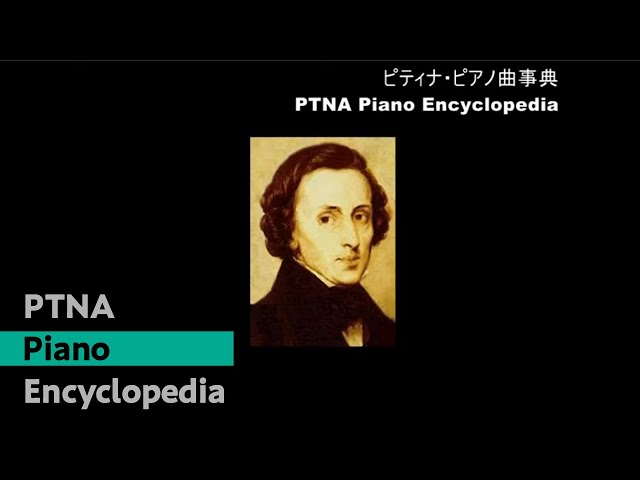
Frédéric Chopin, a leading pianist and composer of the early Romantic era who created the prelude famed for its rain-like droplets of sound.
Born in Poland in March 1810, he showed musical talent from a young age and composed his first piece at seven.
Widely recognized as a composer for the piano, Chopin’s music is marked by advanced technique and a distinctive poetic sensibility.
This work is part of a set written in 1838, when Chopin spent time on the island of Mallorca with his lover, George Sand.
It expresses the wistfulness and melancholy felt within silence through sounds reminiscent of falling rain.
Reflecting Chopin’s delicate emotional expression in vivid detail, this piece is recommended for those seeking a beautiful melody that resonates with the heart.
Chopin’s masterpieces. Popular classical music (21–30)
Piano Sonata No. 2 “Funeral March”Frederic Chopin

Composed in 1839, this work is especially famous for its third movement, the Funeral March.
Its slow rhythm and weighty atmosphere evoke the transience of life and the inevitability of death.
Chopin composed his first piece at the age of seven, showing his talent from an early age.
It is said that this work contains his feelings for his homeland of Poland and his struggle with illness.
The profound emotional expression in which life and death, sorrow and hope intersect is sure to resonate with the heart.
It’s a piece I recommend when you want to reflect deeply on life.