

Recommended classical masterpieces for BGM. Soothing classical music.

Classical music has been used in many settings: as church music for religious services, live performances at aristocratic banquets, and as operatic incidental music depicting beautiful landscapes and people.
Even with pieces I already know, when I revisit them after learning their background, I often feel they were originally close in character to background music.
This time, I’ve gathered classical masterpieces that are perfect as BGM for everyday relaxation, commuting to work or school, and lunchtime or dinnertime.
You can rediscover world-famous pieces everyone knows, as well as lesser-known hidden gems—there’s a wide variety to choose from.
I hope you find a new favorite track.
- Classic soothing songs: healing and relaxing music recommended for when you're tired.
- [Masterpiece Classics] A special showcase of gem-like masterpieces so beautiful they’ll move you to tears
- [Classical] Classical music BGM. Recommended classical music as background music for work and study.
- [Highly Relaxing Songs] Recommended Classics for Stress Relief & Fatigue Recovery, Calming Tracks
- Timelessly beautiful classical masterpieces. Recommended classical music.
- Cool classical masterpieces. Recommended classical music.
- Healing piano music. Calm piano pieces that soothe the mind.
- [Graduation Ceremony BGM] Guaranteed to move you! A comprehensive introduction to classic tear-jerkers!
- Masterpieces of classical piano that are too beautiful for words. A gathering of delicate tones that cleanse the soul.
- Healing Songs Ranking [2026]
- A soothing song. A heart-calming tune you’ll want to listen to when you’re tired or feeling down.
- Recommended easy listening. Relaxing, soothing background music.
- Compilation of Sad BGM You've Heard Somewhere [Famous]
Recommended classical masterpieces for background music: soothing classical music (51–60)
The Moldau – From My HomelandBedrich Smetana
Composed between 1874 and 1879 by Bedřich Smetana, a leading Czech composer, this work consists of six symphonic poems, the most famous of which is the second piece, “The Moldau (Vltava).” It is often performed on its own and portrays the flow of the Czech river Vltava, which it is modeled after.
Just as video games have field music, this piece sounds almost like a field theme from a game.
The grandeur of the orchestral performance is truly overwhelming.
Cello Concerto No. 2 in D majorFranz Joseph Haydn
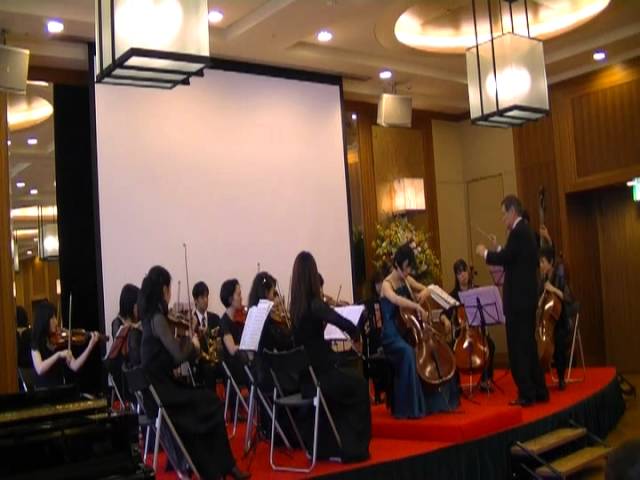
Haydn’s Cello Concerto No.
1 in C major, Hob.
VIIb:1, was written for Joseph Weigl, the cellist of the Esterházy orchestra, while the Cello Concerto No.
2 in D major, Hob.
VIIb:2 (Op.
101), was composed for Anton Kraft, a virtuoso cellist in the same ensemble.
As for my preference, I favor No.
2.
Bach lived on the grounds known as the “Hungarian Versailles,” where he created numerous works.
One can indeed sense the aura of medieval European nobility.
Dance of the Sugar Plum FairyPyotr Tchaikovsky

It’s the third piece in the ballet The Nutcracker, with a somewhat cute, charming feel.
It was composed by the Russian composer Pyotr Tchaikovsky, and its original title is “Dance of the Sugar Plum Fairy,” but since that title isn’t commonly used in Japan, this one has become standard.
In America, it’s known as the Sugar Plum Fairy, and since The Nutcracker is set on Christmas Eve, where the protagonist Clara has a wondrous, dreamlike experience, it could also work well as background music for a mysterious scene.
“Spring” from The Four SeasonsAntonio Vivaldi

This is a work by Antonio Vivaldi, a Baroque-era violinist and composer.
As the title The Four Seasons suggests, it is a set of violin concertos comprising a total of twelve movements—three movements each under the larger headings of Spring, Summer, Autumn, and Winter.
Among the seasons, the most beautiful and famous piece is, of course, Spring.
It truly conveys the elegance and refinement of classical music.
True to its title, the music evokes the arrival of spring and leaves you feeling refreshed.
The violin beautifully imitates birdsong.
It’s just my imagination, but I can picture this piece playing as background music at an upper-class breakfast.
In conclusion
How was it? Classical music has also developed as music played in various settings: as religious music for worship, as live performances played during meals at court, as national marches, or pieces meant to rouse the people.
Over many years, countless famous works have emerged that convey something or create a certain atmosphere when listened to, and perhaps because they were originally performed in a way close to background music, there are many pieces that fit all kinds of situations when you listen again today.
This time, I introduced some recommended masterpieces from among those famous works.
Why not try listening when you wake up early in the morning or as BGM for your commute to work or school? I would be delighted if you find a favorite piece and make it your own personal background music.