

Recommended classical masterpieces for BGM. Soothing classical music.

Classical music has been used in many settings: as church music for religious services, live performances at aristocratic banquets, and as operatic incidental music depicting beautiful landscapes and people.
Even with pieces I already know, when I revisit them after learning their background, I often feel they were originally close in character to background music.
This time, I’ve gathered classical masterpieces that are perfect as BGM for everyday relaxation, commuting to work or school, and lunchtime or dinnertime.
You can rediscover world-famous pieces everyone knows, as well as lesser-known hidden gems—there’s a wide variety to choose from.
I hope you find a new favorite track.
- Classic soothing songs: healing and relaxing music recommended for when you're tired.
- [Masterpiece Classics] A special showcase of gem-like masterpieces so beautiful they’ll move you to tears
- [Classical] Classical music BGM. Recommended classical music as background music for work and study.
- [Highly Relaxing Songs] Recommended Classics for Stress Relief & Fatigue Recovery, Calming Tracks
- Timelessly beautiful classical masterpieces. Recommended classical music.
- Cool classical masterpieces. Recommended classical music.
- Healing piano music. Calm piano pieces that soothe the mind.
- [Graduation Ceremony BGM] Guaranteed to move you! A comprehensive introduction to classic tear-jerkers!
- Masterpieces of classical piano that are too beautiful for words. A gathering of delicate tones that cleanse the soul.
- Healing Songs Ranking [2026]
- A soothing song. A heart-calming tune you’ll want to listen to when you’re tired or feeling down.
- Recommended easy listening. Relaxing, soothing background music.
- Compilation of Sad BGM You've Heard Somewhere [Famous]
Recommended classical masterpieces for BGM: Soothing classical music (41–50)
Barcarolle from The Tales of HoffmannJacques Offenbach

Speaking of Offenbach, he is the composer of the piece familiar from school sports days, ‘Orpheus in the Underworld.’ He produced numerous works as an operetta composer.
‘The Barcarolle’ is a song performed in Act IV of The Tales of Hoffmann, which premiered in 1881.
There are many love songs set in the water city of Venice, sung while riding a gondola.
As an opera number, this piece is his first and last work.
Naturally, it is a love scene.
Recommended classical masterpieces for background music: soothing classical music (51–60)
Cello Concerto No. 2 in D majorFranz Joseph Haydn
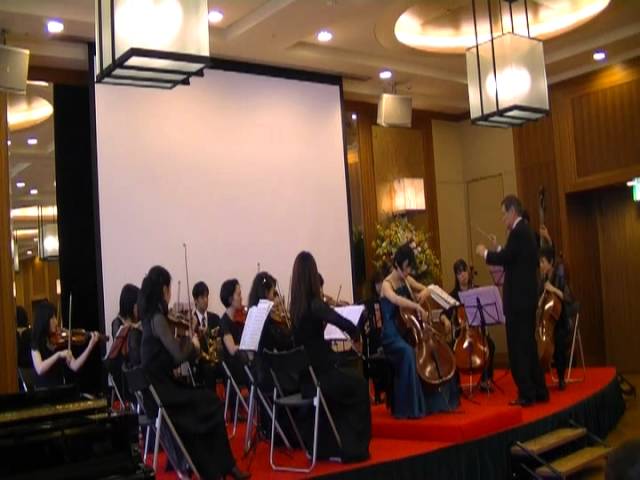
Haydn’s Cello Concerto No.
1 in C major, Hob.
VIIb:1, was written for Joseph Weigl, the cellist of the Esterházy orchestra, while the Cello Concerto No.
2 in D major, Hob.
VIIb:2 (Op.
101), was composed for Anton Kraft, a virtuoso cellist in the same ensemble.
As for my preference, I favor No.
2.
Bach lived on the grounds known as the “Hungarian Versailles,” where he created numerous works.
One can indeed sense the aura of medieval European nobility.
SerenadeFranz Schubert

Called Schubert’s Serenade, it’s the fourth song in the song cycle “Swan Song.” Since a serenade means appealing to one’s beloved from beneath their window, this piece too faithfully pleads love to a sweetheart.
But Japanese men can’t really do something that cheesy, can they? The mood of the piece is still a love scene, isn’t it?
Dance of the Sugar Plum FairyPyotr Tchaikovsky

It’s the third piece in the ballet The Nutcracker, with a somewhat cute, charming feel.
It was composed by the Russian composer Pyotr Tchaikovsky, and its original title is “Dance of the Sugar Plum Fairy,” but since that title isn’t commonly used in Japan, this one has become standard.
In America, it’s known as the Sugar Plum Fairy, and since The Nutcracker is set on Christmas Eve, where the protagonist Clara has a wondrous, dreamlike experience, it could also work well as background music for a mysterious scene.
Brandenburg Concerto No. 3J.S.Bach

This is a signature work by Bach, one of the foremost musicians of 18th-century Germany, notable for its brilliant string timbres and rich expressiveness.
The joyous melodies woven by three groups of strings are perfect for a refreshing study break.
Its intricate counterpoint and lush harmonies are pleasing to the ear and help enhance concentration.
Presented in March 1721 to the Margrave of Brandenburg, this piece—scored solely for strings—conveys a noble, almost celestial quality.
Recommended as a quiet companion for long hours of study or reading, when you want to calm and center the mind.
Water MusicHenderu

A work in which majestic and resplendent orchestral melodies resound with beauty.
Composed by Handel for a boating party on the River Thames in July 1717, this piece musically depicts the gentle flow of the river.
The rich sonorities woven by a variety of instruments—such as horns, oboes, and strings—create an elegant, soothing atmosphere, like light shimmering on the water’s surface.
Even today, its universal appeal is evident in its use as the theme music for NHK-FM’s “Enjoying Early Music” and as the departure melody at Kyoto Station.
It is a recommended piece for tasks or study that require concentration, or whenever you wish to quietly calm your mind.
TurandotGiacomo Puccini

It’s a piece with a striking opening and powerful classical character, yet throughout it conveys a sense of beauty.
Because its contrasts are so clear, Olympic figure skating gold medalist Shizuka Arakawa and Mao Asada have both performed to it.
I expect there will be athletes who choose this piece for their programs in the future as well.