

Recommended classical masterpieces for BGM. Soothing classical music.

Classical music has been used in many settings: as church music for religious services, live performances at aristocratic banquets, and as operatic incidental music depicting beautiful landscapes and people.
Even with pieces I already know, when I revisit them after learning their background, I often feel they were originally close in character to background music.
This time, I’ve gathered classical masterpieces that are perfect as BGM for everyday relaxation, commuting to work or school, and lunchtime or dinnertime.
You can rediscover world-famous pieces everyone knows, as well as lesser-known hidden gems—there’s a wide variety to choose from.
I hope you find a new favorite track.
- Classic soothing songs: healing and relaxing music recommended for when you're tired.
- [Masterpiece Classics] A special showcase of gem-like masterpieces so beautiful they’ll move you to tears
- [Classical] Classical music BGM. Recommended classical music as background music for work and study.
- [Highly Relaxing Songs] Recommended Classics for Stress Relief & Fatigue Recovery, Calming Tracks
- Timelessly beautiful classical masterpieces. Recommended classical music.
- Cool classical masterpieces. Recommended classical music.
- Healing piano music. Calm piano pieces that soothe the mind.
- [Graduation Ceremony BGM] Guaranteed to move you! A comprehensive introduction to classic tear-jerkers!
- Masterpieces of classical piano that are too beautiful for words. A gathering of delicate tones that cleanse the soul.
- Healing Songs Ranking [2026]
- A soothing song. A heart-calming tune you’ll want to listen to when you’re tired or feeling down.
- Recommended easy listening. Relaxing, soothing background music.
- Compilation of Sad BGM You've Heard Somewhere [Famous]
Recommended classical masterpieces for BGM: Healing classical music (1–10)
Joy of LoveFritz Kreisler

This is a brilliant and popular piece for violin and piano composed by the world-renowned Austrian violinist Fritz Kreisler.
Its striking feature is the ascending passage using double-stops—tilting the bow to play chords on two strings—which, true to its title, conveys a sense of joy.
Fritz Kreisler was born in Vienna and began the violin at the age of three.
Thanks to his prodigious aptitude, he was exceptionally admitted to a music school at seven and, remarkably, graduated at the top of his class at just ten.
For a time he followed in the footsteps of his father, a practicing physician, and pursued medicine, but it did not suit him, and he returned to a career in music.
‘Liebesfreud’ (Joy of Love) is also often used as entrance music at weddings.
Je te veuxErik Satie

It is a sweet and romantic piece by Erik Satie.
Characterized by a sensual yet elegant style, it sings of a powerful longing for a lover.
Set to a waltz rhythm, it expresses deep passion for the beloved and serves as a fine example of the “simplicity” and “refinement” that Satie’s music embodies.
Composed in 1897 and officially published in 1903, it was later arranged for solo piano as well.
Often featured in classical concerts and film scores, it is beloved by many.
It’s perfect as background music for a quiet evening with your partner or a leisurely teatime.
“Music for the Royal Fireworks” Alla HornpipeGeorg Friedrich Händel

This is a masterpiece that unfolds the lavish, resplendent world of Baroque music.
Composed for the glittering occasion of a royal boating party on the River Thames, the piece is distinguished by the sonorous tones of trumpets and horns, brilliantly conveying royal dignity and elegance.
The anecdote that Handel dedicated it to regain the king’s favor is also well known.
Since its premiere in 1717, it has been beloved for many years and continues to be used in a variety of settings today.
Its graceful yet grand atmosphere makes it perfect as background music for relaxing moments or for lunch and dinner times.
It’s also recommended when you want to elevate the mood on a special day.
Recommended classical masterpieces for BGM: Soothing classical music (11–20)
Air on the G StringJ.S.Bach

A famous piece composed by the German composer Johann Sebastian Bach.
Officially, it is the Aria from the Orchestral Suite No.
3 in D major, BWV 1068, arranged for solo violin with piano accompaniment.
It has been transposed from D major to C major so that it can be played on the violin’s lowest string, which is said to be the origin of its nickname.
The nickname is certainly easier to remember than the formal title.
It might work well for scenes of reopening or restarting in films.
Piano Sonata No. 8 “Pathétique,” Second MovementLudwig van Beethoven
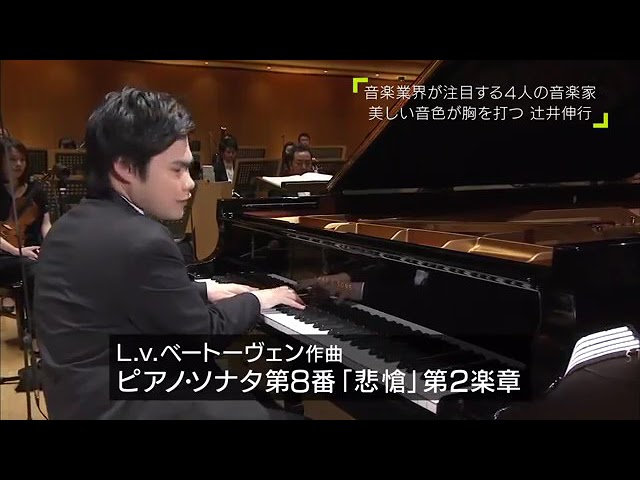
Known as a classic masterpiece of classical music, this piece is characterized by its leisurely tempo and elegant melody.
Composed in 1798, it is a work that fully showcases Beethoven’s youthful genius.
Its gentle strains bring deep peace to listeners.
It was used in the film “A Boy Named Charlie Brown” and has long been beloved by many.
Its influence is far-reaching, even being quoted in Billy Joel’s “This Night.” It’s perfect as background music for a quiet evening of relaxation or for times when you want to concentrate.
Surrendering yourself to its graceful melody will offer a pleasantly soothing experience.
Piano Sonata No. 14 “Moonlight,” First MovementLudwig van Beethoven

This is one of Beethoven’s signature works, depicting a magical scene where the night’s silence and moonlight are reflected on the surface of a lake.
The beautiful melody woven by the left hand’s octaves and the right hand’s triplets soothes the listener and leaves a deep impression.
Completed in 1801 and dedicated in 1802 to one of Beethoven’s students, the piece departs from conventional movement arrangement, giving the whole work a distinctive sense of motion.
Performance directions calling for delicate playing with the damper raised further heighten its ethereal, dreamlike atmosphere.
It’s a perfect choice as quiet nighttime background music or for moments when you want to relax.
Pavane for a Dead Princess (Orchestral Version)Claude Debussy/Joseph Maurice Ravel

This is a representative work by the French composer Maurice Ravel, suffused with delicate color and an air of elegance.
Composed as a piano piece in 1899, it was orchestrated by Ravel himself in 1910.
Featuring memorable solos for horn and oboe, its structure evokes a quiet melancholy and dreamlike scenes.
The piece has been recorded by many artists; the Berlin Philharmonic under Karajan and the Montreal Symphony Orchestra under Dutoit are particularly famous.
It has also been used as background music in films, commercials, and television programs, making it beloved across generations.
It’s a perfect track for everyday background music—during relaxation, commuting to work or school, or at lunch and dinner time.