

[Ghibli] Timeless Ghibli Classics in Classical Arrangements: The charm of Ghibli music performed with live instruments

Classical music and Ghibli.
At first glance, this combination may seem worlds apart, yet it’s quietly sparking a boom among music fans.
Ghibli’s beloved melodies, performed on classical instruments like the piano and violin, bring us new allure and profound emotion.
While preserving the warmth and tenderness of the originals, the grandeur and delicacy unique to classical music are added, creating a fresh experience that feels like listening to an entirely different story.
Experience for yourself how those famous tunes you know so well are reborn through classical arrangements.
- [Ghibli’s Famous Songs Medley] The soothing world of Studio Ghibli that resonates with the heart
- [Masterpiece Classics] A special showcase of gem-like masterpieces so beautiful they’ll move you to tears
- [Ghibli] Popular BGM. Enjoy the world of Ghibli through music!
- Songs of Studio Ghibli: List of Theme Songs, Insert Songs, and BGM from Ghibli Music
- [Christmas] Classical music to listen to at Christmas: recommended sacred Christmas songs
- [Violin] A curated selection of beloved classic masterpieces and popular pieces that continue to be cherished across eras
- [Orchestra] Introducing famous and popular pieces
- [For Piano Recitals] Simple yet Cool Classical Pieces
- Cool classical masterpieces. Recommended classical music.
- Debussy’s masterpiece. Popular classical music.
- Disney classics to enjoy in a classical arrangement: recommended popular songs
- [For Beginners] Recommended Ghibli Masterpieces You’ll Want to Play on the Piano
- Immersive Ghibli Classics! Recommended BGM for Work and Study
[Ghibli] Classic arrangements of Ghibli masterpieces. The allure of Ghibli music performed with live instruments (11–20)
Ask me why (A Mother’s Thoughts)Hisaishi Joe

This is the theme song from Studio Ghibli’s feature-length animated film The Boy and the Heron, which can be called the culmination of director Hayao Miyazaki’s work.
It is performed tenderly on a solo piano only three times during important scenes, from the opening to the late stages of the film, with no arrangements or variations for other instruments, making it clear how deeply composer Joe Hisaishi cherishes this piece.
If you listen closely, one note in the chorus melody differs from Ask Me Why (Mahito’s Resolve).
Just as Mahito returns with the stone and retains his memories of the experience, he has indeed changed from before to now.
It feels like a deliberate, meaningful misalignment.
The characters’ emotions are conveyed through live performance, as if opening the door to the heart.

Music of the CelestialsHisaishi Joe

This is “Heavenly Beings’ Music” from The Tale of the Princess Kaguya.
The composer is Joe Hisaishi, well known for his music in Studio Ghibli works.
Hisaishi is one of the representative composers for Studio Ghibli, but interestingly, he usually scores only films directed by Hayao Miyazaki; when other directors are involved, different composers tend to take over.
The director of The Tale of the Princess Kaguya is Isao Takahata, making this a rare case where Hisaishi worked on a non-Miyazaki film.
Since Princess Mononoke, full orchestras have more frequently been used for in-film performances.
As Ghibli and Hisaishi’s popularity has grown, there have been more concerts as well, and it’s said that Hisaishi creates new arrangements for each concert.
It might be fun to compare the soundtrack versions with the concert versions.
I stopped being alone.Yano Akiko
The theme from “My Neighbors the Yamadas” is performed here in a lovely piano arrangement.
I’ve previously introduced an orchestral version, but when this gentle depiction of everyday life is rendered on piano, it becomes even more immersive, like being drawn into a world of memories.
Everyday life is something everyone has, and it’s unique to each person—not measured by anyone else’s standards.
Yet when the everyday life that must have been mine is shown as images, a quiet feeling of “this is somehow nice” arises.
This piano version touches many people’s heartstrings and will surely brighten the listeners’ everyday lives.
Haru’s MemoriesYuji Nomi
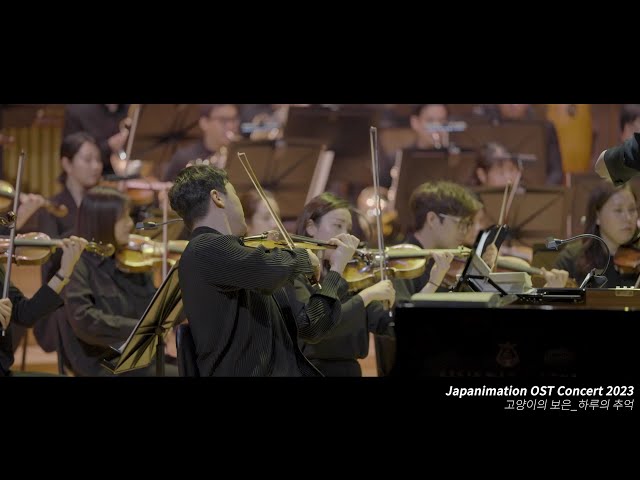
From the film The Cat Returns, this is “Haru’s Memories.” The Cat Returns is framed as a story written by Shizuku Tsukishima from Whisper of the Heart, and the tale begins when the heroine, Haru, saves a cat that is about to have an accident.
Both The Cat Returns and Whisper of the Heart were scored by Yuji Nomi, whose works are known for their gentle warmth.
In the film, the Tokyo Philharmonic Orchestra—familiar from game and anime music concerts—performs the score, and on the soundtrack a bonus track features the Czech Philharmonic Orchestra, resulting in a work of high caliber even as a listening experience.
In the video, a Korean orchestra performs it in concert, showing its popularity abroad as well.
The flute, harp, and tender strings are truly soothing.
Carrying YouHisaishi Joe

From Castle in the Sky.
This is a song by Azumi Inoue, who debuted as an idol singer in 1983.
Thanks to the acclaim this song received, she also performed the theme song “My Neighbor Totoro” and the opening theme “Stroll” for the Studio Ghibli film My Neighbor Totoro.
In addition, she contributed two insert songs—“The Passing Seasons” and “Warmth of Magic”—for Kiki’s Delivery Service, among many other Ghibli works.
The lyrics, which synchronize with the film’s story, instantly draw you into the world of the movie.
Country RoadHon’na Yoko

Based on the Japanese manga by Aoi Hiiragi, Whisper of the Heart is a coming-of-age story about Shizuku Tsukishima, a first-year junior high school girl who loves reading, and Seiji Amasawa, who aspires to become a violin maker.
Country Roads is the film’s main theme song, and in the movie it plays during the scene where Seiji plays the violin and Shizuku sings at a small antique shop called Earth Shop (Chikyūya), which she discovers after spotting a mysterious, plump cat on the train to the library and following it to a rotary.
In this version, Country Roads is performed with lovely gospel-style vocals and orchestral accompaniment, offering an arrangement different from the main feature.
[Ghibli] Classic arrangements of Ghibli’s famous songs: the charm of Ghibli music performed with live instruments (21–30)
Treasure of FlamesŌno Yūji

From Lupin the Third: The Castle of Cagliostro.
It was used as the theme song.
Yuji Ohno, who composed and arranged it, is also active as a jazz pianist.
He has provided songs to many artists, including Sayuri Ishikawa, Yuzo Kayama, and SMAP.
His distinctively expansive musical style is prominently reflected throughout the Lupin the Third series.
The vocals were performed by BOBBY.
It is a piece whose heartrending melody and lyrics move the soul.