

![[Piano Sheet Music] Beloved Classics | A Comprehensive Introduction to Copyright-Free Works](https://i.ytimg.com/vi/8EaXf6fOFnA/hqdefault.jpg)
[Piano Sheet Music] Beloved Classics | A Comprehensive Introduction to Copyright-Free Works

Baroque, Classical, Romantic, early modern, and contemporary—classical music has evolved along with the flow of time, yet masterpieces that reflect the background and ideas of each era continue to be loved by many across generations.
In this article, we’ve gathered piano masterpieces that are often cited as “pieces I want to play” or “dream pieces” from the rich history of classical music.
All the pieces introduced here are in the public domain, so another great perk is that you can download the sheet music for free!
Why not download and print them at home right away and start practicing?
[Piano Sheet Music] Beloved Classics | A Comprehensive Introduction to Copyright-Free Works (1–10)
Grandes études d’après Paganini, S.141 No. 3 in G-sharp minor “La Campanella”Franz Liszt

Franz Liszt’s Grandes études de Paganini, S.141 No.
3 in G-sharp minor—one of the pieces many pianists aspire to play—is widely known by its title La Campanella, meaning “the little bell.” This hallmark of Liszt’s demands transcendental technique: it’s a notoriously difficult work packed with passages that torment performers, including rapid, repeated two-octave leaps.
But the sense of fulfillment when you master it is surely exceptional.
While it’s hard to push the tempo like a concert pianist, it might be nice to follow the notes slowly to savor the atmosphere.

Pavane for a Dead PrincessMaurice Ravel
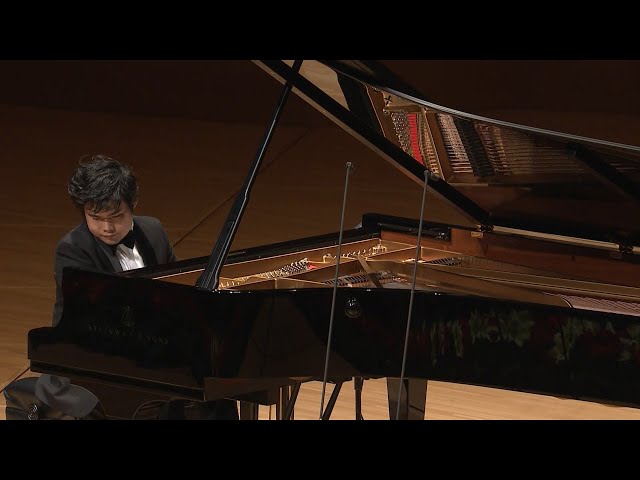

A masterpiece by French composer Maurice Ravel, composed in 1899 and well known as a piano piece.
A pavane is a type of court dance that was performed from the 16th to the 17th century.
This work allows even first-time listeners to comfortably immerse themselves in its world and feel the beauty of Impressionism.
It is popular as a recital piece and is not particularly difficult.
However, careful practice is essential to express its elegance and delicacy.
Aim for a refined atmosphere by playing with a soft, rounded tone.
In 1910, Ravel himself arranged it for orchestra, bringing it to an even wider audience.
Suite bergamasque, No. 3: Clair de LuneClaude Debussy


A masterpiece by Claude Debussy, notable for its gentle, beautiful melody that evokes a moon faintly floating in the night sky.
Among Debussy’s early works in the Suite bergamasque, it is the most famous, and it is frequently used not only in classical concerts but also in films and commercials.
Published in a revised edition in 1905, the piece is filled with tranquility and mystery, and is said to have been inspired by the poetry of Paul Verlaine.
Expressing a dreamlike atmosphere and the stillness of night, it fully draws out the piano’s potential.
Its mysterious tone is perfect for listening on a quiet autumn night.
Performing it yourself is also recommended—enjoy its unique worldview and savor the arts in autumn.
Gymnopédie No. 1Erik Satie


One of the three piano pieces composed in 1888 by Erik Satie, the French-born enfant terrible.
Considered one of Satie’s signature works, it has a transparent quality that evokes watercolor paintings.
Amid its unhurried progression, occasional tantalizing chords convey a sense of suffering and poignancy.
The harmony is more complex than the listening impression suggests, so the initial score reading may feel confusing.
However, this very harmony is a hallmark and a captivating aspect of Satie’s music, so rather than memorizing each note individually, try practicing in a way that imprints the sonorities into your body.
It’s a gently permeating, calming piece—perfect before sleep or whenever you want to soothe the mind.
24 Preludes, Op. 28: No. 15 in D-flat major “Raindrop”Frederic Chopin


Frédéric Chopin’s 24 Preludes, Op.
28, is a collection of very short pieces.
Among them, the fifteenth—widely known as the “Raindrop” Prelude—is especially popular, often heard as incidental music in television and film and beloved by piano learners.
Its calm yet slightly melancholy atmosphere, suggestive of a long, continuous rainfall, cannot be conveyed by playing it simply and evenly.
As you perform, be mindful of the subtle nuances that can be read from the score—such as harmonic changes and the rise and fall of the melodic line—while picturing a gentle, persistent rain.
Waltz No. 6 in D-flat major, Op. 64 No. 1 “Minute Waltz”Frederic Chopin


Among Frederic Chopin’s many outstanding waltzes, the Waltz No.
6 in D-flat major, Op.
64-1—well known as the “Minute Waltz”—is especially popular and often performed at piano recitals.
It is said to have been composed at the request of Chopin’s lover, George Sand, who asked him to depict in music the image of her pet puppy spinning around as it chased its own tail.
Indeed, it’s a charming piece that easily conjures the playful antics of a puppy.
The key point in this piece is lightness! Practice your finger technique as you go, and aim for a clear, sparkling sound.
Nocturne No. 2, Op. 9-2Frederic Chopin


A masterpiece by Frédéric Chopin, a composer emblematic of the Romantic era.
Among Chopin’s works, this piece is relatively accessible to perform, but it is not easy to play the left-hand leaps and the delicate right-hand ornaments beautifully.
Still, with an arrangement that reduces the number of notes to the minimum without losing the original atmosphere, even beginners can take on the challenge.
Composed in 1831, this work has been loved across genres, including its adaptation as the theme song for the 1956 American film “A Love Story.” Taking on a classical masterpiece can also boost your motivation to practice the piano.