

Take on a comet trivia quiz! Space fun facts you’ll want to share once you know them

Many people may not actually know what kind of celestial object a comet is.
In fact, comets are full of fascinating mysteries! The more you learn about them—their beautiful tails when they approach the Sun and the nature of the gases released from their icy nuclei—the more captivating they become.
Here, we present fun trivia about comets in a quiz format.
With explanations included, it’s packed with bite-sized knowledge that lets you deepen your understanding of astronomy while having fun! Kids and adults alike—try thinking through it together!
- A collection of trivia and fun facts about space, brimming with dreams and romance
- Fun to Know! A Collection of Space Trivia [Rec]
- Space trivia quiz: Multiple-choice questions about the planets of the solar system and astronauts
- Collection of trivia and fun facts about stars shining in the night sky
- Think you know it, but maybe you don’t? Fun trivia quiz about the Sun!
- [Space] Did you know? Saturn Trivia Quiz
- Trivia quiz with useful tips to know: fun facts that come in handy at school or at home [for kids]
- Fun facts about the Moon. A rapid-fire quiz!
- Solar trivia quiz! Try your hand at little-known facts
- [Trivia] Jupiter Quiz: A three-choice quiz about the planet
- Recommended for elementary school students! Trivia quiz you'll want to share once you know it
- A quiz to learn what kind of celestial body Mercury—the planet closest to the Sun—is!
- How many can you solve? A surprising trivia and fun facts quiz about total lunar eclipses
Take on a comet trivia quiz! Space fun facts you’ll want to share once you know them (1–10)
What is the true nature of a comet?
- A celestial body primarily composed of gas and ice
- Stellar Fragments
- A meteor shower primarily composed of metal
See the answer
A celestial body primarily composed of gas and ice
Comets are small celestial bodies composed of ice, dust, and rock. When they approach the Sun, the ice on their surface sublimates, releasing gas and dust that create beautiful tails. A shooting star is the phenomenon where tiny dust particles shed by comets enter Earth’s atmosphere and burn up, appearing as streaks of light.

What shape are comets most often?

- a round sphere
- elongated oval
- a rugged, irregular shape
See the answer
a rugged, irregular shape
Many comet nuclei are rugged and irregular in shape, made up of rock and ice, and are not necessarily spherical or ellipsoidal. Observations by spacecraft have also confirmed nuclei with irregular shapes. A comet’s nucleus is like a “dirty snowman,” a mixture of ice and dust.
What is another name for a comet?

- shooting star
- comet
- asteroid
See the answer
comet
Comets are also called “broom stars.” This name comes from the way a comet appears to trail a long tail, resembling a broom. In Japan, they have long been known by the name “broom star.”
Take on a comet trivia quiz! Bite-sized space facts you'll want to share once you know them (11–20)
What is the phenomenon that can be seen every year when a comet leaves dust on Earth?
- solar eclipse
- meteor shower
- Aurora
See the answer
meteor shower
When dust left behind by a comet enters Earth’s atmosphere, it glows and becomes a shooting star. The phenomenon in which these appear concentrated around the same time each year is called a meteor shower. Representative examples include the Perseids and the Quadrantids.
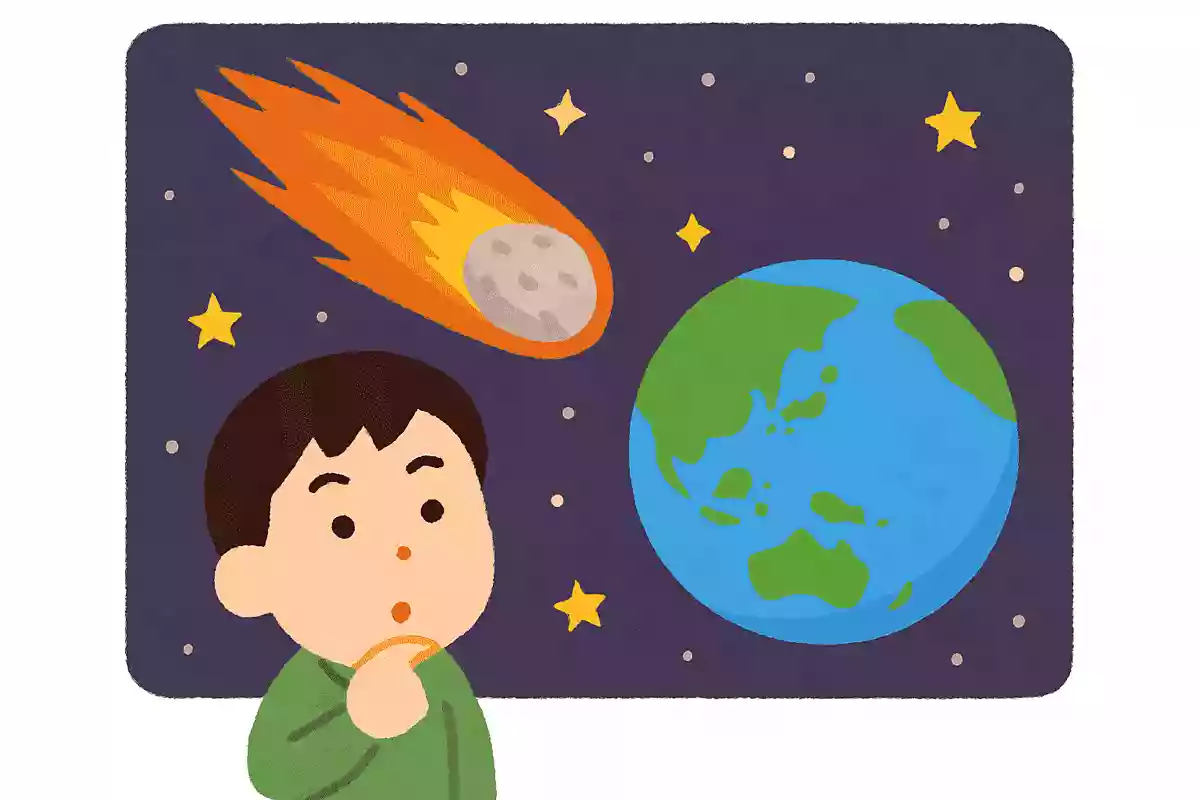
Is there a possibility that a comet could collide with Earth?
- Absolutely impossible
- I've run into this many times in the past.
- The possibility is very small, but it exists.
See the answer
The possibility is very small, but it exists.
The chances of a comet hitting Earth are very small, but not entirely zero. While comets have been considered one possible cause of past mass extinctions and are continually monitored by astronomers today, the actual probability of a collision is regarded as extremely low.
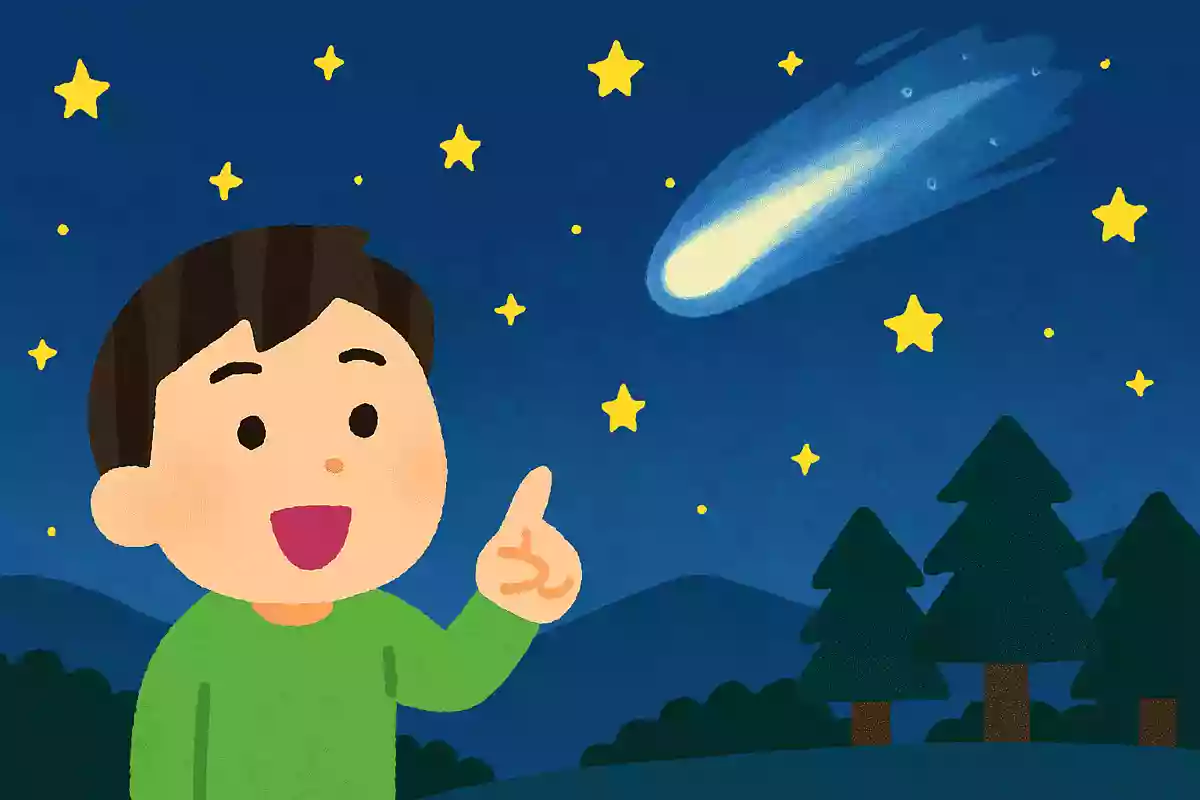
Where can comets mainly be seen?
- In the sea
- Desert ground
- The sky of Earth
See the answer
The sky of Earth
Because comets orbit the Sun, they can often be observed by looking up at the night sky from Earth. Comets are seen on dark nights with little light, trailing tails across the sky. In natural, dark-sky locations, they can sometimes be seen even better with binoculars or a telescope.
How long will the comet be observable?
- a few hours
- from a few days to a few weeks
- several years
See the answer
from a few days to a few weeks
Comets become brighter and visible to the naked eye as they approach the Sun, but that period usually lasts only from a few days to a few weeks. They then grow dim again, so the window for observation is relatively short. They aren’t visible all night long.