

A quiz to learn what kind of celestial body Mercury—the planet closest to the Sun—is!

Mercury is the celestial body that lies closest to the Sun among the planets of the solar system.
Some of you may have wondered why it’s called “Mercury” even though there is no water on it.
The name was given during an era influenced by China’s Five Elements philosophy—fire, water, wood, metal, and earth—which were thought to govern the world.
Therefore, it has nothing to do with the presence or absence of water.
In this way, Mercury holds truths that are surprisingly little known.
Seemingly familiar yet distant, seemingly known yet unknown—let’s use this quiz to deepen our understanding of Mercury!
A quiz to learn what kind of celestial body Mercury—the planet closest to the Sun—is! (1–10)
How many times has Mercury been explored so far?
- twice
- three times
- four times
See the answer
three times
As of 2023, Mercury has been explored three times: NASA’s Mariner 10 (1974–1975), MESSENGER (launched in 2004, in Mercury orbit from 2011 to 2015), and BepiColombo, jointly developed by the European Space Agency (ESA) and the Japan Aerospace Exploration Agency (JAXA) (launched in 2018, scheduled to enter Mercury orbit in 2025).
When was Mercury first observed?

- Around 3000 BCE, records by the Sumerians
- Around 1000 BCE, references in the Vedic literature
- Around 350 BCE, as described by Aristotle
See the answer
Around 3000 BCE, records by the Sumerians
Mercury has been known since ancient times and is thought to have been first recorded by the Sumerians around 3000 BCE. The motion of Mercury was observed by ancient civilizations, and that knowledge contributed to the early development of astronomy. However, there is no record of the exact first observation, and the estimate is based on the oldest surviving written documents.
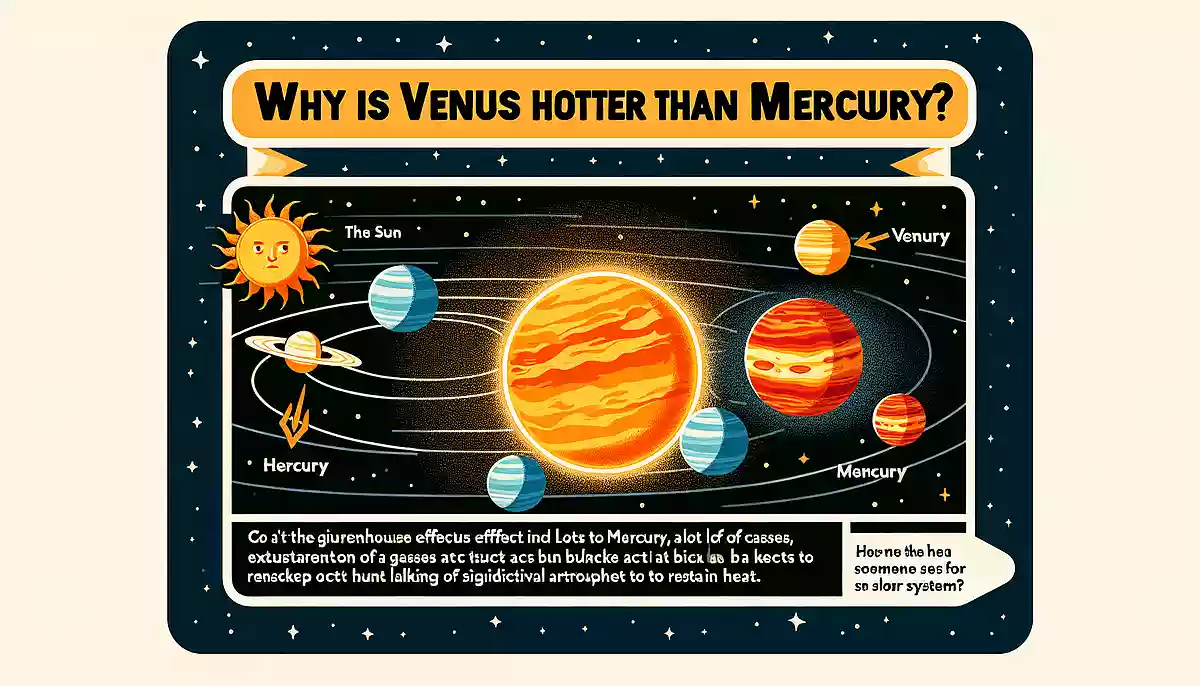
Why is Venus hotter than Mercury?
- Because Venus has a thick atmosphere
- Because Venus is constantly heated by volcanic activity
- Because Venus is closer to the sun than Mercury
See the answer
Because Venus has a thick atmosphere
Venus is the second-closest planet to the Sun and has an atmosphere composed mainly of thick carbon dioxide. This dense atmosphere traps the Sun’s heat and produces an extremely strong greenhouse effect, making Venus’s surface temperature significantly higher than Mercury’s. Mercury has almost no atmosphere and thus little greenhouse effect, so its average surface temperature is lower than Venus’s. While Mercury’s dayside becomes extremely hot during the day and drops sharply at night, Venus’s atmosphere distributes heat evenly, resulting in a very small temperature difference between day and night.
What kind of phenomenon is Mercury retrograde?
- Mercury is actually moving in the opposite direction.
- An illusion caused by the relative positional relationship and differences in motion between Earth and Mercury.
- An optical phenomenon caused by sunlight reflecting off Mercury.
See the answer
An illusion caused by the relative positional relationship and differences in motion between Earth and Mercury.
Mercury retrograde does not mean Mercury is actually moving backward. It’s an optical illusion caused by Earth and Mercury orbiting the Sun at different speeds. From our vantage point on Earth, when Earth overtakes Mercury, Mercury appears to move backward. This is similar to the illusion you experience when you pass a car in the next lane and it seems to drift backward.
What is the origin of Mercury, the English name for the planet Mercury?

- Vulcanus, the god of fire
- Mars, the god of war
- Mercurius, the god of commerce and travel
See the answer
Mercurius, the god of commerce and travel
The English name for Mercury comes from Mercurius, the Roman god of commerce, travel, and thieves. He was known for moving very quickly, which reflects how rapidly Mercury orbits the Sun.
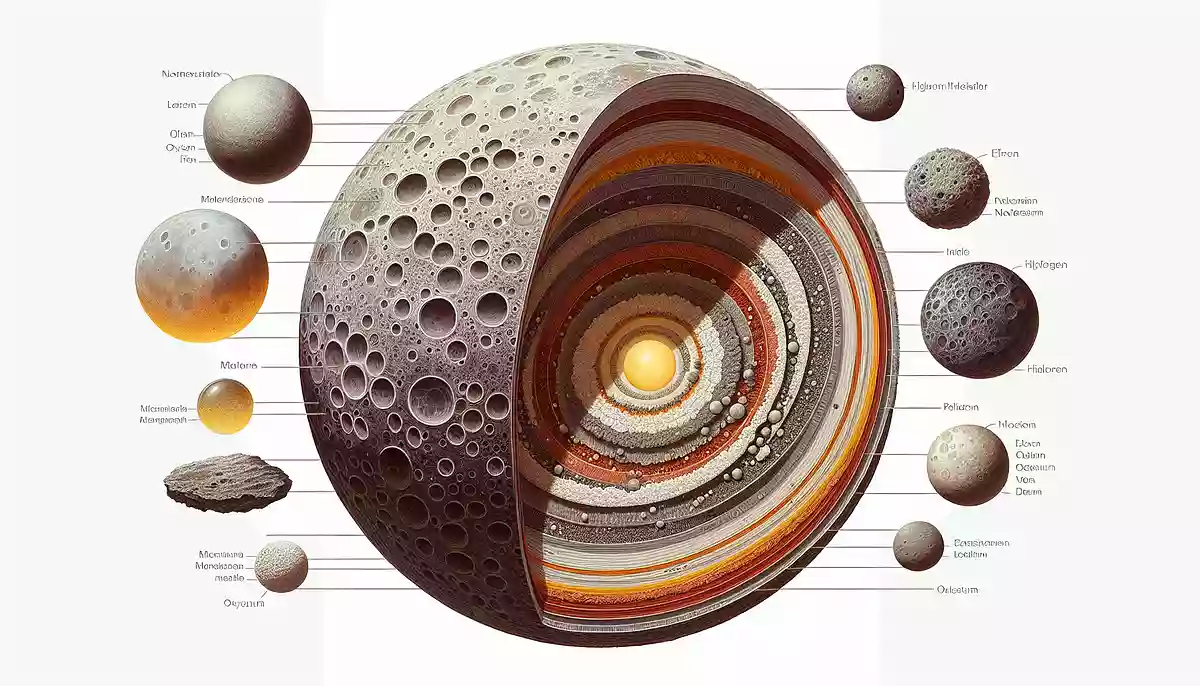
What is Mercury made of?
- Gas and ice
- Gas and dust
- Rocks and Metals
See the answer
Rocks and Metals
Mercury is known for having a large iron core in its internal structure. Its surface is covered with rock, and its composition consists mainly of silicates (one of the minerals that make up rock) and metals. Therefore, it can be said that Mercury is composed of rock and metal.
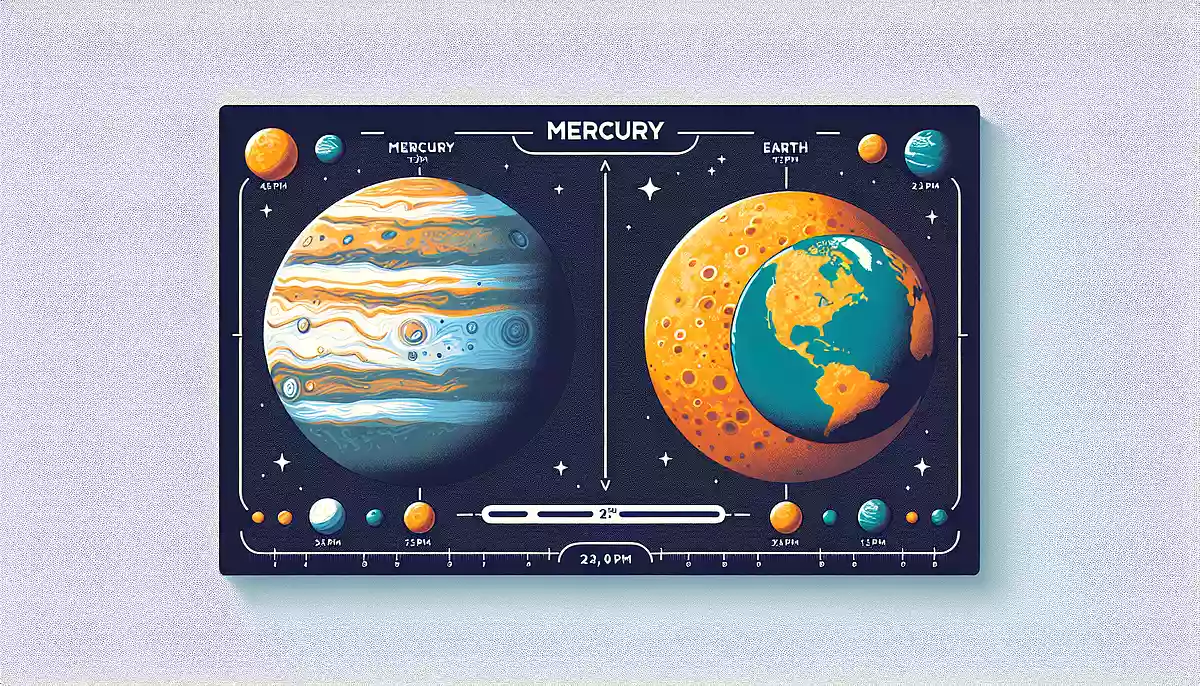
How different are Mercury and Earth in size?
- about 1/2
- About one-third
- About 1/6
See the answer
About one-third
Mercury’s diameter is about 4,880 km, and Earth’s diameter is about 12,742 km. Therefore, Mercury’s diameter is roughly one-third that of Earth.