

A quiz to learn what kind of celestial body Mercury—the planet closest to the Sun—is!

Mercury is the celestial body that lies closest to the Sun among the planets of the solar system.
Some of you may have wondered why it’s called “Mercury” even though there is no water on it.
The name was given during an era influenced by China’s Five Elements philosophy—fire, water, wood, metal, and earth—which were thought to govern the world.
Therefore, it has nothing to do with the presence or absence of water.
In this way, Mercury holds truths that are surprisingly little known.
Seemingly familiar yet distant, seemingly known yet unknown—let’s use this quiz to deepen our understanding of Mercury!
- [Challenging] General Knowledge Quiz Compilation: Difficult and Interesting Multiple-Choice Questions (3 Options)
- [Trivia] Jupiter Quiz: A three-choice quiz about the planet
- Space trivia quiz: Multiple-choice questions about the planets of the solar system and astronauts
- Fun facts about the Moon. A rapid-fire quiz!
- Collection of trivia and fun facts about stars shining in the night sky
- Fun to Know! A Collection of Space Trivia [Rec]
- [Trivia] Did You Know? A Collection of Weather Proverb Quizzes!
- [For Kids] Today’s Quiz Roundup. Let’s play quizzes about today! [April 2026]
- [Space] Did you know? Saturn Trivia Quiz
- A collection of trivia and fun facts about space, brimming with dreams and romance
- Think you know it, but maybe you don’t? Fun trivia quiz about the Sun!
- [Snake Quiz] Surprisingly fascinating once you know! Snake ecology & characteristics
- Holst’s Piano Pieces: Masterworks for Piano by the Composer of the Suite The Planets
A quiz to learn what kind of celestial body Mercury—the planet closest to the Sun—is! (1–10)
What color is Mercury?
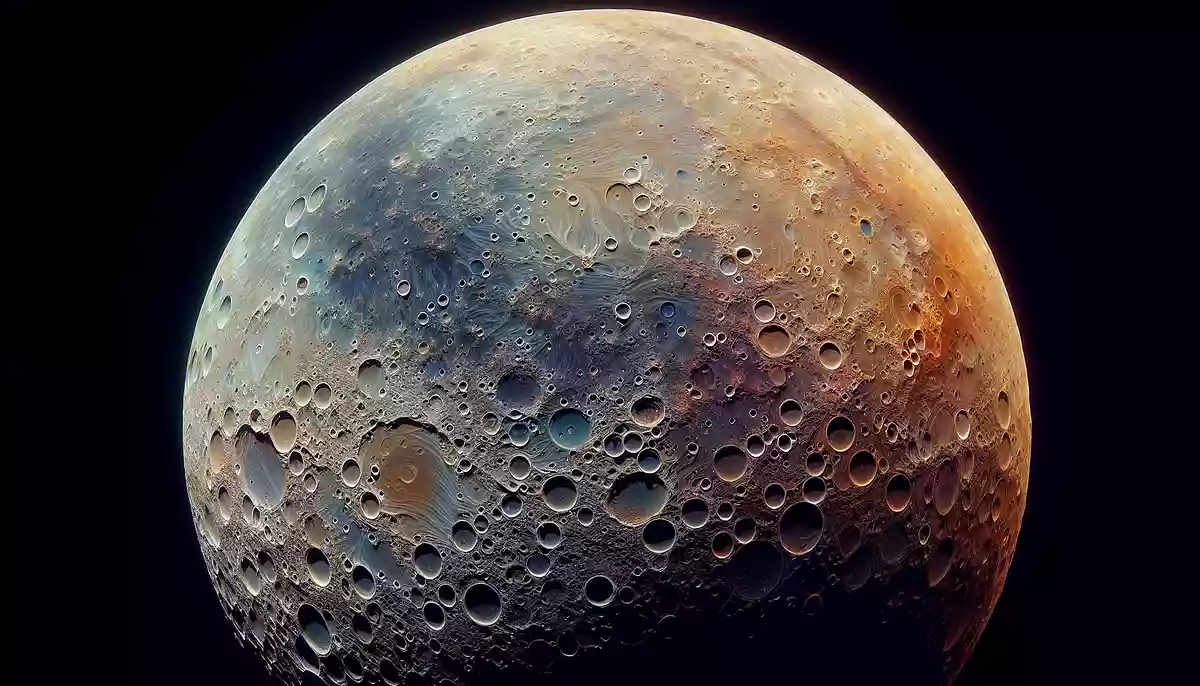
- vivid blue
- dark gray
- bright red
See the answer
dark gray
Mercury is composed of rock, and its surface is covered with many craters. Because of this, Mercury has a dark gray color similar to Earth’s Moon, and the appearance is determined by the colors of the surface rocks and dust. Rather than a vivid blue or bright red, the correct answer is a subdued dark gray.
How many moons does Mercury have?

- 0 item(s)
- 9 pieces
- 26 pieces
See the answer
0 item(s)
Mercury has no moons. In fact, both Mercury—the planet closest to the Sun—and Venus, the second closest, do not have any moons. This is because their proximity to the Sun makes it difficult for moons to remain in stable orbits due to the Sun’s strong gravitational pull.
What type of planet is Mercury in the solar system?
- terrestrial planet
- Jovian planet
- plutoid
See the answer
terrestrial planet
Mercury is the closest planet to the Sun in the solar system, and it is a small, dense planet composed of rock. Therefore, it is called a terrestrial planet. Jovian planets are huge and composed mainly of gas, and the Plutonian category was once used to refer to Pluto; however, Pluto is now classified as a dwarf planet.
A quiz to learn what Mercury, the planet closest to the Sun, is like! (11–20)
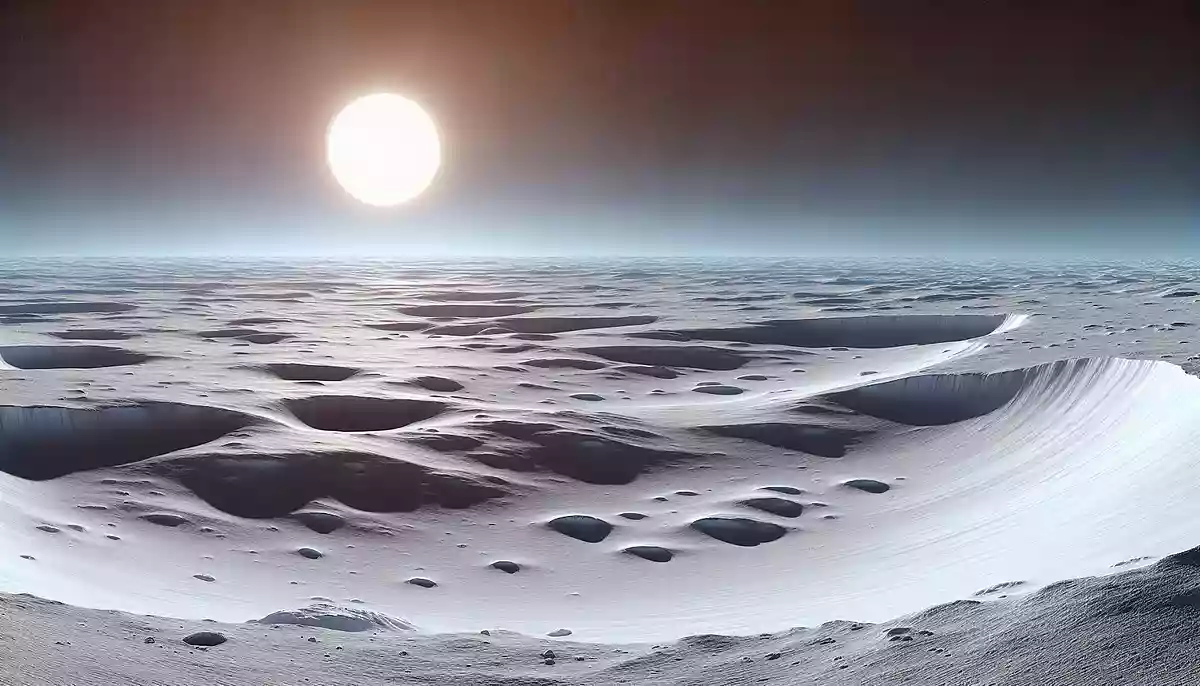
Why doesn’t Mercury have seasons?
- Because its orbital period is short
- Because the rotational speed is high
- because there is almost no inclination of the axis
See the answer
because there is almost no inclination of the axis
The main reason Mercury has almost no seasons is that its axial tilt is extremely small. Earth’s axis is tilted by about 23.5 degrees, which is the primary factor that produces seasonal changes. In Mercury’s case, however, the axis is barely tilted, so the angle of sunlight doesn’t vary much over the course of a year, making seasonal changes unlikely.
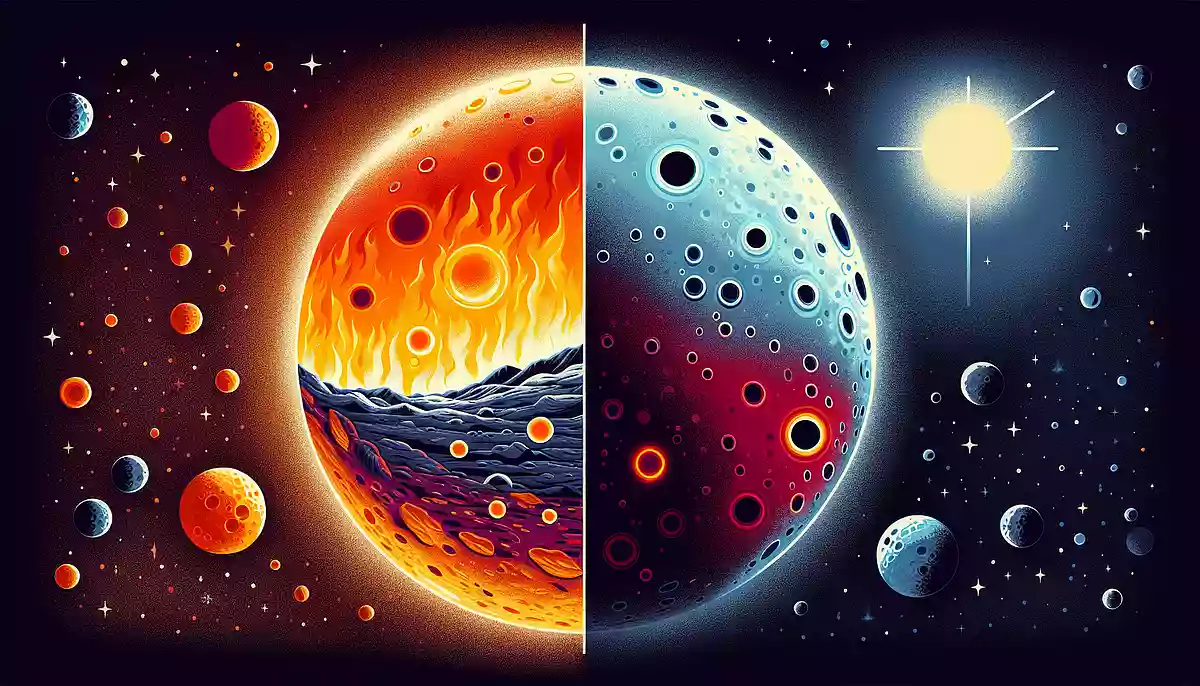
How big is the temperature difference on Mercury?
- approximately 170°C
- about 400°C
- approximately 600°C
See the answer
approximately 600°C
The surface temperature on Mercury rises to about 430°C during the day, but at night it can drop to around -170°C. Therefore, the temperature difference on Mercury can reach about 600°C.
What are the numerous features on Mercury that are named after writers and artists?
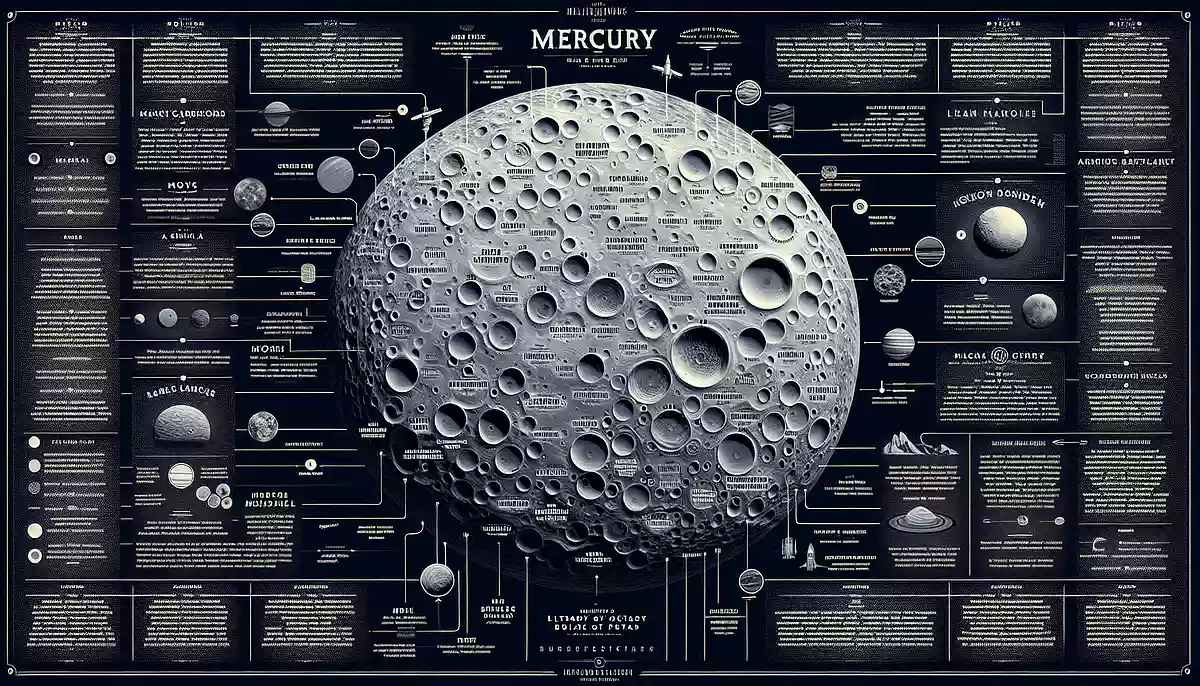
- mountain range
- valley
- crater
See the answer
crater
Mercury’s surface contains numerous craters, and many of them have been named after famous writers and artists by the International Astronomical Union (IAU). Examples include the Shakespeare crater and the Beethoven crater.
What is the distance between Mercury and Earth?
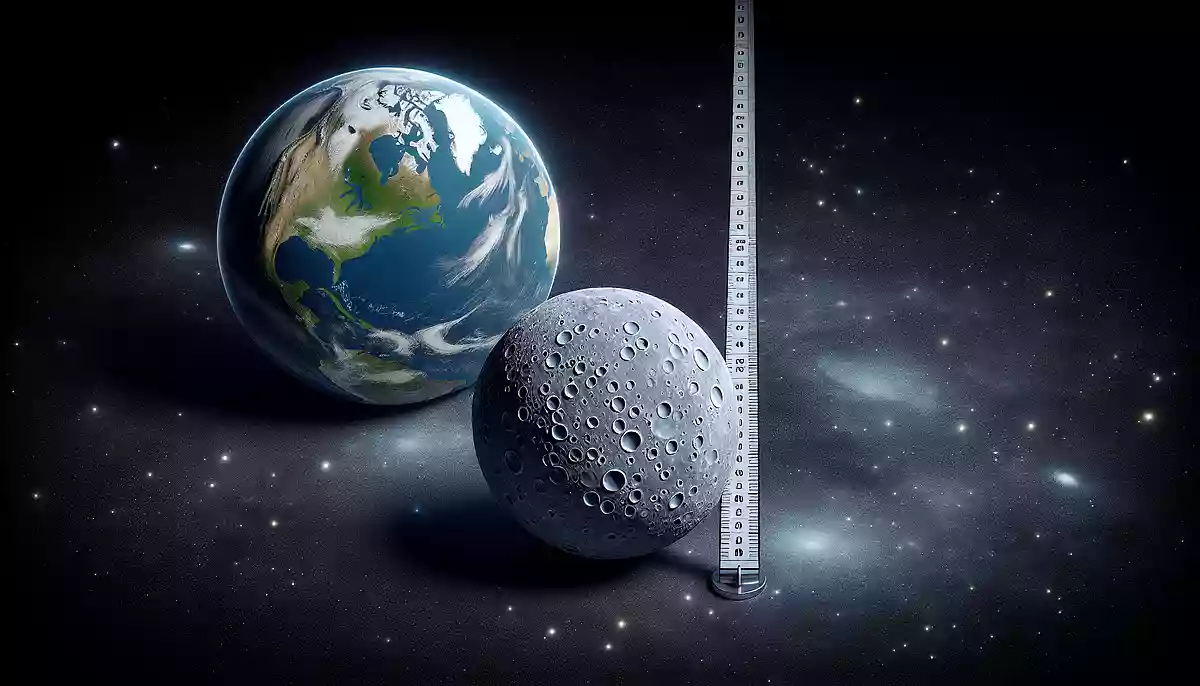
- Approximately 77 million kilometers
- about 92 million kilometers
- about 150 million kilometers
See the answer
about 92 million kilometers
The average distance between Mercury and Earth is about 92 million kilometers. However, this is only an average value; in reality, the distance varies greatly because both planets have elliptical orbits. At times they come much closer, and at other times they move farther apart.