

Take on a comet trivia quiz! Space fun facts you’ll want to share once you know them

Many people may not actually know what kind of celestial object a comet is.
In fact, comets are full of fascinating mysteries! The more you learn about them—their beautiful tails when they approach the Sun and the nature of the gases released from their icy nuclei—the more captivating they become.
Here, we present fun trivia about comets in a quiz format.
With explanations included, it’s packed with bite-sized knowledge that lets you deepen your understanding of astronomy while having fun! Kids and adults alike—try thinking through it together!
Take on a comet trivia quiz! Space fun facts you’ll want to share once you know them (1–10)
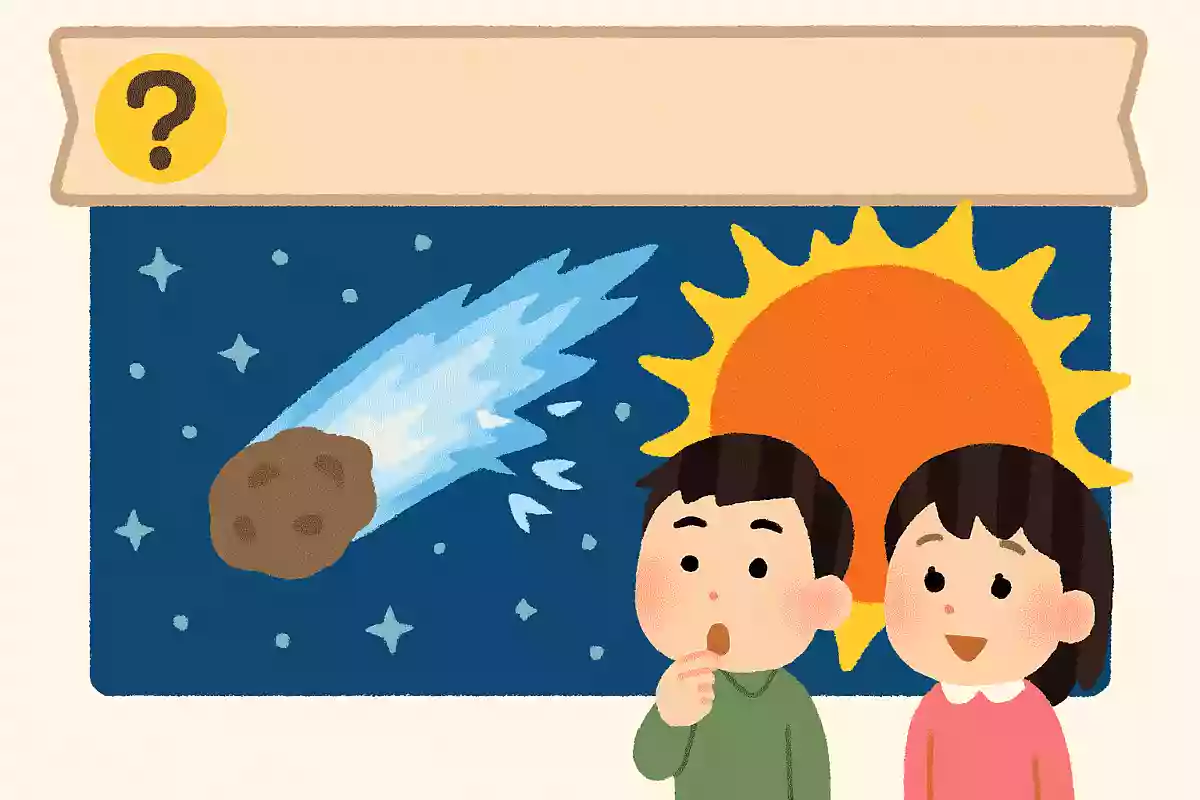
What do you call a comet that quickly breaks apart right after passing close to the Sun?
- Signal Comet
- Comet ISON
- sungrazer comet
See the answer
sungrazer comet
A sungrazer comet is a comet with an orbit that brings it extremely close to the Sun, and many such comets are destroyed in an instant due to intense heat and other effects when they approach too closely. Because they pass so near the Sun and are subjected to extreme temperatures and related influences, they are a special class of comets known for rapidly disintegrating immediately after perihelion.

How often is Halley’s Comet visible?

- about six years
- about 76 years
- about 200 years
See the answer
about 76 years
Halley’s Comet is a periodic comet that passes near Earth about every 76 years. It travels in an elliptical orbit around the Sun, and it can be seen with the naked eye from Earth at roughly the same 76-year interval. It was last observed in 1986 and is expected to be observed again in 2061.
When is a comet easiest to see?

- When the comet is farthest from the Earth
- when a comet is farthest from the Sun
- when the comet was closest to the Sun
See the answer
when the comet was closest to the Sun
When a comet approaches the Sun, its temperature rises and the ice and gases on its surface vaporize, forming a tail. It appears brightest in this state and is best for observation. This is called perihelion passage. As it gets closer to the Sun, heat releases gas and dust, creating a tail and making it brighter, so it becomes easier to see from Earth.
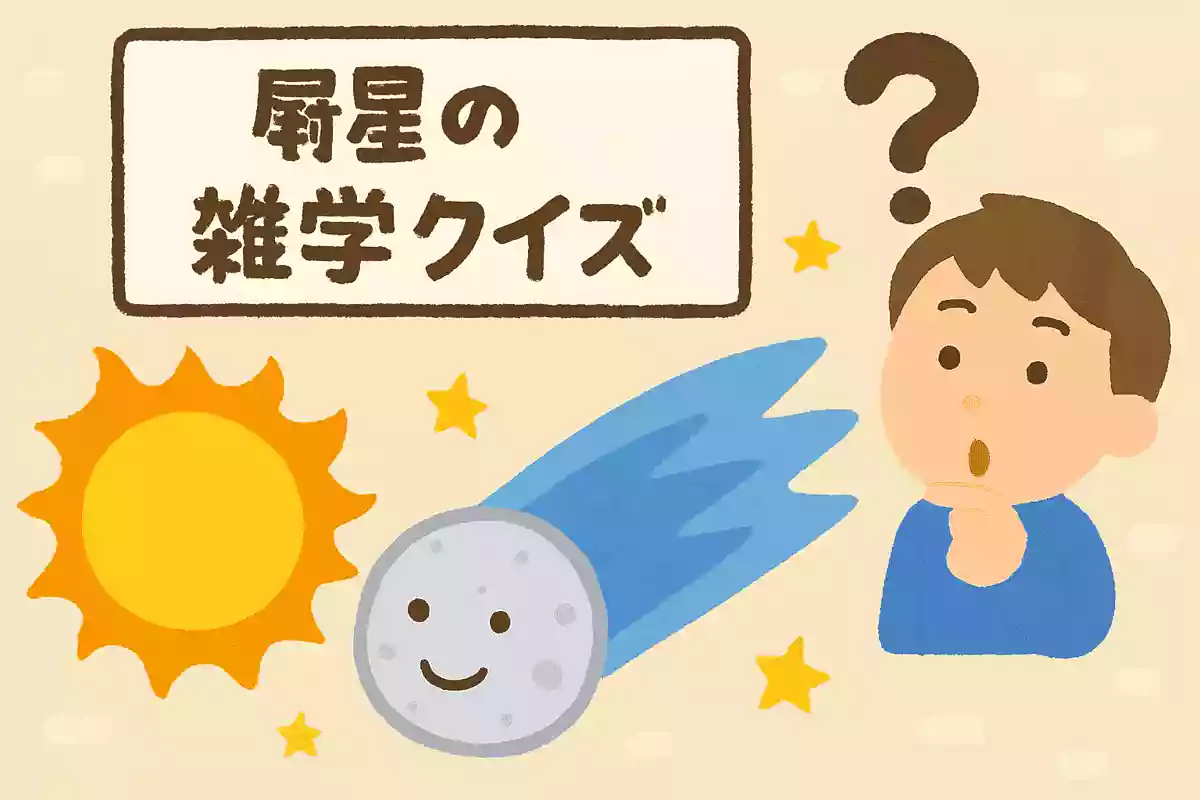
What causes a comet’s “tail” to form?
- Because the comet is rotating.
- The influence of Earth's gravity
- Effects of sunlight and the solar wind
See the answer
Effects of sunlight and the solar wind
When a comet approaches the Sun, its ice and dust evaporate due to the Sun’s heat. The solar wind and the pressure of sunlight then push the gas and dust that have escaped from the comet’s nucleus away to the side opposite the Sun, forming a “tail.” As it comes closer to the Sun, the heat causes gas and dust to be released.
Which direction does a comet’s tail point?

- Direction of the comet's motion
- The reverse direction of a comet
- the opposite direction of the sun
See the answer
the opposite direction of the sun
A comet’s tail always extends in the direction opposite the Sun due to the solar wind and radiation pressure. It doesn’t necessarily point along the comet’s direction of travel or behind it. As the comet approaches the Sun, the tail appears and is pushed by the solar wind, so it stretches away from the Sun.
What is the place called that is considered the birthplace of comets?

- asteroid belt
- Edgeworth–Kuiper belt
- Oort Cloud
See the answer
Oort Cloud
Many comets are thought to come from a spherical region even farther out than the solar system, called the Oort Cloud. The Oort Cloud is a place where numerous ices and rocks are gathered. It is believed that long-period comets come from the Oort Cloud, far beyond the outer reaches of the solar system.
What substances are abundantly present in a comet’s nucleus?

- carbon dioxide
- Ammonia
- ice
See the answer
ice
A comet’s nucleus contains the most ice, and also includes substances such as carbon dioxide and ammonia. When the Sun’s heat causes the ice to sublimate, it releases gas and dust, forming the comet’s tail. Because comets spend long periods in the cold, dark reaches of space, they contain a lot of ice.