

I want to run an escape game at the school festival! How to create a real-life escape game and tips


Some of you might be thinking about creating a real escape game as your school festival attraction.
It’s a game where you solve various puzzles with the goal of escaping from a locked room, and it originally started as a computer game.
Recently, real escape games—where participants are actually locked in and try to escape—have been getting a lot of attention.
If you can pull this off as a school festival exhibit, it will definitely become a hot topic, but many people probably don’t know how to make one.
So in this article, we’ll introduce how to create an escape game and tips to improve its quality!
- How to Create and Tips for Mystery-Solving Games for School Cultural Festivals
- [For school cultural festivals] Recommended maze ideas and traps
- Unusual attractions you can do in a classroom for a cultural or school festival
- [School Festival] Let's build a roller coaster!
- [School Festival] Ideas for gimmicks to incorporate into a haunted house
- [Elementary School] Treasure Discovered! A Collection of DIY Puzzle Treasure Hunt Ideas
- Cultural Festival: Ranking of Popular Booth Ideas
- Eye-catching! Interior decoration ideas to brighten up your school festival
- [School Festival] Ideas for Handmade Coffee Cups
- [For High School Students] A roundup of recommended attractions for the school festival
- Better than a theme park! Attractions perfect for school cultural festivals
- Instagram-worthy ideas for a high school cultural festival: photo spots everyone will love
- Festival booth menu items that can be served without cooking and without using fire
How to Create Problems and Tips (1–10)
Problem creation is “answer × rules.”
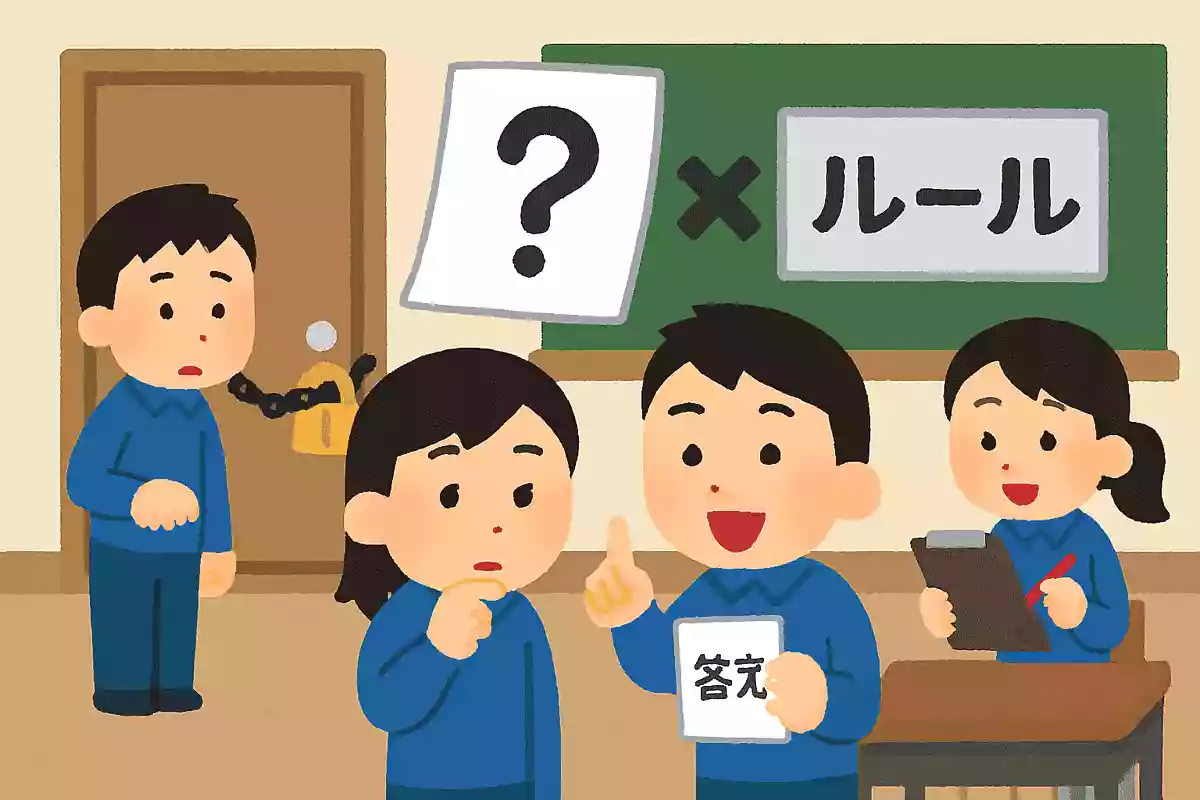
It’s fine to use existing puzzle collections for inspiration, but since you’re creating an escape game for the school festival, you’ll probably want to come up with your own puzzles.
A useful tip for designing puzzles is to decide the answer first, then decide the rule that leads to it. For example, if the answer is “ume (plum),” and the rule is “convert katakana into kanji,” you could create a question like: “What is the saihi loved by Sugawara no Michizane?” Converting “サイヒ (saihi)” into kanji gives “花 (hana, flower),” which leads to the answer “梅 (ume, plum).” In this way, by thinking from the two angles of the desired answer and the rule to solve it, you can create a wide range of puzzles.

Variations of puzzles (1–10)
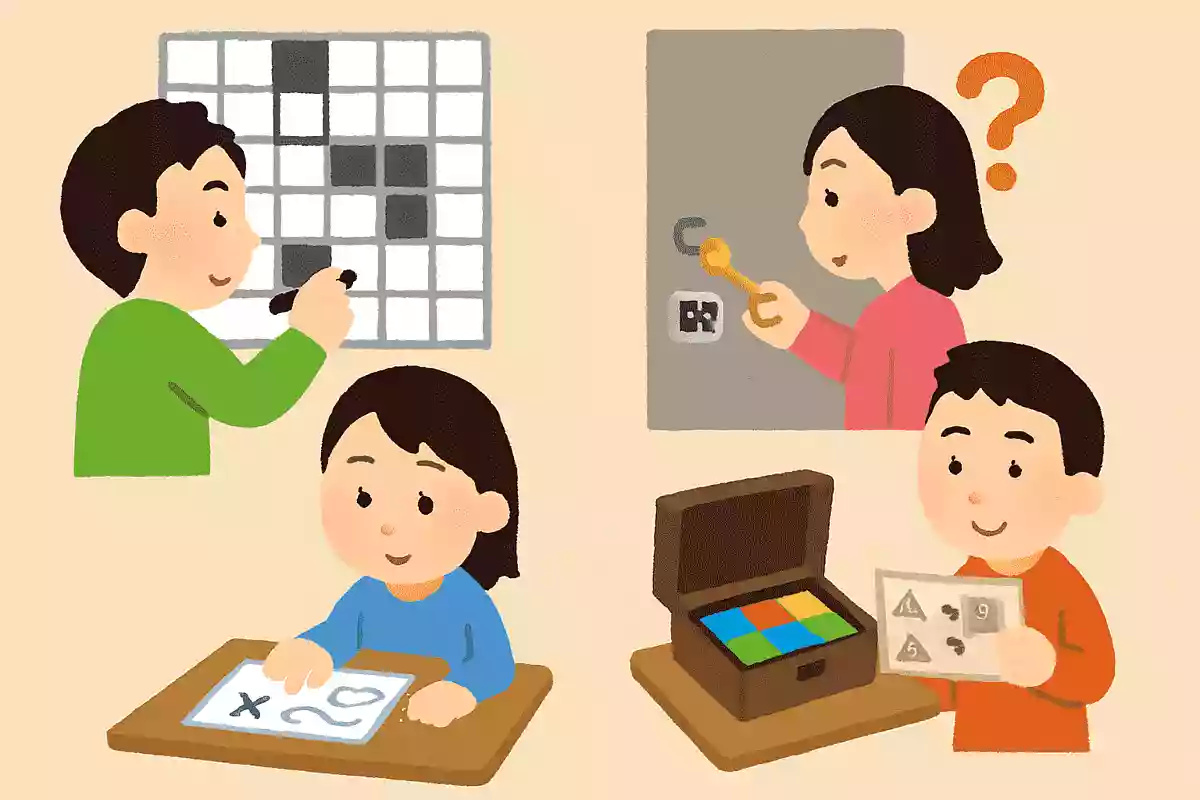
After sharing tips on how to create puzzles, I’ll introduce various puzzle-solving variations, such as practical answer rules and problem formats.
By incorporating a range of formats and ideas, you can prevent the game from becoming monotonous and keep players engaged all the way to the end.
conversion problem
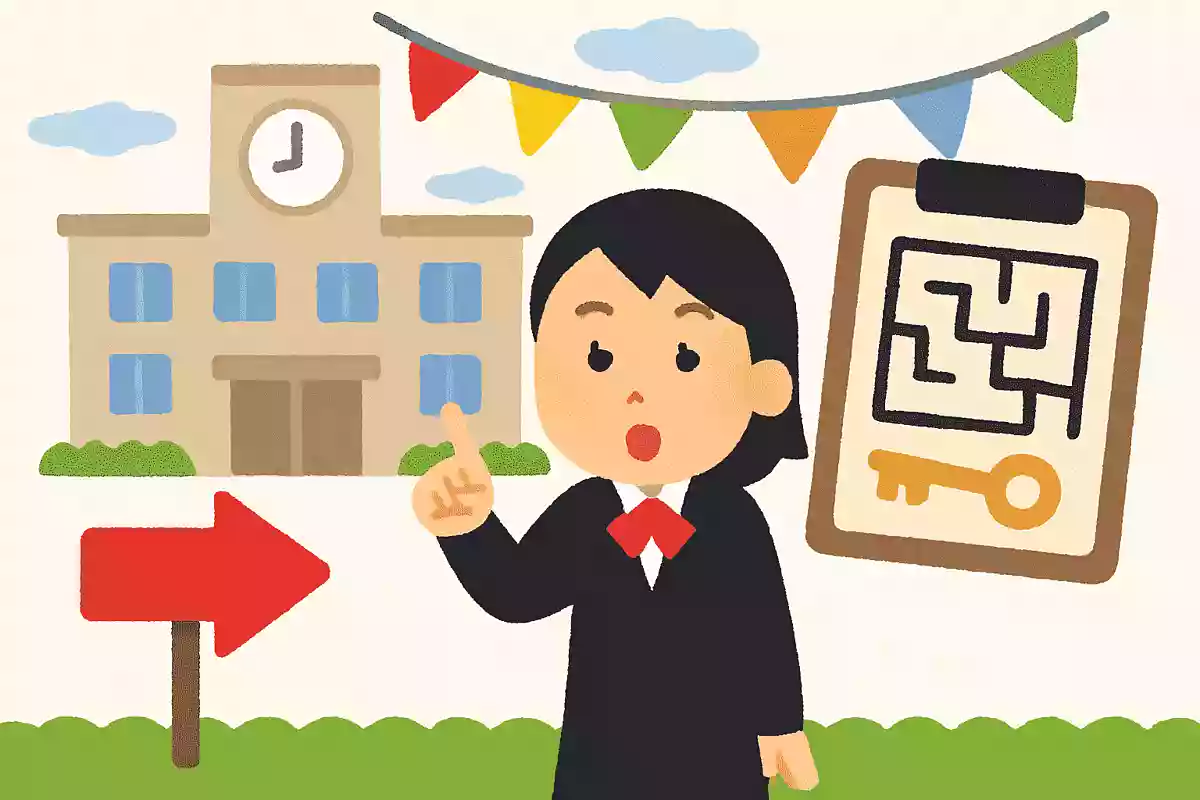
One of the most common rules for solving puzzles is the “conversion-type” method introduced under the heading “How to Create Puzzles and Tips.” You often see tasks where you convert kanji to katakana, read numbers or letters in alternate ways, or make an illustration suggest a different word—basically, transforming the prompt into something else.
If you keep your antenna up day to day, you might start noticing convertible words, like “X can also be read as Y.” By collecting such ideas regularly, you may come up with more elaborate conversions.
Problems using examples
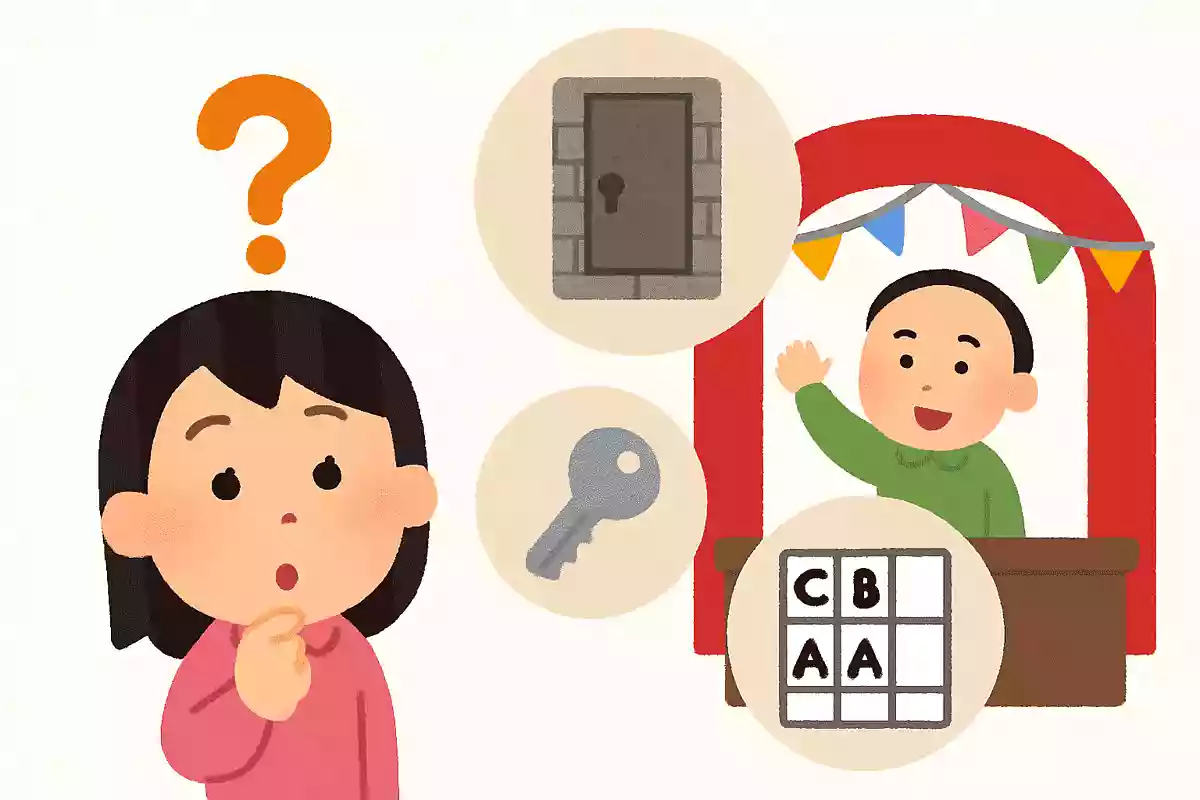
This is another type often seen in puzzle-solving questions: for example, “12 is red, 56 is Naha; then what is 876?” You’re given a few examples first, and you have to find the rule and answer from them.
To solve this type, you need to observe carefully and try various hypotheses.
Players will likely get absorbed in working on it.
To create this type of question, it’s a good idea to consult collections of puzzle quizzes.
By the way, the example given refers to old feature-phone text input: 1 corresponds to the A-row (a-i-u-e-o), 2 to the Ka-row, and so on.
Therefore, “876” becomes “Yamaha.”
Jigsaw puzzle
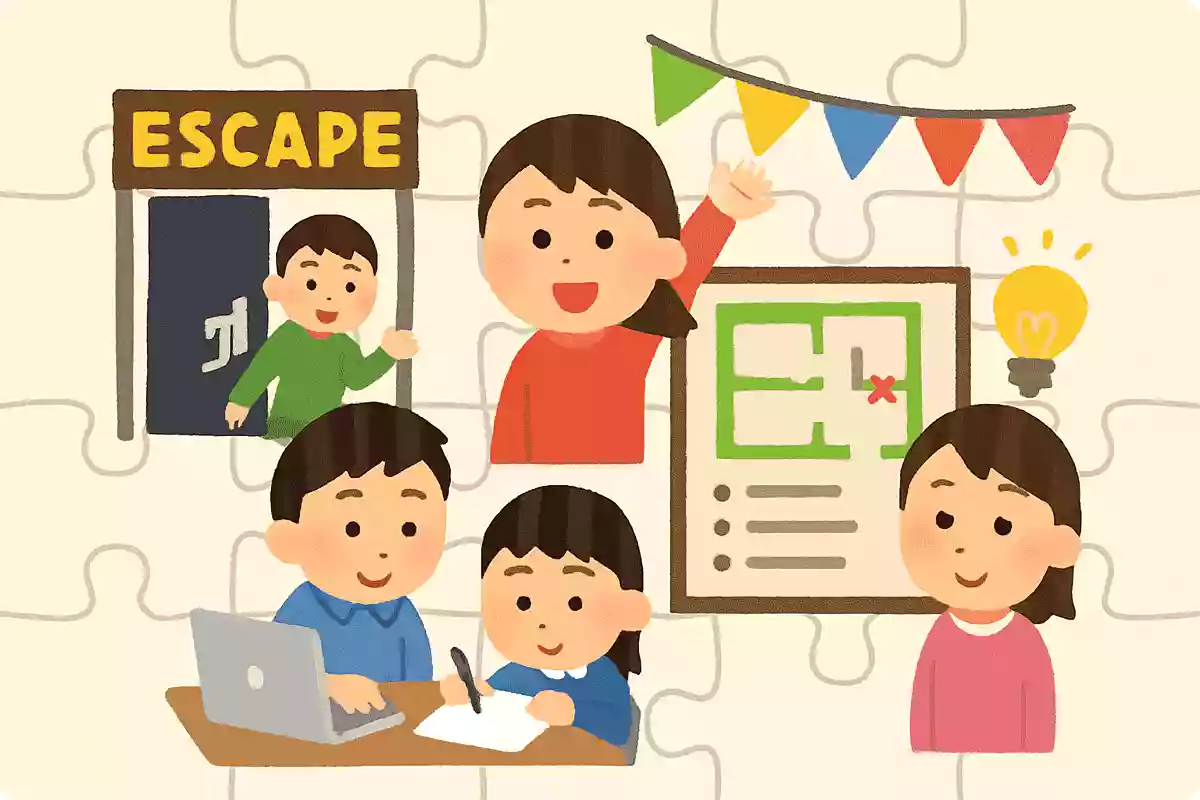
The puzzles you have players solve in an escape game don’t have to be just quizzes.
Using a jigsaw puzzle that players physically assemble is also a great idea.
Here’s a recommended gimmick: when the puzzle is completed, it reveals a clue for the next puzzle.
For preparation, assemble a blank, pictureless jigsaw puzzle in advance and write the next clue on it.
Then, during the actual escape game, have the players put the puzzle together.
It’s a familiar jigsaw-puzzle-based idea, but it easily creates a sense of puzzle-solving, so definitely consider incorporating it.
Crossword
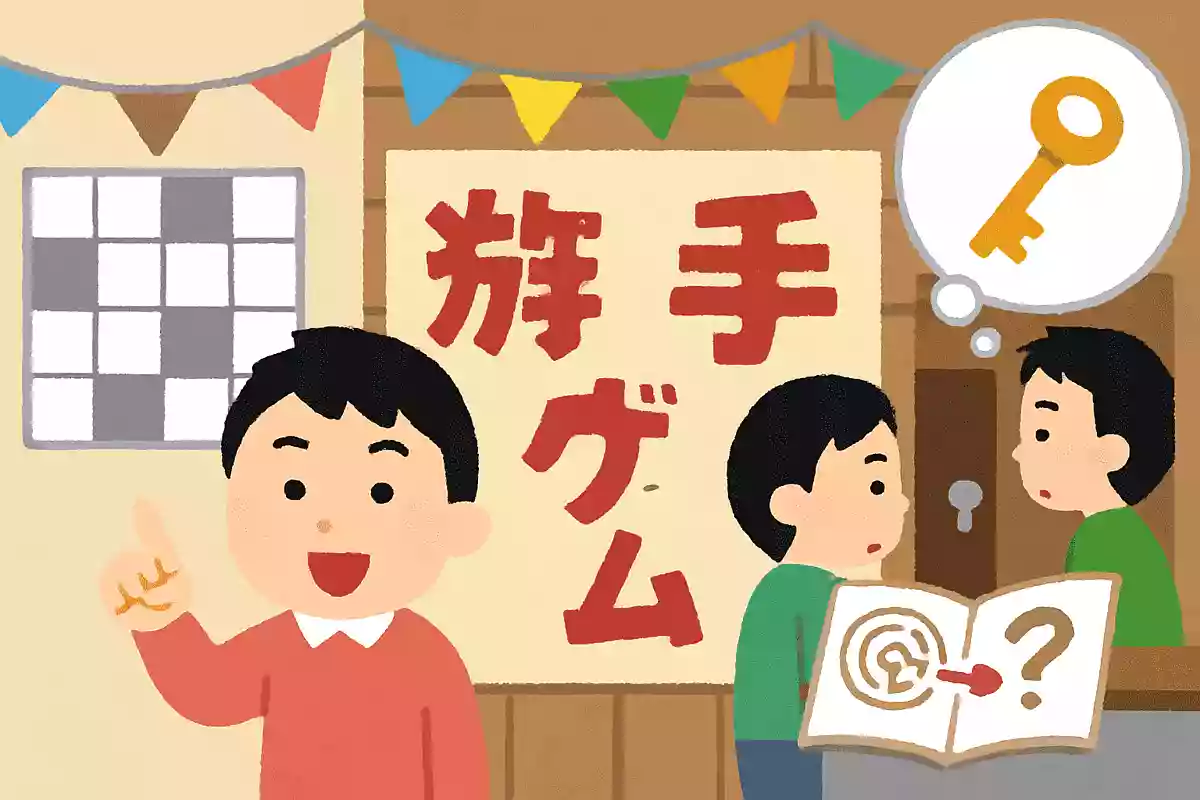
Like jigsaw puzzles, crosswords are a recommended idea for preventing puzzle fatigue in escape games.
The word that appears when you complete the crossword can serve as a clue to advance to the next stage or as the password for a lock on a box containing an important item—there are many ways to adapt the puzzle depending on your creativity.
If it’s too complex, it will take too long, so it’s better to make it solvable in a short time.
To improve the game's level of completion (1–10)
So far, we’ve introduced tips for crafting a story, how to create puzzles, and variations of riddles.
Keeping these in mind, you’ve likely created an escape game that players can really sink their teeth into.
Now, to wrap up, I’ll share some tips to further enhance the polish and completeness of your finished game.
Be sure to incorporate the following tips to refine your game even more.
Have them do a demo play.
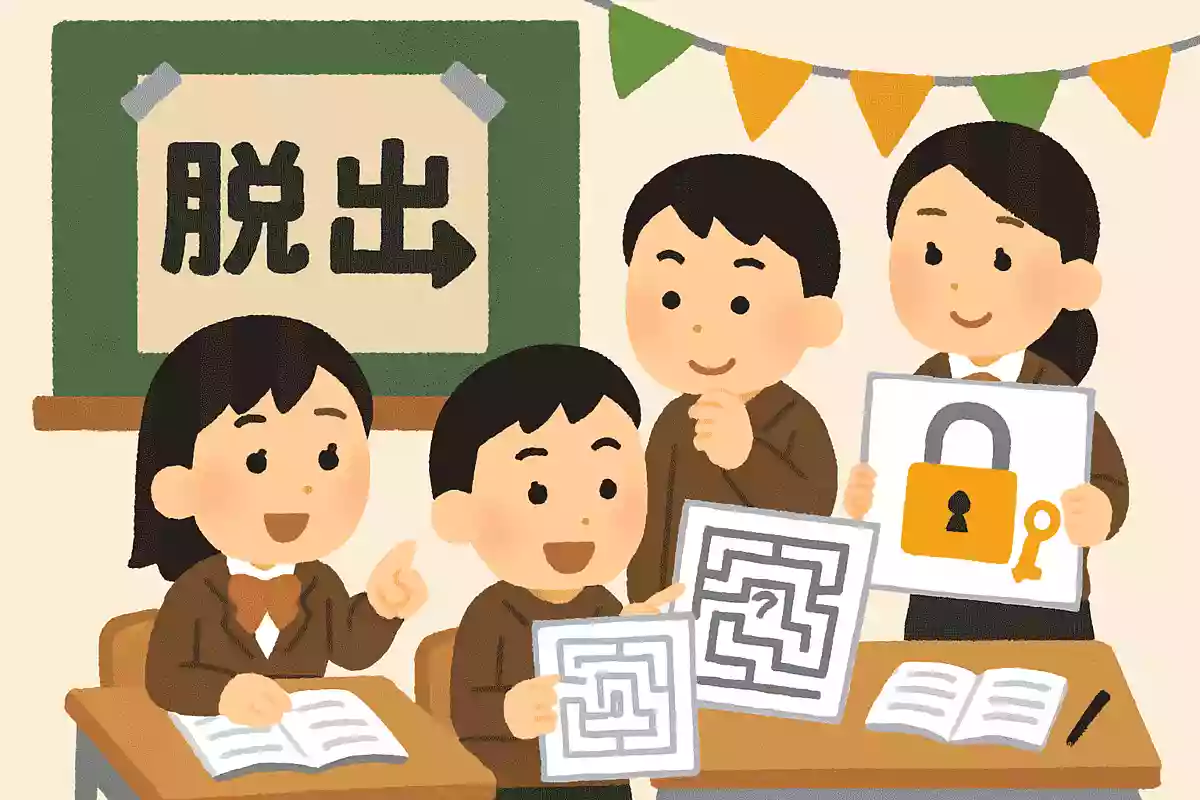
Once your escape game is mostly complete, make sure to conduct a test play.
Have several people who weren’t involved in development try playing it multiple times and gather a variety of feedback: whether the overall difficulty is appropriate, how long it takes, and what improvements could make it more fun.
Use their input to refine the game.
Even if you can’t devote much time to testing or you lack enough testers, and thorough testing isn’t possible, be sure to conduct at least one test play to avoid unexpected issues.
Try actually solving puzzle-solving and escape games
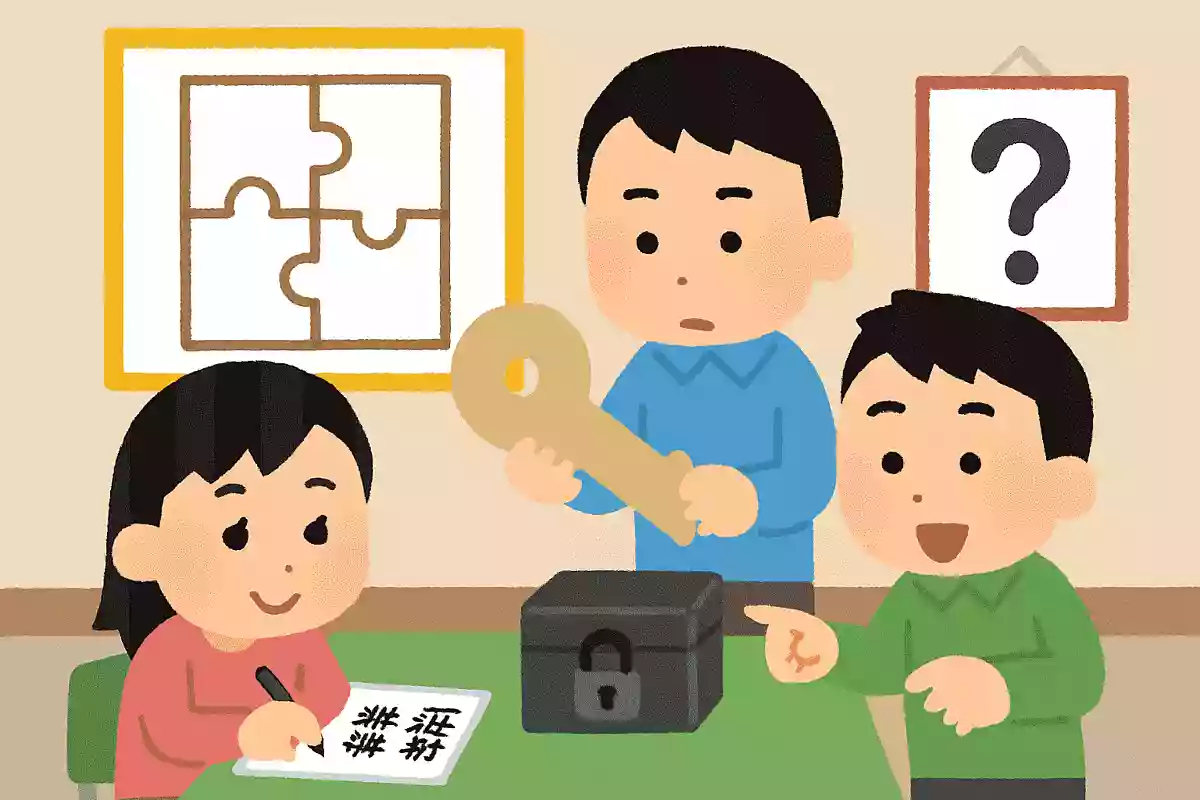
In this article, we’ve mainly focused on tips for creating stories and puzzles, but I’m sure many of you still feel, “I can’t come up with good ideas.” If that’s you, try playing a few escape games or solving some puzzle quizzes.
By actually experiencing them yourself, you’ll encounter ideas you can use as references and start to understand how puzzle quizzes are constructed.
Keep this in mind: when you’re stuck, try becoming the player yourself.
Item ideas to use in a game (1–10)
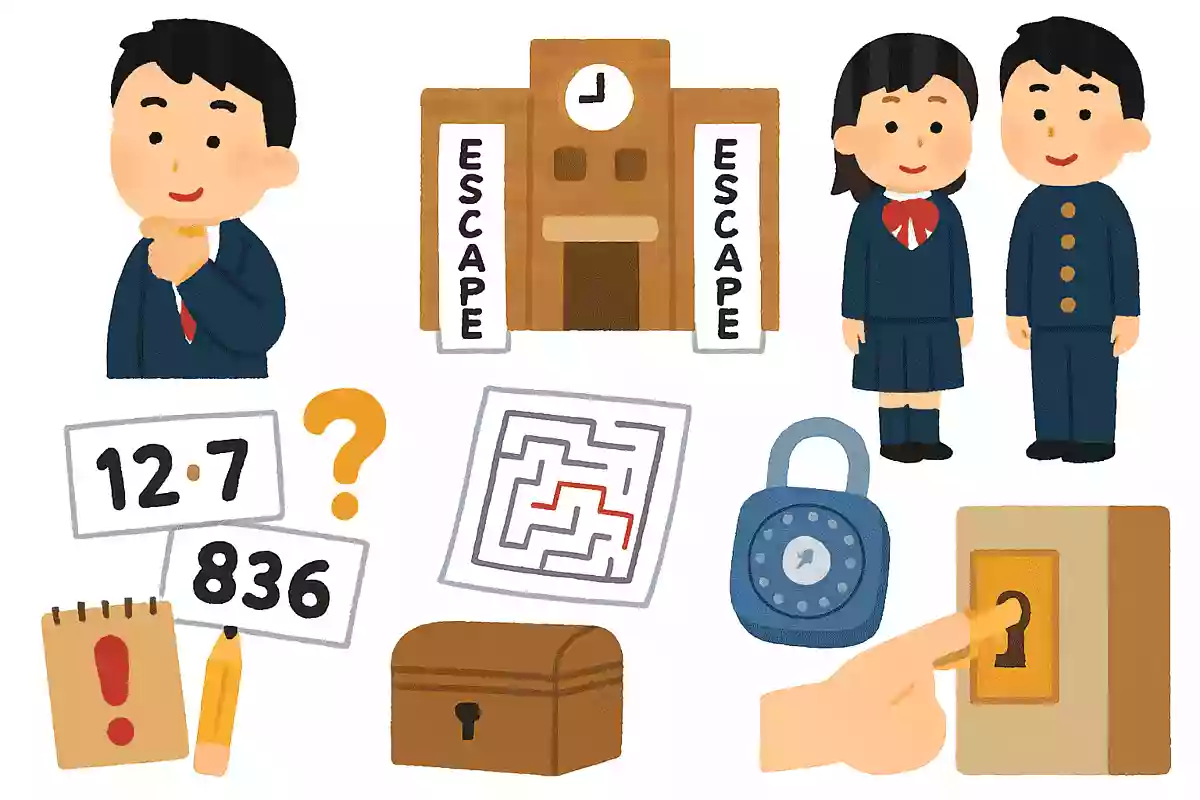
Lastly, here are some prop ideas you can use in an escape room.
Feel free to use them as inspiration for mechanisms that serve as the key to escaping or for hiding places for key items.