

How to Create and Tips for Mystery-Solving Games for School Cultural Festivals

Puzzle solving that’s popular with everyone from kids to adults!
Events are held all over the country, and there are even TV shows that feature puzzle challenges—lots of people are hooked on their charm.
You might be thinking about incorporating puzzle solving as an attraction for a school or cultural festival.
In this article, we’ll show you how to create puzzle-solving activities that are perfect for festival booths!
We’ll also share tips for crafting problems and stories, so be sure to use them as a reference.
Let’s create a fun puzzle experience that can rival any event!
- I want to run an escape game at the school festival! How to create a real-life escape game and tips
- Unusual attractions you can do in a classroom for a cultural or school festival
- [For Elementary School Students] Cipher Quiz: Fun Puzzle Riddles
- [For school cultural festivals] Recommended maze ideas and traps
- Games that rival street festivals and variety shows!? Crowd-pleasers for school cultural festivals
- Cultural Festival: Ranking of Popular Booth Ideas
- [For High School Students] A roundup of recommended attractions for the school festival
- [Trick Quiz] Quiz Questions That Excite Everyone from Kids to Adults
- A roundup of recreational activities to liven up cultural and school festivals
- [Casino at the School Festival] Introducing classic casino games like cards and dice
- [Middle School] Cultural Festival Attractions: A roundup of popular exhibits, games, and stage performances
- [School Festival] Let's build a roller coaster!
- Attraction Ideas for School Festivals That Only High Schoolers Can Pull Off?
Tips for Storytelling (1–10)
Make it realistic and easy to visualize.
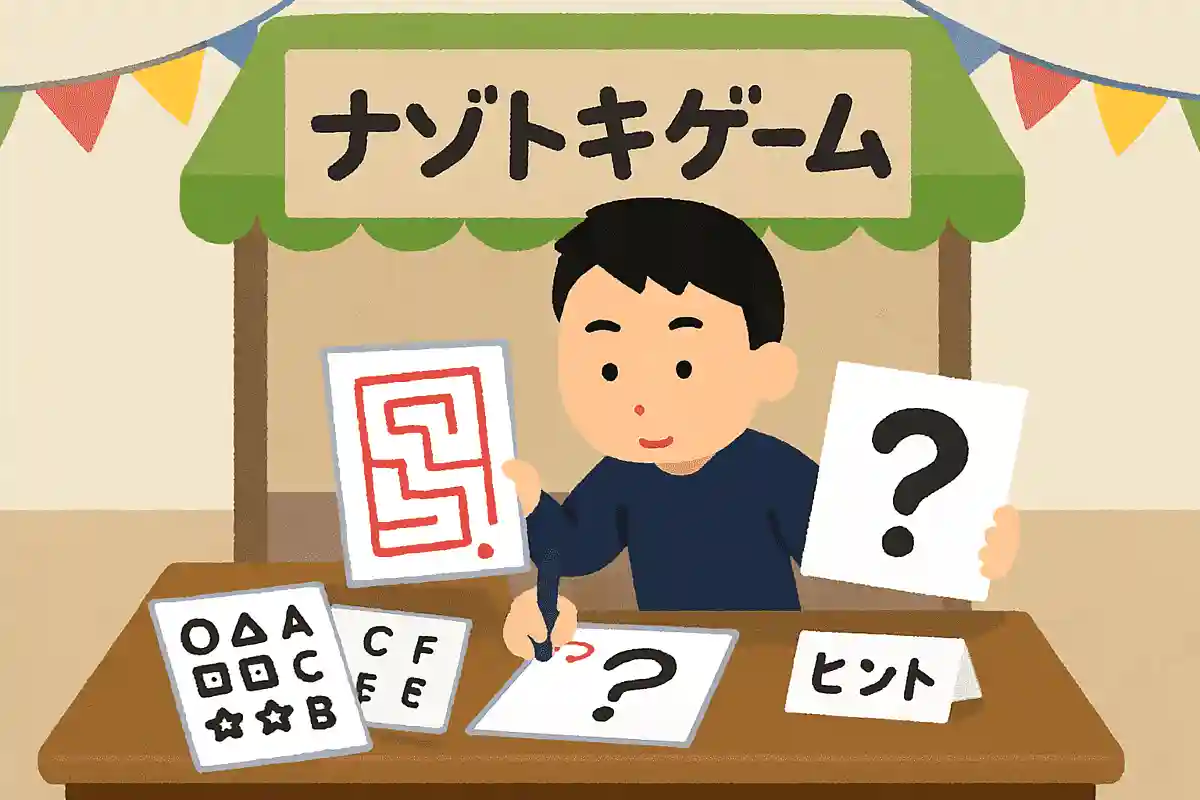
When deciding on a story, we recommend making your puzzle game’s setting a realistic, everyday world rather than a fantastical one.
No matter how important the story is, the heart of a puzzle game is the puzzles themselves.
If the story is too unrealistic, it can overshadow the puzzles, which should be the main focus.
Therefore, it’s preferable to create something as grounded as possible.
Use familiar places—like classrooms, trains, supermarkets, or homes—as the story’s base, and build the narrative around mysteries or incidents that occur there.

Create it with 5W3H in mind.
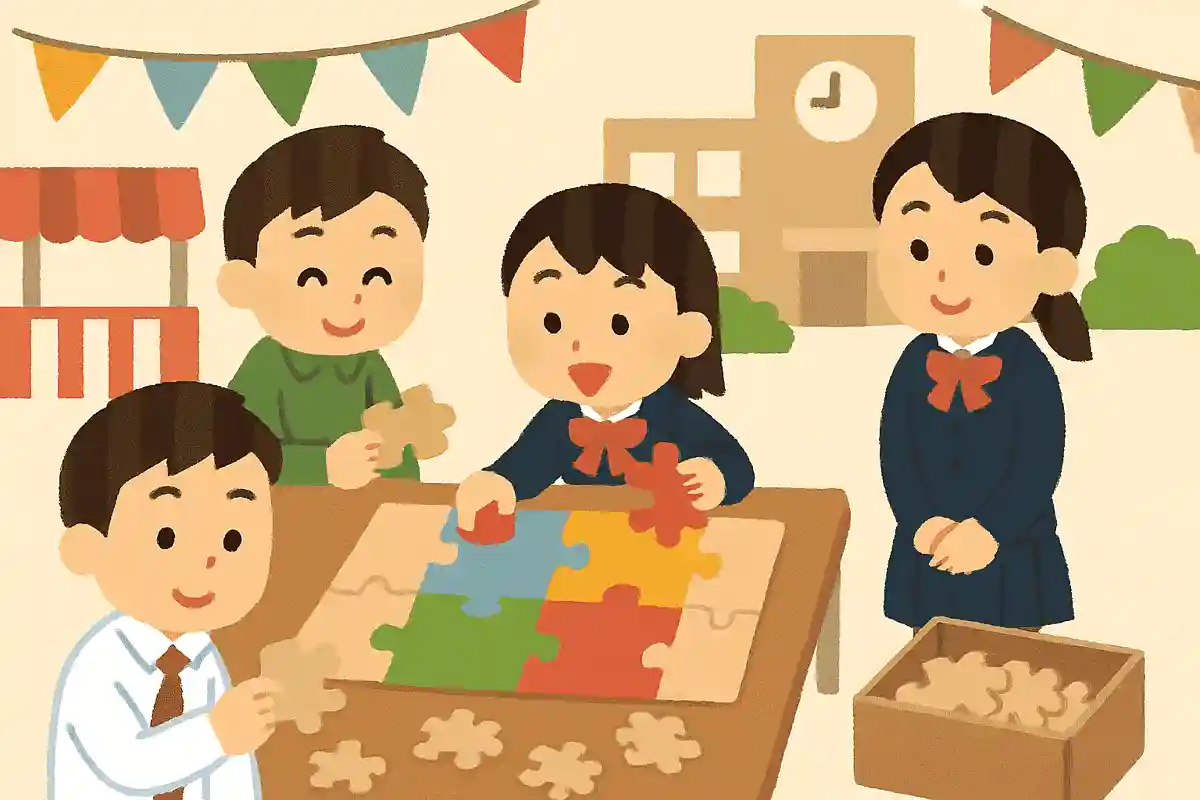
To clearly convey what kind of story it is, the 5W3H framework is important.
The 5Ws are: “when” for time and date, “where” for place, “who” for people, “what” for things or events, and “why” for reasons.
The 3Hs are: “how” for method, “how many” for quantity, and “how much” for cost.
In other words, it’s crucial to clarify who did what, when, where, and why, and then specify how they did it, how many minutes or hours it took to solve the mystery, and what kind of reward awaits at the end.
When creating a story, be sure to think carefully about these elements as well.
How to Create Puzzle Riddles (1–10)
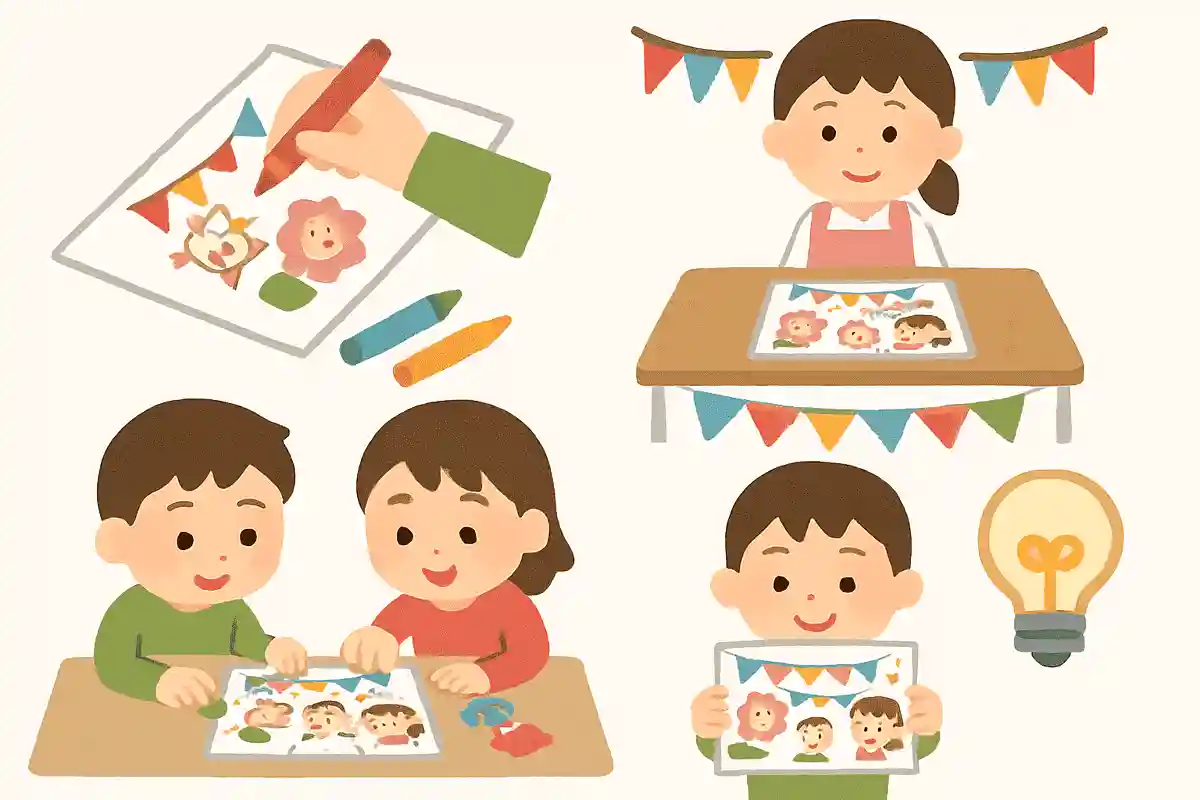
Next, I’ll introduce how to create puzzle-solving problems.
When you look at puzzles published in real events or on TV, many people may feel that making them yourself seems difficult.
Generally, puzzle problems are created by first deciding on the answer and then working backward.
Just like the riddles we played with as children, you can create problems by starting from the answer and letting your ideas branch out in different directions.
From here, I’ll explain the mindset for making problems in more detail.
Try creating puzzles that everyone can enjoy solving.
Consider rules for solving puzzles
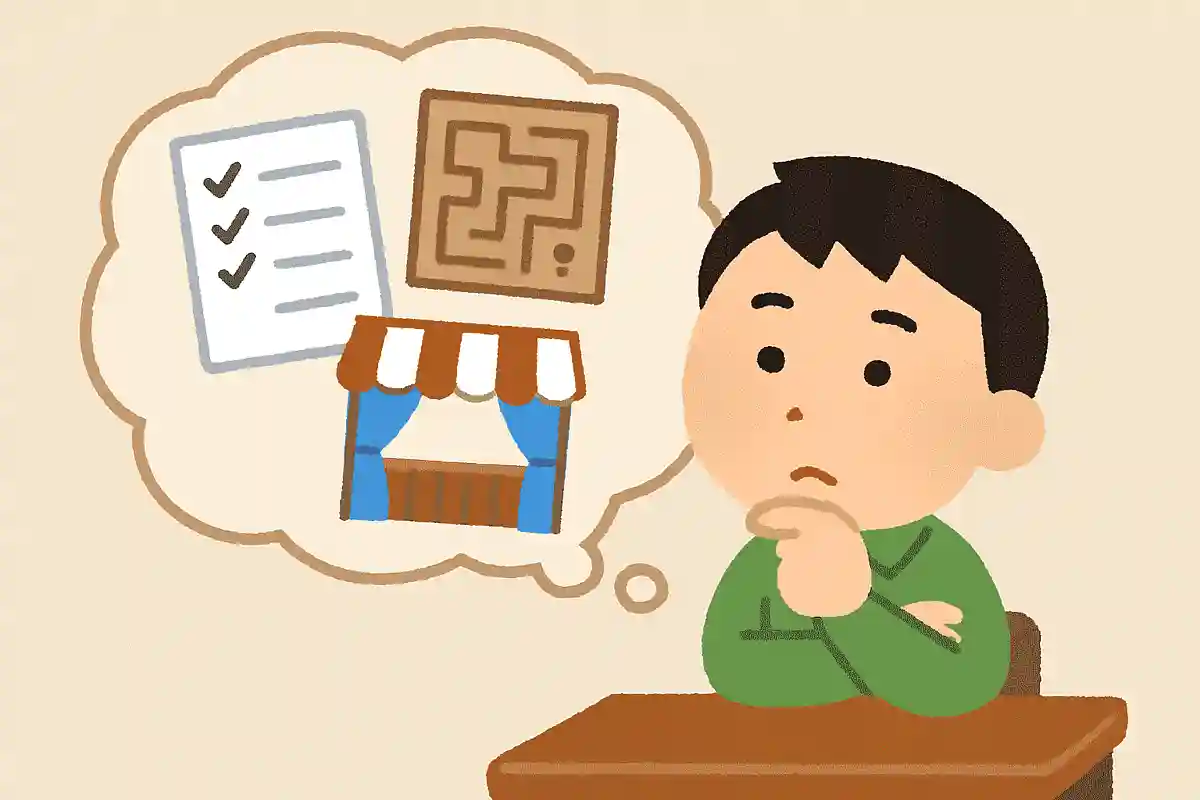
Once you’ve decided on the answer to the puzzle, you need to think about the rules that will be used to solve it.
Among those rules, the most common is transformation.
In other words, converting parts of the problem statement or likely key elements from hiragana to katakana, to kanji, or to English, or turning illustrations in the puzzle into text—these are all transformations.
You often see puzzles on TV quiz shows that are solved using such rules.
When creating a puzzle, by carefully considering what kind of rule you want solvers to use, you can spark insights in your audience and help them enjoy tackling the challenge.
Create a problem statement that connects the answer with the puzzle’s underlying rule.
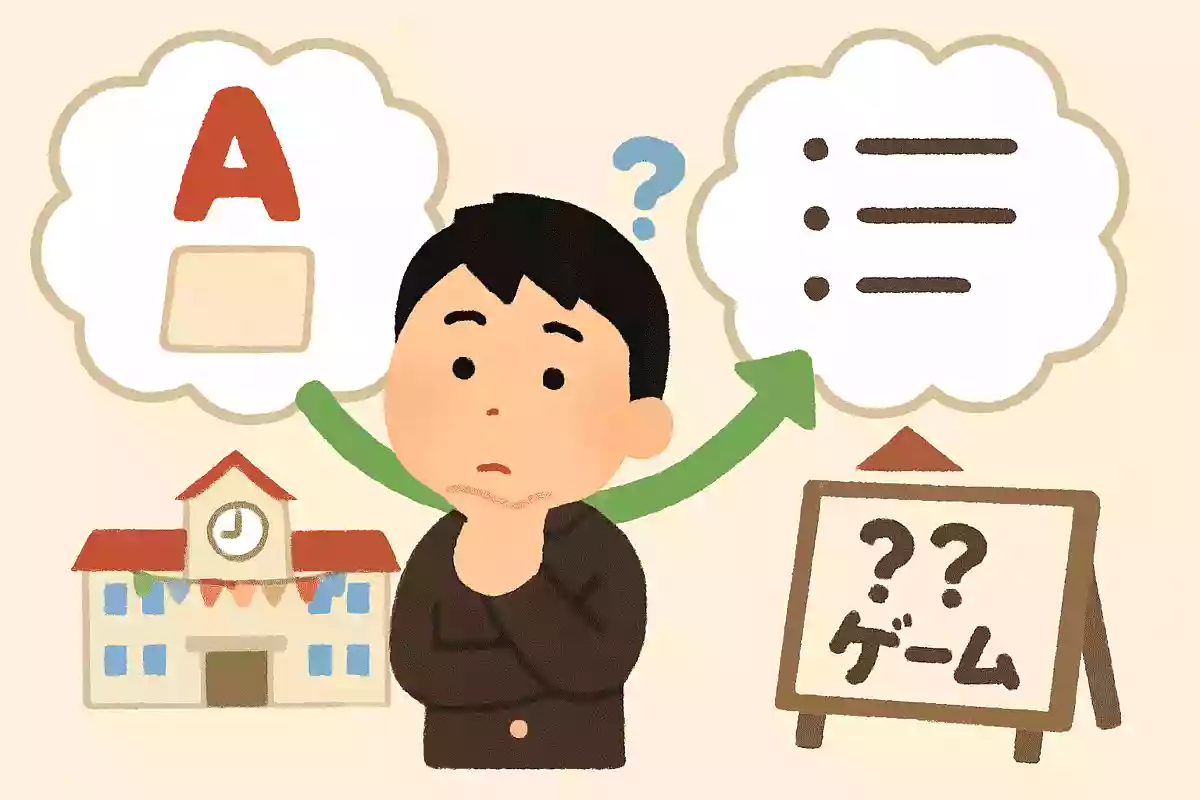
Once you’ve decided on the answers and the rule for solving the problems, it’s finally time to create the actual questions.
Craft the prompts so that the rule leads naturally to the correct answer.
However, as you draft questions, you may end up with ones that feel forced.
If that happens, it can cool your audience’s enthusiasm.
Take the time to refine your questions so that, when it’s time to check the answers, everyone can agree that they make sense.
Tips for creating questions (1–10)
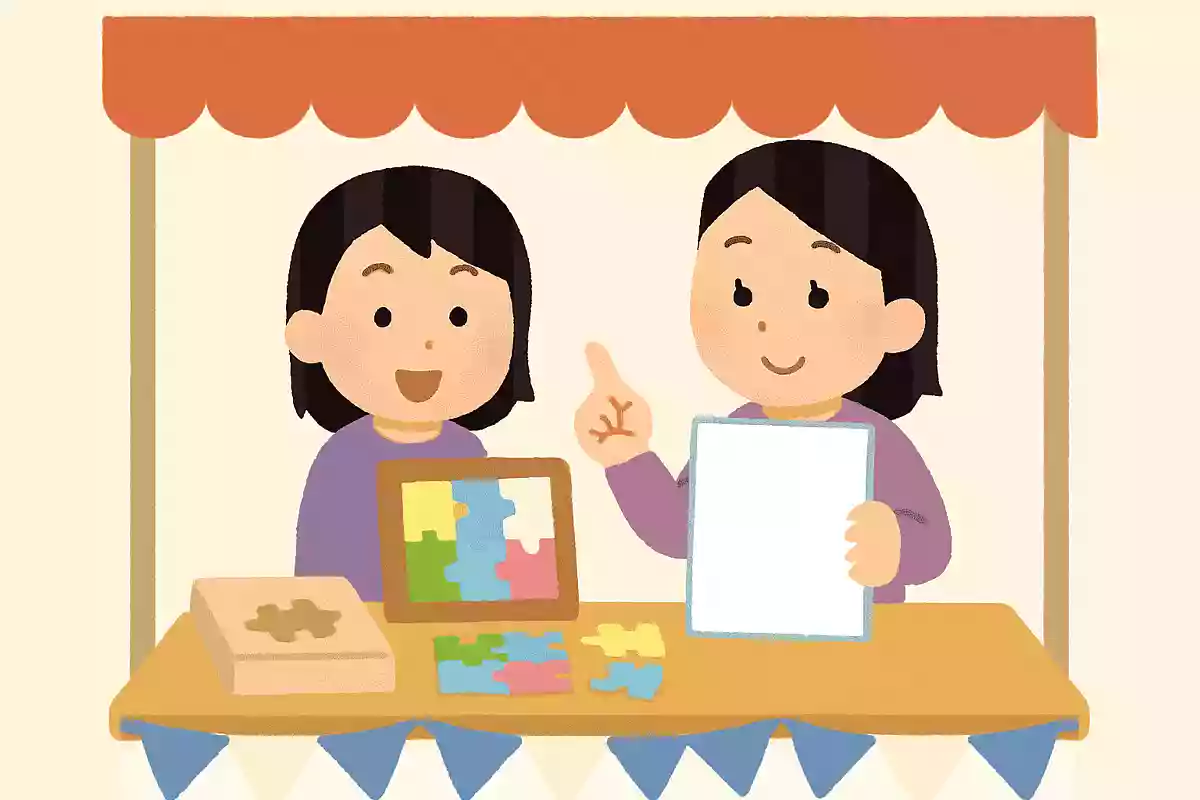
Next, I’ll introduce some tips for creating puzzle-solving challenges.
If you simply make problems and have people solve them, the game can become monotonous.
However, by adding a few small twists, the game becomes more enjoyable and players will feel more curiosity and excitement, wanting to keep going.
These are all easy ideas to implement, so be sure to try them after you’ve made your puzzles.
Also, if you integrate the puzzles and their presentation with the overall story, you can better honor and enhance the story’s worldbuilding!
Display it in a way that makes people want to solve the problem.
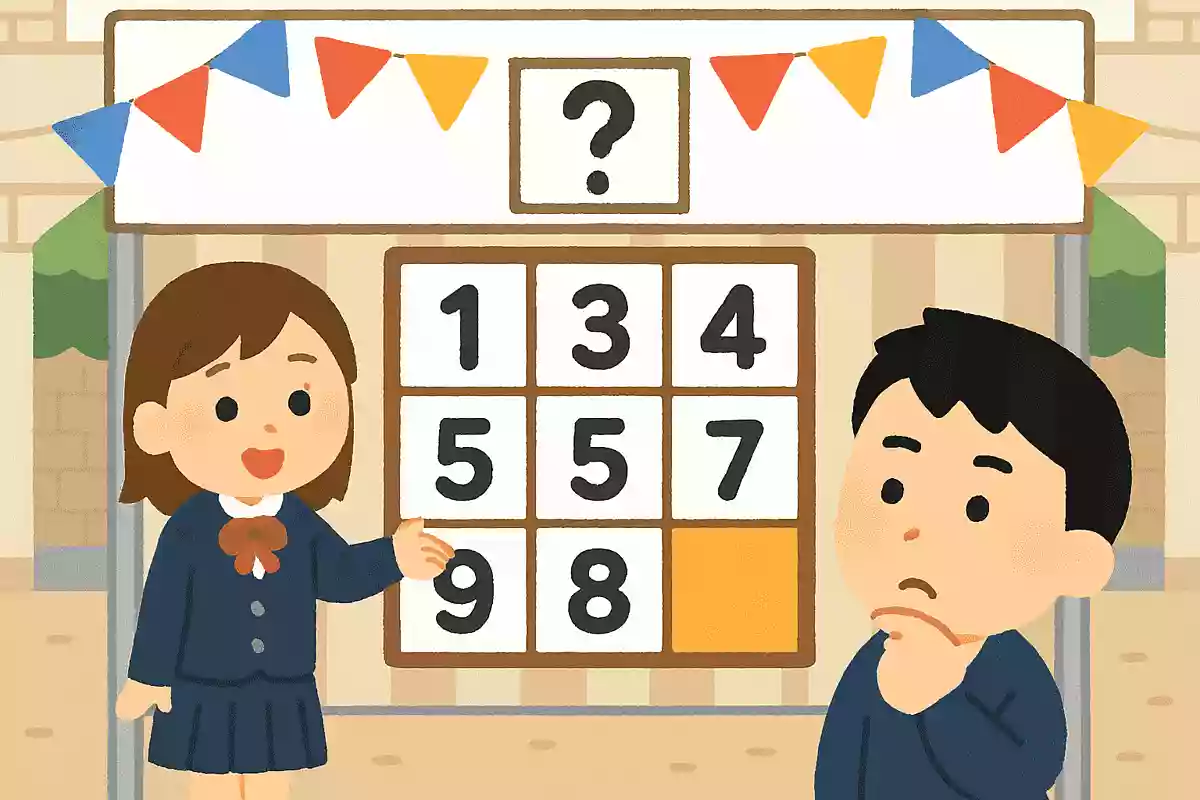
To let customers enjoy solving puzzles, the appearance of the problems matters too.
Rather than just having the questions written and placed there, many people feel more motivated to give them a try when elements like color, typography, and how the puzzles are set up are thoughtfully designed.
If the bare-bones style—just having the problem there—fits the story, that’s fine.
But if not, you’ll need a bit of ingenuity to help customers enjoy themselves more.
Let’s work together to come up with creative ways to present the puzzles.
Make the problem feel slightly off and use that as a hint.
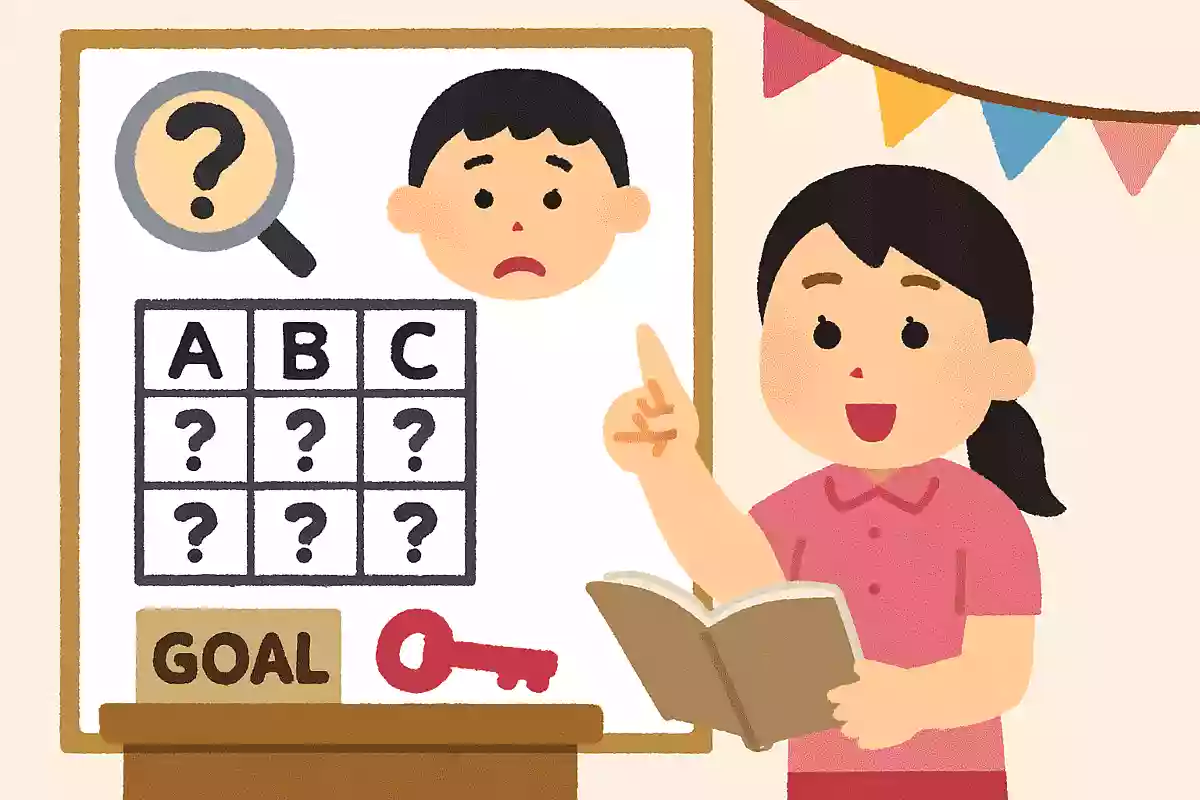
One useful tip for solving puzzle riddles is to notice the subtle sense of incongruity hidden within the problem.
Creating that feeling of incongruity within the puzzle is also a key technique for crafting puzzles that make hearts race with excitement.
For example, “It’s odd that this is in the picture,” “Doesn’t this phrasing feel strange in this sentence?” or “This looks like it could be converted into something else”—these are the kinds of points that create a sense of incongruity.
Build your puzzle so that using these points of incongruity as keys leads to the solution.
If the incongruity is too obvious, the puzzle is solved too quickly and isn’t interesting, so aim for that sweet spot where it takes a little thought to notice.
Use illustrations
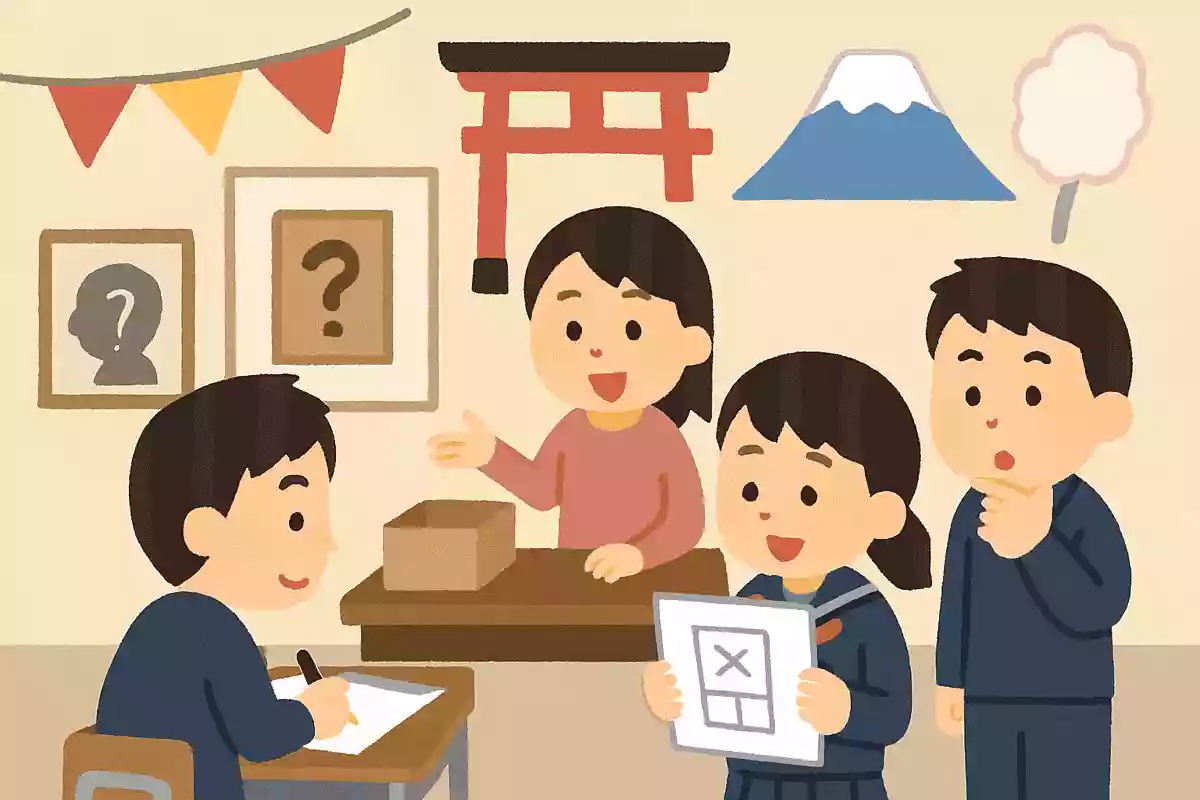
Illustrations are very helpful for puzzle-solving problems.
Not only do they make it easier to express the problem clearly, but they’re also useful for guiding solvers toward the underlying rules.
Compared to text alone, pictures allow for a wider range of interpretations.
For example, if there’s an illustration of a single round object, some viewers might see a ball, others a watermelon, and others just a circle.
By exploring these various interpretations, people can discover the rule and reach the answer.
If you want to mislead with multiple interpretations—or, conversely, make it easier to find the rule—be sure to make use of illustrations.