

Useful in emergencies! Learn disaster preparedness the fun way with a disaster-prevention trivia quiz

What actions should I take when a disaster strikes? What do I need in an emergency? Disaster-preparedness quizzes let you learn the answers to these questions in a fun way.
Knowing about disaster preparedness in everyday life helps you be mentally ready when the time comes.
In this article, we’ll introduce disaster-preparedness knowledge we want both children and adults to learn, in an approachable quiz format.
Why not learn about disaster readiness like a game together with your loved ones? You might even discover something that makes you say, “Wow, I didn’t know that!”
- Surprisingly unknown? Trivia Quiz [Multiple Choice: 3 Options]
- For Seniors: Be Prepared for Emergencies — A Disaster Preparedness Quiz Useful in Times of Crisis
- A collection of challenging quizzes for adults [Difficult]
- Let's get excited with a two-choice quiz that everyone—from kids to adults—can enjoy!
- It never hurts to know! General knowledge quiz
- [Battle of Wits] Stimulate your intellectual curiosity! Quiz questions that get adults excited
- Aim for a perfect score! A three-choice common knowledge quiz that deepens your understanding
- [You Can Make It with Everyday Items!] DIY Craft Ideas for Creating Emergency Preparedness Supplies
- A three-choice quiz of useful trivia: a collection of questions you can use in everyday life
- Let's take on a four-choice quiz that everyone can enjoy together!
- Fun quizzes for elementary school kids: a collection of questions everyone can enjoy together
- [For Kids] December Trivia Quiz & Fun Facts! Learn about seasonal events and traditions!
- [Trick Quiz] Quiz Questions That Excite Everyone from Kids to Adults
Useful in emergencies! Learn disaster preparedness the fun way with a disaster-prevention trivia quiz (11–20)
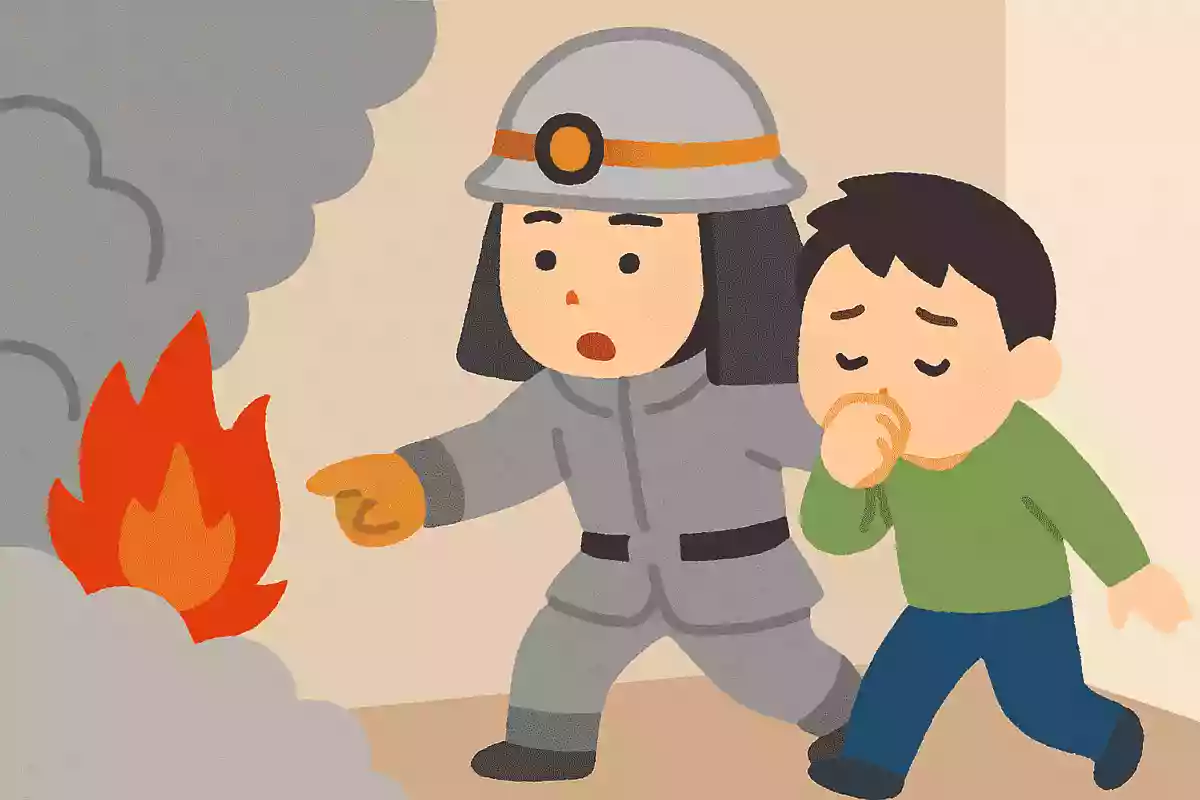
What is the correct way to escape in the event of a fire?
See the answer
Lower your posture and flee
If a fire breaks out, hold a handkerchief over your nose and mouth, keep your posture low, and evacuate. This is because smoke tends to rise. It is also important to avoid using elevators and to escape outdoors or to lower floors whenever possible. And above all, do not go back to retrieve belongings.

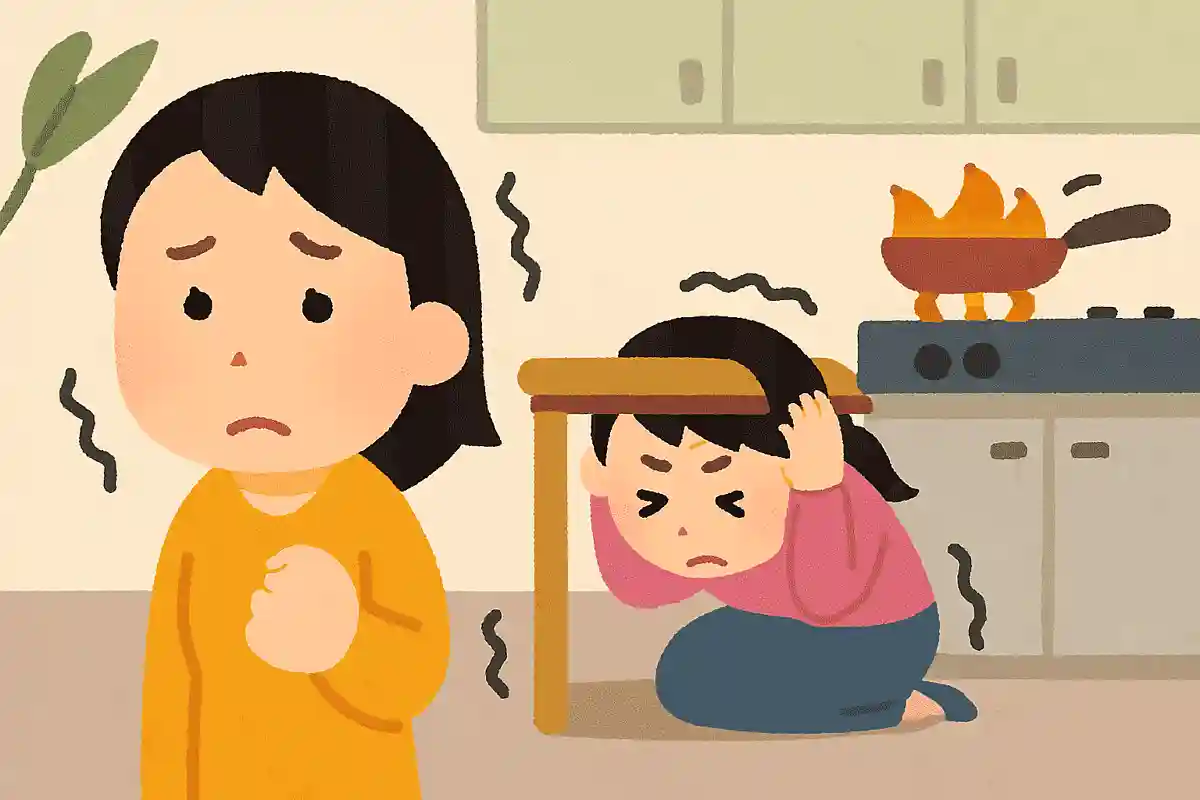
When is the appropriate time to check sources of fire when an earthquake occurs?
See the answer
After the shaking from the earthquake subsided
During an earthquake, trying to check for fire hazards while the shaking is intense is dangerous and can lead to injuries from falls or falling objects. First, ensure your own safety and take cover in a safe place, such as under a desk. After confirming that the strong shaking has stopped, promptly check for fire hazards and close the main gas valve. Above all, it’s crucial not to panic and to act in the proper order.

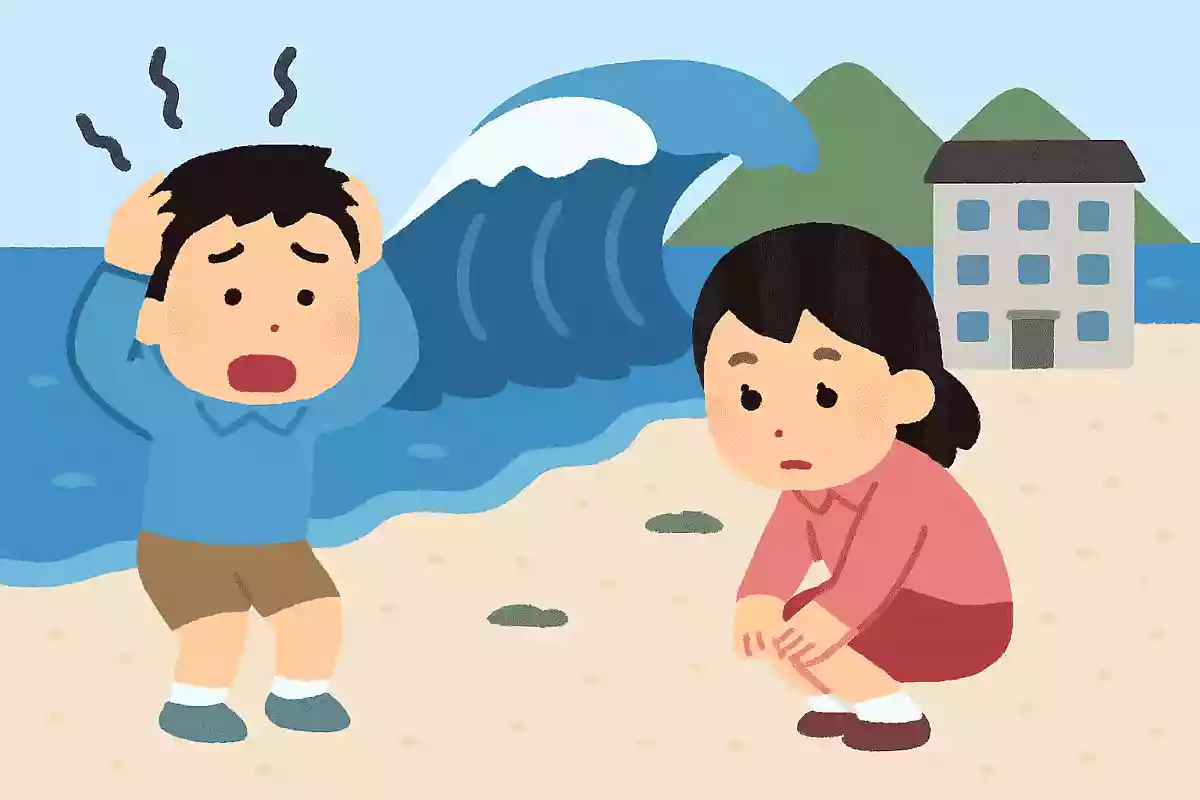
What should I do if I experience an earthquake near the ocean?
See the answer
Leave the area immediately to prepare for a tsunami and evacuate to the highest building possible.
If you experience an earthquake near the sea, it is advisable to consider the possibility of a tsunami and evacuate to higher ground. Even if the shaking is mild, a tsunami may still occur, so please remember that evacuation should be your first action. Also, do not forget that multiple tsunami waves may arrive in succession.
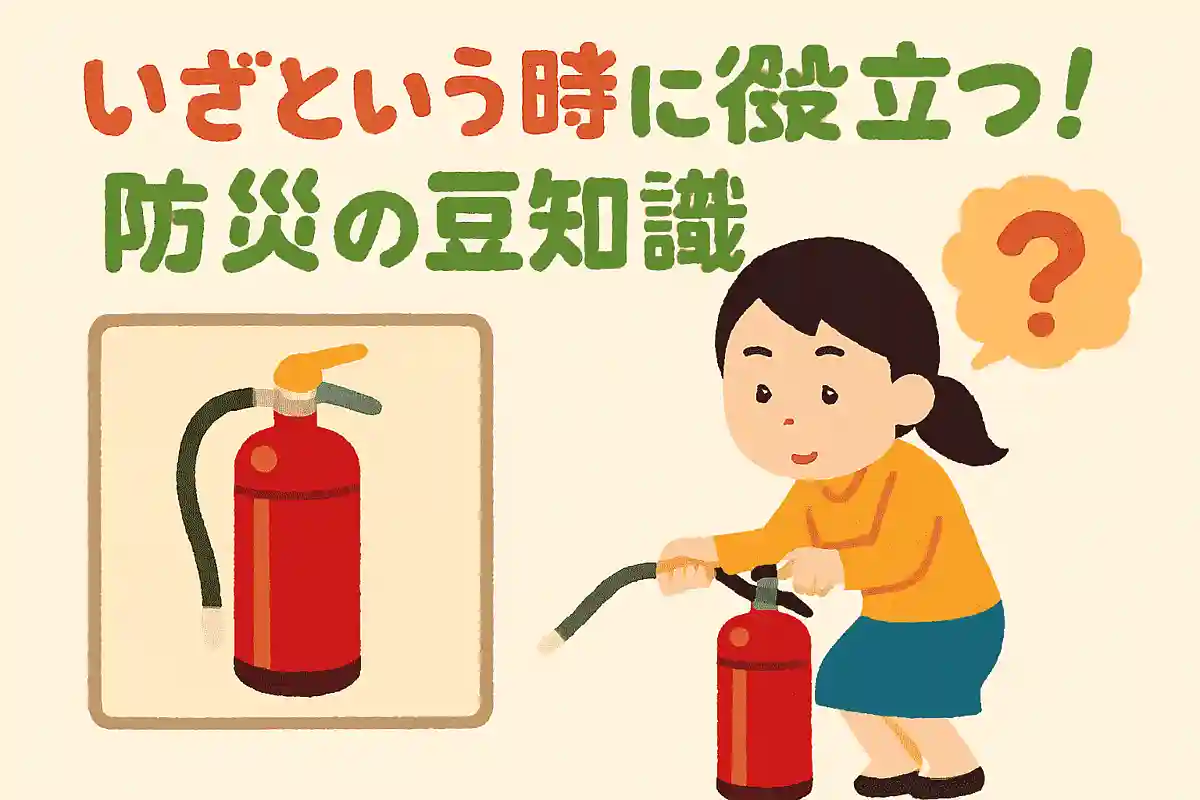
What is the first thing to do when using a fire extinguisher?
See the answer
Pull out the safety pin
When using a fire extinguisher, the first thing you should do is pull out the safety pin. The safety pin is there to prevent accidental discharge, and without removing it, the extinguishing agent will not spray even if you squeeze the lever firmly. After pulling the pin, immediately point the nozzle at the base of the fire and squeeze the lever firmly to begin extinguishing. Knowing how to use a fire extinguisher correctly is an important point for responding quickly in an emergency.
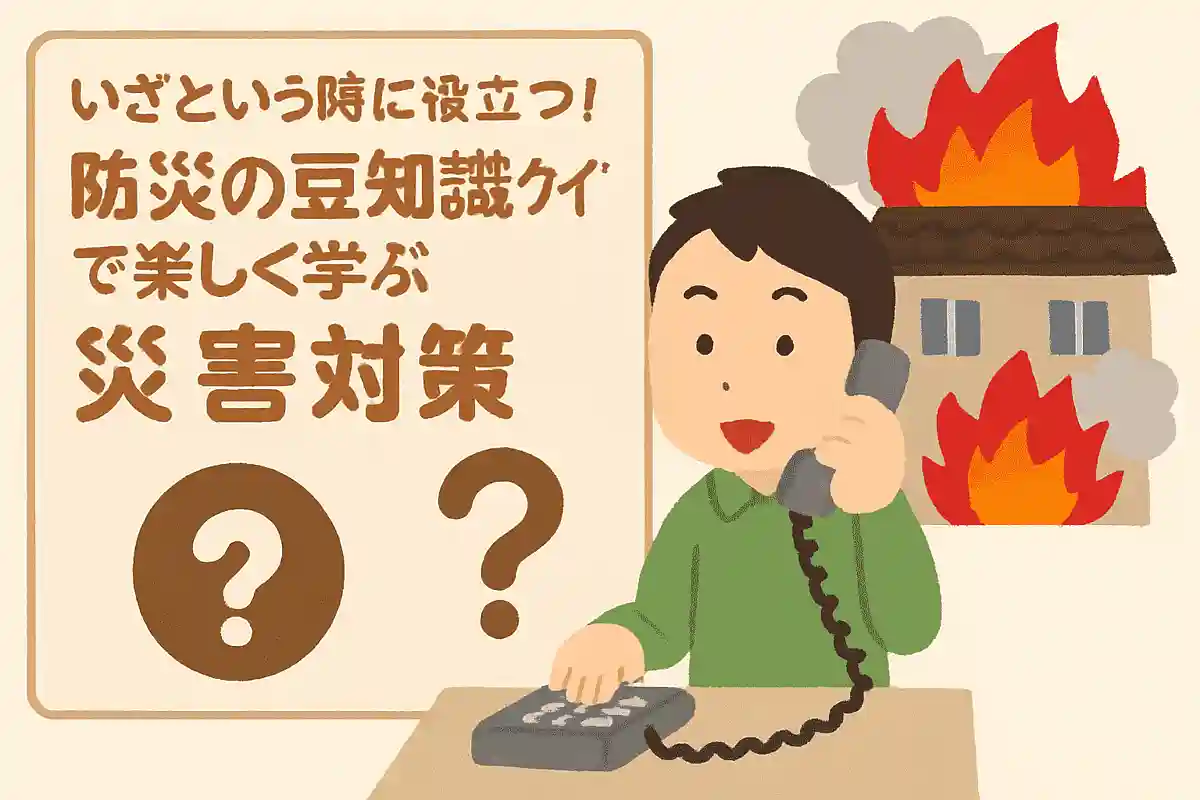
What is the first thing you should do when you discover a fire?
See the answer
Shout “Fire!” to alert the people around you.
When you discover a fire, the first thing you should do is not try to handle it by yourself, but loudly alert those around you by shouting, “Fire!” This helps others become aware of the situation so they can evacuate promptly and assist with calling 119. If and only if initial firefighting is possible and you can act with safety in mind, you may attempt to extinguish the fire, but above all, prioritize your own safety.
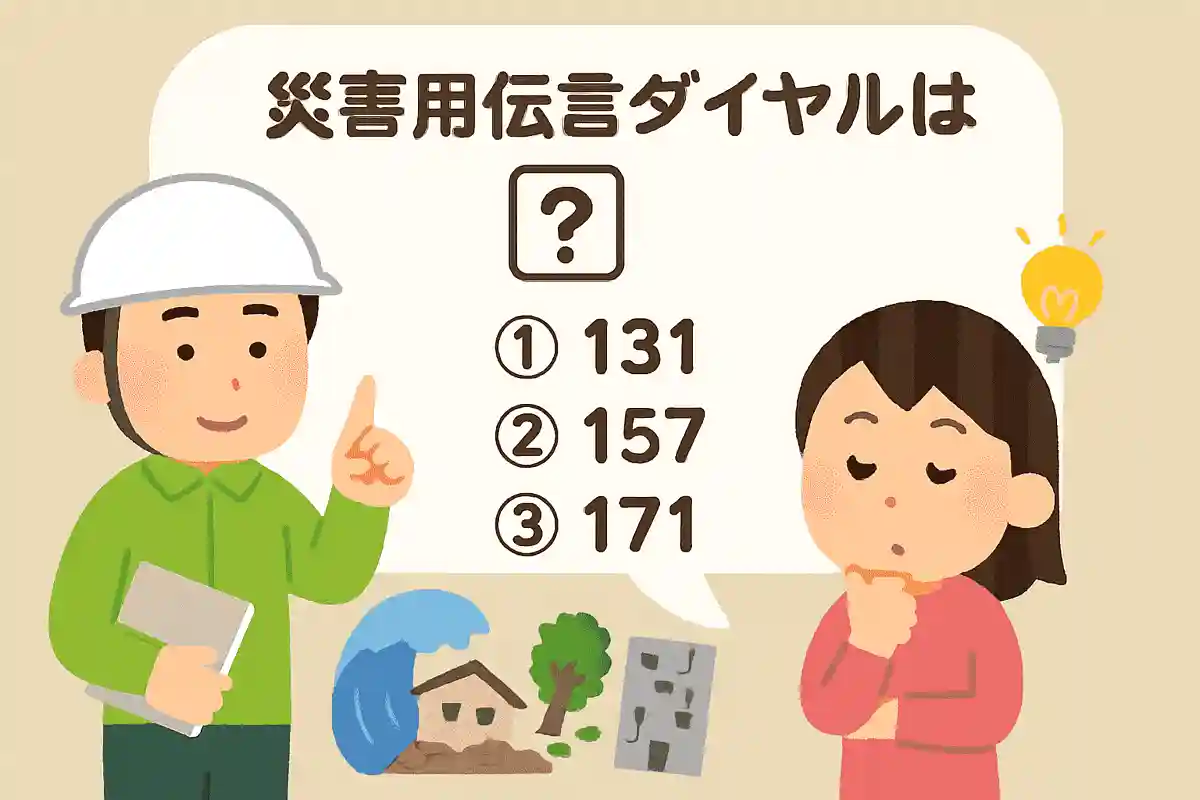
What is the number for the disaster message dial service?
See the answer
171
You can use the Disaster Emergency Message Dial at 171. During major earthquakes or disasters, it can become difficult to connect by phone. In such situations, by calling 171 you can record and check safety information for yourself and your family. It can be used from both landlines and mobile phones, and messages can be recorded and played back with simple operations. If you discuss how to use it with your loved ones in advance, you’ll feel more secure in case of an emergency.
Useful in emergencies! Learn disaster preparedness the fun way with a disaster trivia quiz (21–30)
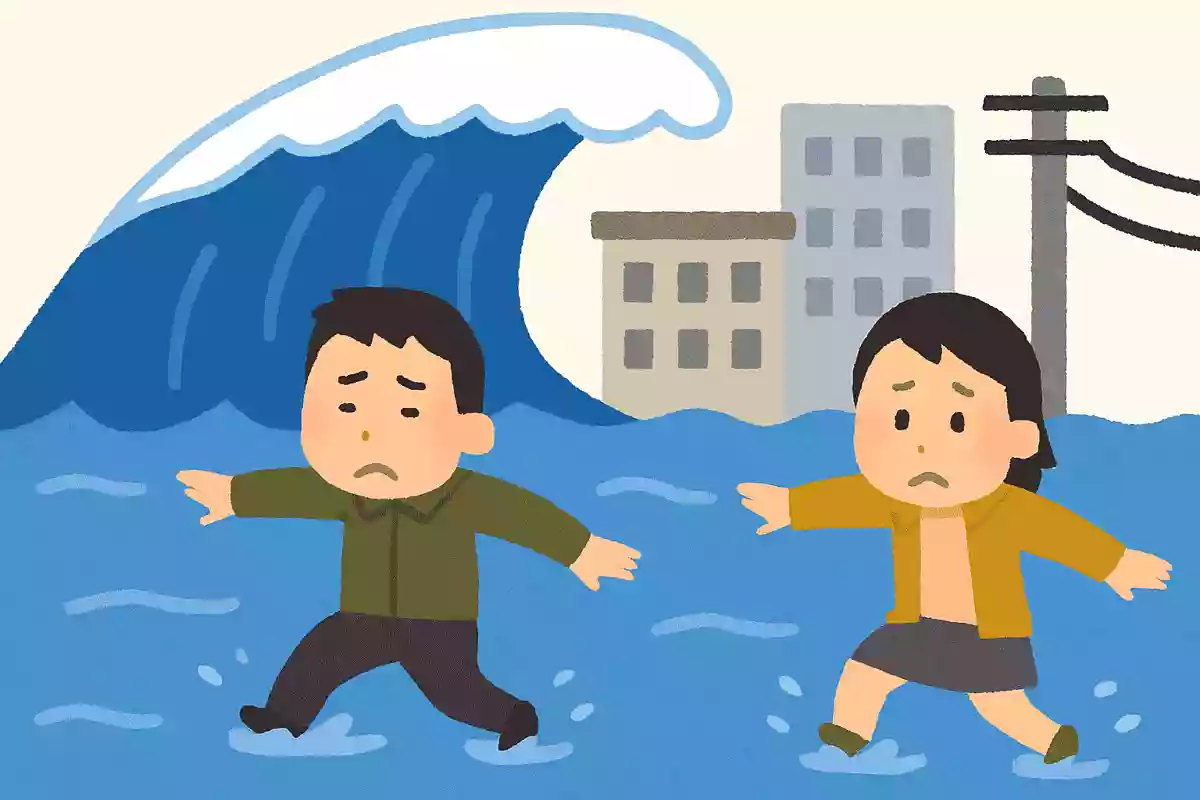
If an area is flooded by a tsunami, at what water depth (in centimeters) can a person no longer walk?
See the answer
30cm
According to one theory, it becomes difficult to walk in 30 cm of water, adults can be swept away at 50 cm, and at 100 cm you may not even be able to stand. However, since the force depends on the speed of the current, you should be cautious even when it is below 30 cm.